‘70% of funds went to unregulated wallets’- Binance CEO warns MiCA amplifies risk
MiCA's effectiveness is under scrutiny as the regime's transitional period come to an end



Binance CEO Richard Teng has cast doubt on the effectiveness of the EU’s crypto regulatory regime, MiCA, citing capital flow patterns from the exchange.
In an interview with Reuters, Teng highlighted an interesting insight as MiCA went into effect.
70% of those funds go to self-hosted wallets. Only 30% flows to MiCA-regulated entities.
He added,
Can the MiCA regime then serve its purpose by minimizing risks for the users? Once the funds go to self-hosted wallets, the risk amplifies because you don’t have oversight and AML controls.
Binance failed to get MiCA approval and withdrew its initial Greek application. Like the rest of the platforms without approval, they are required to allow users to move their funds and stop any new sign-ups of EU citizens.
In fact, Coinbase and OKX launched aggressive bonus wars to attract Binance EU users in late June and early July. However, based on Teng’s insights, it seems the bonus wars didn’t attract some of the major investors that were previously using Binance.
Tracking Binance capital outflows amid MiCA woes
In other words, 70% of the funds didn’t see the need to move to regulated MiCA entities; instead, they chose self-custody.
CryptoQuant data showed that stablecoin withdrawals (capital outflows) intensified last month and extended into the first week of July.
In particular, USDC reserves on Binance fell by 21% from over $6B to about $4.47B. That’s nearly $2B in outflows, which CryptoQuant called “regulated capital flight.”
After the USDT delisting across the EU, USDC and Euro-based stablecoins gained popularity. Hence, the outflows could be deemed related to users moving out their funds. Worth pointing out that USDT reserves on Binance also dipped by over $1B during the same period.
In the past week alone, the daily average Binance stablecoin outflows hit $115M.
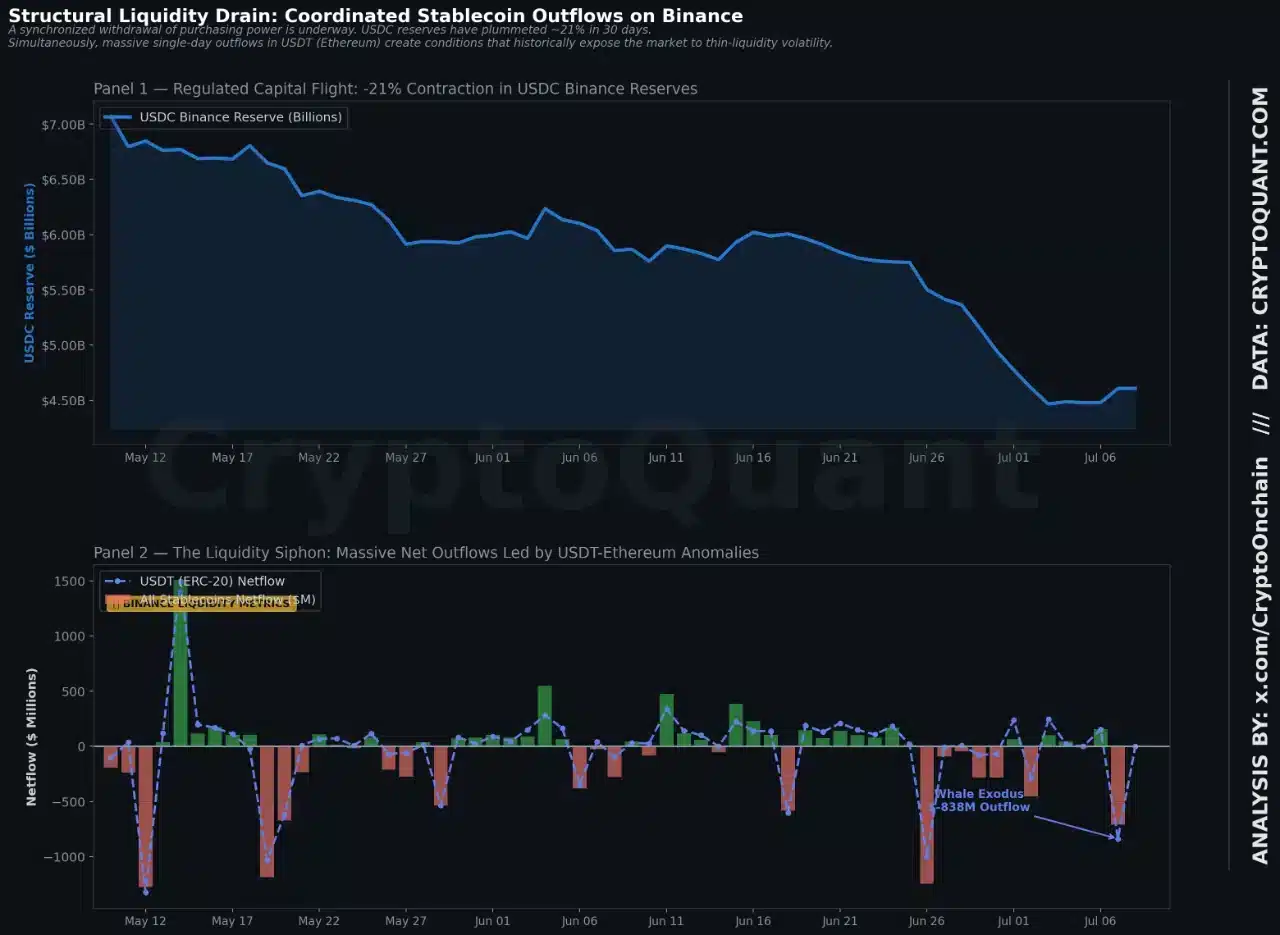
Assuming the flight was linked to EU users, that would mean about $3B in capital outflows. Based on Teng’s insight, about $2.1B could have gone to unregulated self-hosted platforms while only $900M moved to regulated venues like Coinbase and OKX.
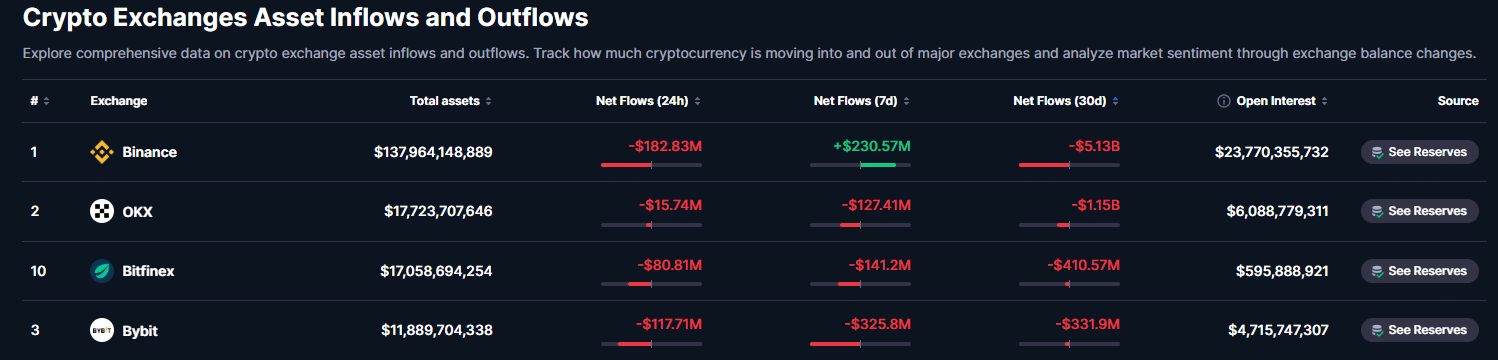
In fact, CoinMarketCap showed the outflows were as high as $5B in the past 30 days. Still, OKX, one of the MiCA-approved entities, also saw $1B in net outflows.
That said, the EU watchdog is currently reviewing the regulation to recalibrate MiCA for tokenization and DeFi. Whether concerns raised by Teng and others will be considered remains to be seen.
Final Summary
- 70% of funds withdrawn from Binance by EU users ended up in unregulated self-hosted wallets.
- Binance CEO cautioned that the data meant MiCA is exposing EU crypto users to amplified risks instead of protecting them.