Bitcoin hashrate sees new highs: What’s next?
Bitcoin's hashrate attains record levels while miner revenue remains constant.

- Bitcoin’s hashrate reached new heights.
- Miner revenue remained stable as its Open interest grew.
Bitcoin [BTC] prices stagnated after jumping past the $34,000 barrier. Even though the state of the holders was largely positive, the miner cohort told a different story.
Hashrate continues to rise
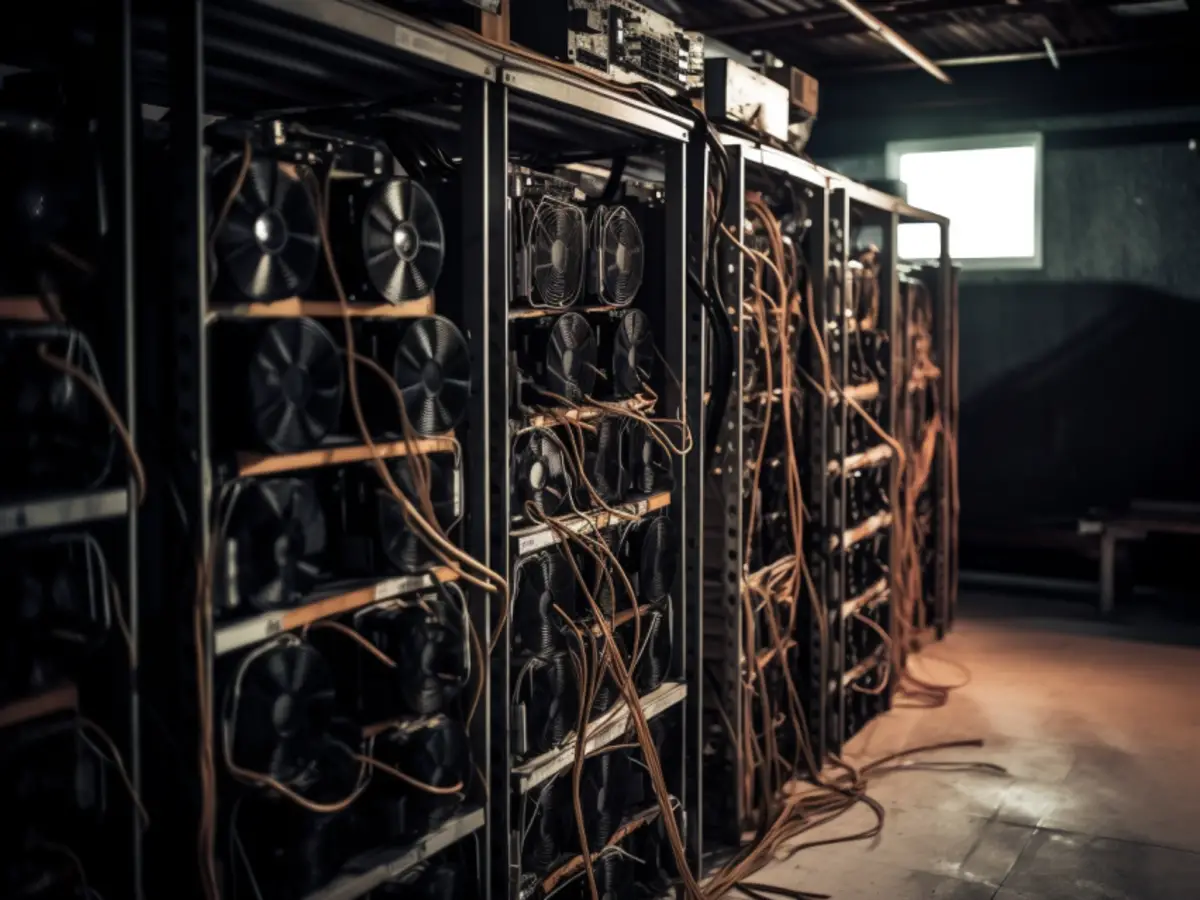
The 5th of November marked a historic moment for Bitcoin, as its hash rate reached a record 521 exahashes per second (EH/s). This milestone came during the middle of a difficulty epoch, and it’s anticipated that the difficulty adjustment will increase by over 5.5%.
In simpler terms, Bitcoin’s processing power hit an all-time high, indicating strong network security.

A high hash rate in Bitcoin has several positive effects. First, it enhances the security of the network, making it harder for malicious actors to attack or manipulate the blockchain. This boosts trust in the cryptocurrency.
Second, a strong hash rate indicates a vibrant and competitive mining community. This leads to efficient and timely processing of transactions, ensuring smooth operation.
However, there are negative aspects as well. With a high hash rate, mining becomes more competitive and resource-intensive. Smaller miners may find it challenging to compete, leading to centralization.
Rising difficulty
Additionally, along with Bitcoin’s hash rate, the overall network difficulty of Bitcoin mining also rose. High mining difficulty in Bitcoin has both positive and negative impacts.
On the positive side, it ensures the security of the network by making it very hard for anyone to maliciously tamper with the blockchain. This is crucial for maintaining trust in the system.

Moreover, high mining difficulty contributes to a steady and predictable issuance of new Bitcoins, preventing inflation and ensuring that the cryptocurrency maintains its value over time.
However, there are also negative effects. As mining difficulty increases, it becomes more challenging for miners to solve the complex mathematical puzzles required to validate transactions and add new blocks to the blockchain.
This means miners need more computational power, which can be costly.
The increased difficulty may lead to centralization, with only large mining operations able to afford the necessary equipment and energy costs. This could potentially reduce the decentralized nature of Bitcoin.
At press time, F2pool had the largest share. BTC.com and AntPool came in second in terms of hashrate distribution.

Despite these factors, the revenue collected by miners remained stable. At the time of writing, the daily revenue collected by the miners was at $35,085.

High miner revenue allows miners to hold their BTC without having to sell them for a profit.
Even though miners don’t have much of a reason for selling their holdings, the same couldn’t be said about BTC holders. Due to the recent surge in BTC prices, the MVRV ratio of BTC has gone up.
This indicated that many holders were profitable and were inclined to sell their holdings in the future going forward.

Surge in Open Interest
Coming to the state of the traders, AMBCrypto analyzed that Open Interest in Bitcoin remained stable since the surge in price from $26,000 to $34,000.
Is your portfolio green? Check out the BTC Profit Calculator
Approximately 390,000 BTC are involved in these Open Interest contracts, which is slightly over 2% of Bitcoin’s total market capitalization.
Interestingly, as Open Interest on the Chicago Mercantile Exchange (CME) increased, there was a decrease in Open Interest on Binance [BNB]. This suggested that some traders were shifting their positions between these platforms.