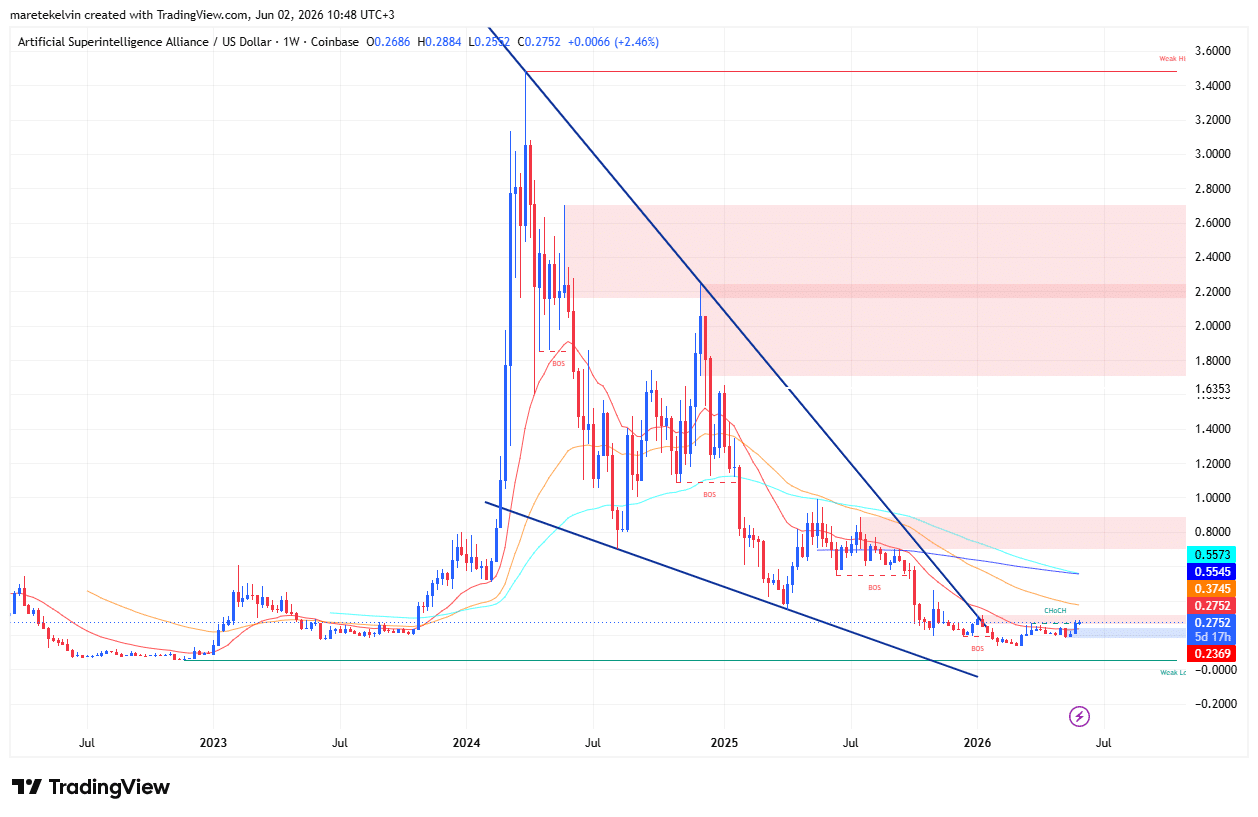
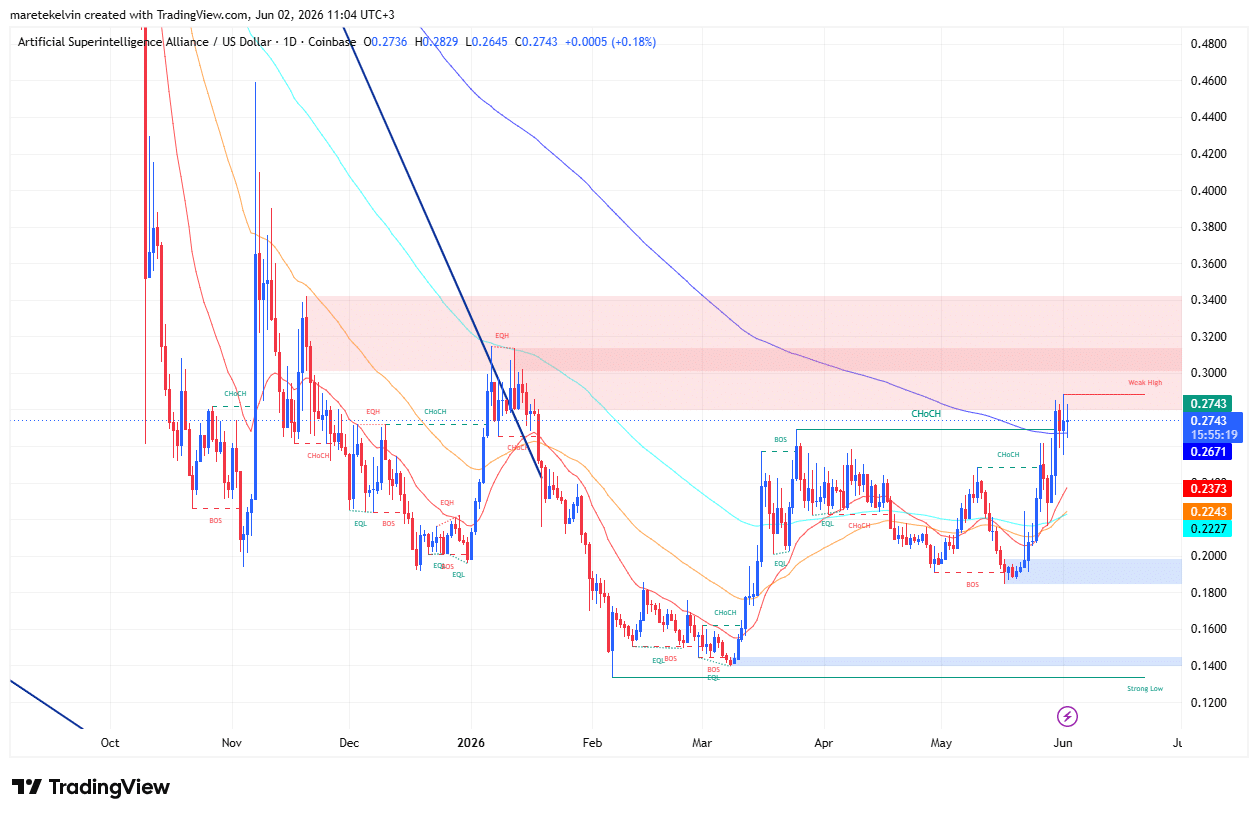
FET is at the core of one of the most rapidly emerging narratives in the crypto sphere: artificial intelligence.
Initially, the protocol was introduced by Fetch.ai, which aimed at creating an ecosystem of self-sustained AI agents that can execute tasks, exchange information, and make transactions without relying on a central authority.
However, with the establishment of the Artificial Superintelligence [ASI] Alliance, a much more ambitious vision has emerged.
Under the ASI Alliance, which included Fetch.ai, SingularityNET, and Ocean Protocol, the developers have formed an ecosystem designed to facilitate decentralized AI development. FET served as its economic layer.
One of the significant developments that happened was the creation of Agent Launchpad on the 20th of May, 2026.
Through Agent Launch, AI agents can create economies, generate tokens, seek support, and even fund themselves with no human involvement. The concept behind Agent Launch is to build an incentive mechanism for autonomous AI agents to work effectively.
Just two days after, Fetch.ai launched Agent Launchpad, the first agentic token deployment platform. AI agents can trade, negotiate, and coordinate on-chain systems.
The adoption of these technologies has been quite impressive.
According to Fetch.ai, there have been over 150,000 active agent launches so far on the BNB chain. The number is over 43,000 percent greater compared to early 2026.
The platform also introduces a security-focused token model. Newly launched agent tokens trade through a bonding curve mechanism before automatically migrating to PancakeSwap with permanently locked liquidity pools.
The development was aimed at reducing rug-pull risks while creating a more sustainable framework for autonomous agent economies.
Behind the scenes, the Fetch.ai ecosystem is evolving quickly.
Another big development is the recent network’s push toward a dedicated blockchain infrastructure designed to handle demanding AI workloads. The long-term vision is ambitious.
The network aims at building an open, decentralized AI network that can compete with the closed ecosystems currently controlled by major technology firms.
That vision is already attracting developers.
Fetch.ai continues to draw builders working on autonomous agents, decentralized services, and AI-driven applications. Much of the project’s ongoing research is focused on creating scalable multi-agent systems that can operate securely and efficiently across decentralized networks.
Investor interest is following a similar path.
With artificial intelligence having become a hot topic, the influx of funds into blockchain companies with actual exposure to AI applications has increased. In the case of Fetch.ai, it saw the rise in interest coupled with increased engagement.
However, what should be noted here is the fact that ASI’s developer community is active. New infrastructure upgrades are being implemented. So the platform continues to develop not only due to speculation, but as a result of real use cases.
In light of the continuous expansion of the Artificial Superintelligence Alliance project, FET stays at the center of the economic system. The further development of the token will depend on how effective the network will be able to attract additional developers and stimulate autonomous agents’ activities.