Ethereum buyers struggle to absorb supply: Will liquidation pressures harm ETH?
Ethereum faces a critical test as buyer demand clashes with persistent overhead supply.



Ethereum’s [ETH] weakness is becoming increasingly visible through whale positioning. Price has fallen to roughly $1,740, placing ETH below the whale realized price near $1,900.
That gap suggests many large holders now sit on unrealized losses rather than profits.
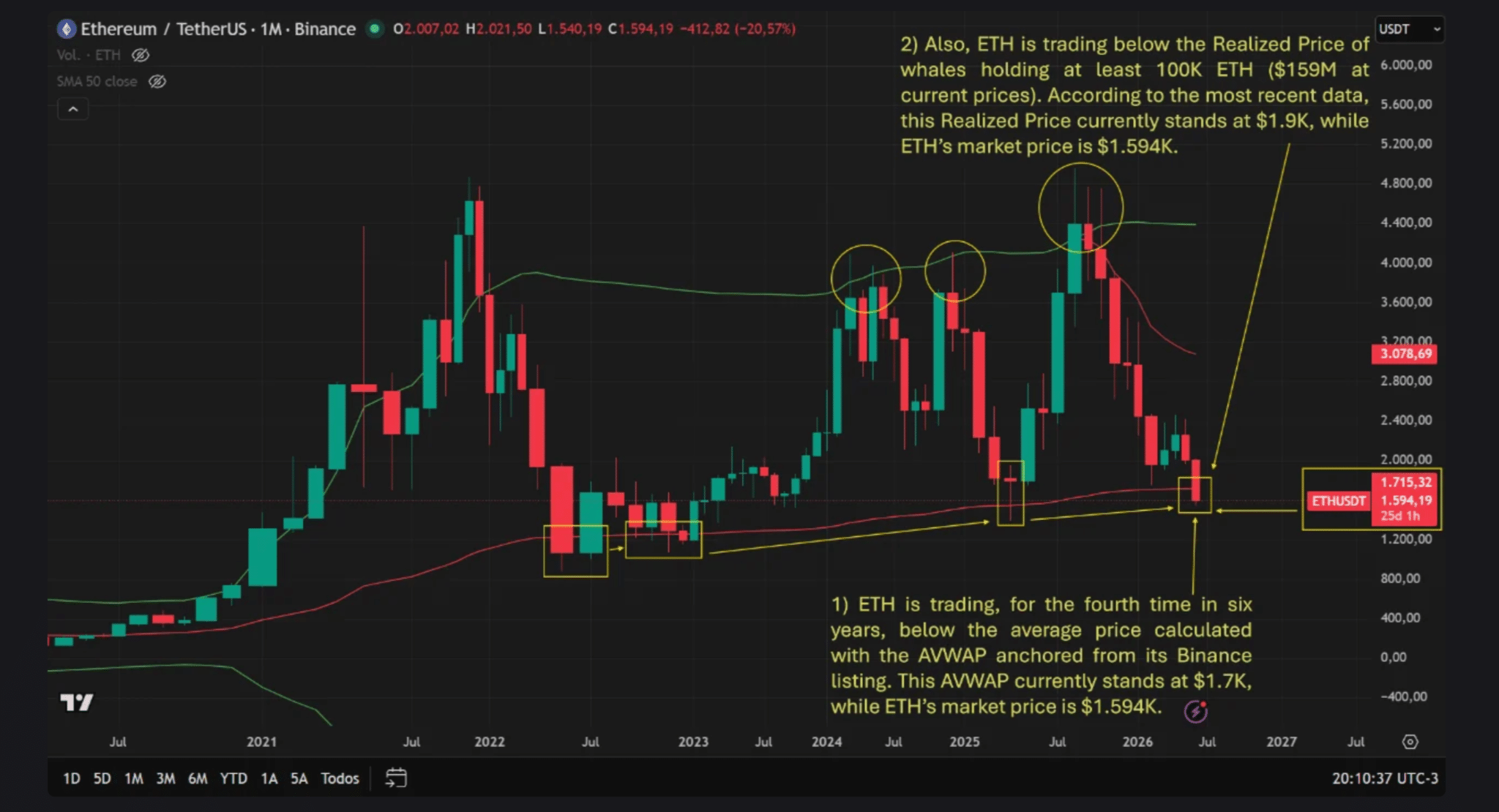
The pressure extends further. ETH is also trading below the Binance listing AVWAP, currently near $1,700.
Notably, this marks only the fourth time in six years that price has traded beneath that long-term benchmark. Historically, such periods have reflected deteriorating market confidence and weaker accumulation dynamics.
As a result, whale support appears less reliable than during previous recovery phases. Unless ETH reclaims these cost-basis levels, distribution pressure could remain elevated and weigh on broader sentiment.
Liquidation clusters keep downside risks elevated
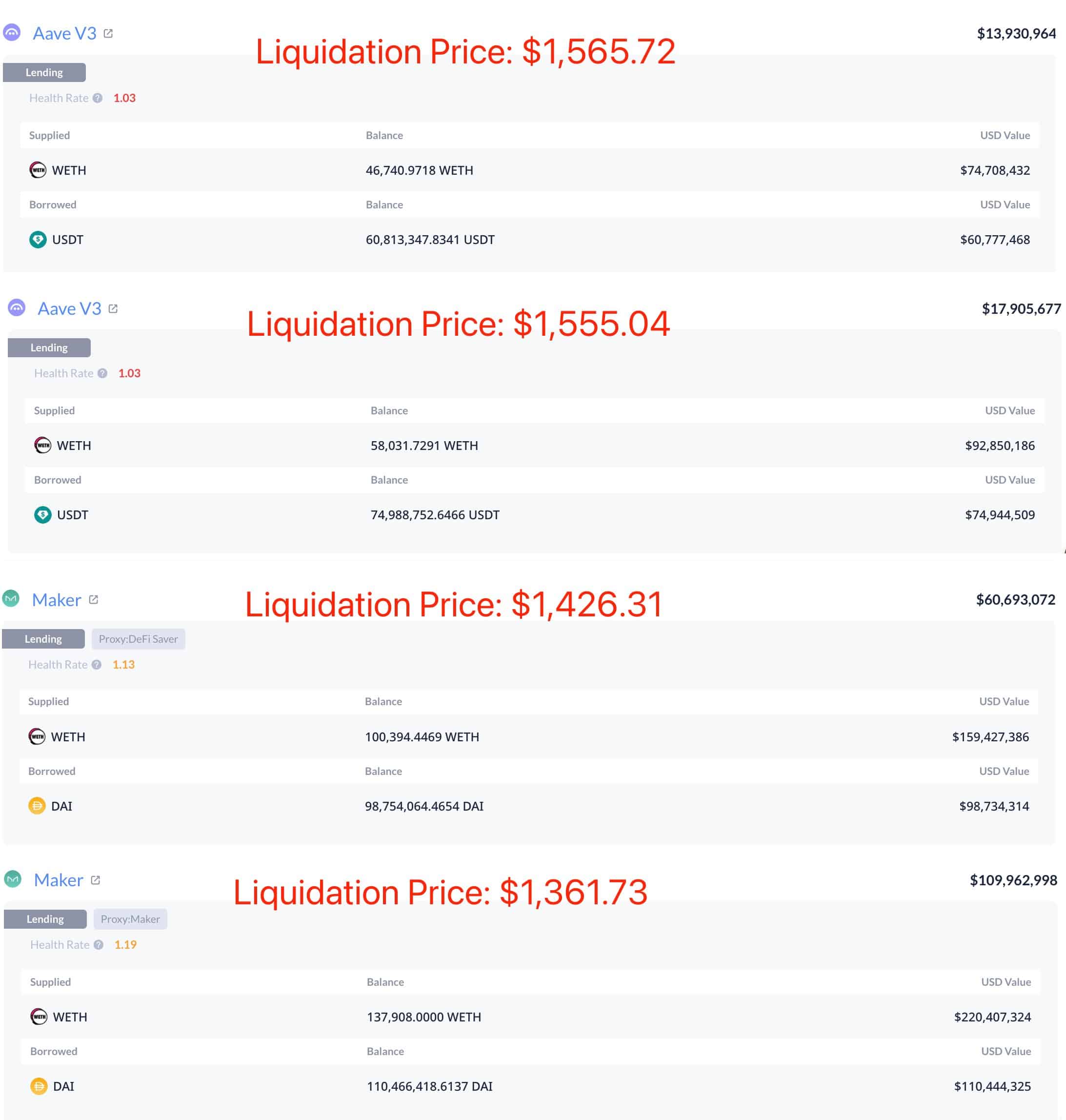
Ethereum’s drop below $1,550 did more than break a key support level. It exposed how much leverage had accumulated across DeFi lending markets.
Once collateral thresholds failed, more than 21,540 ETH worth roughly $34.1 million was liquidated, adding fresh sell pressure into an already weak market.
That reaction highlights how quickly downside momentum can reinforce itself. Falling prices trigger liquidations, while liquidations create additional selling.
Yet the largest risk may still lie ahead. Around $547 million in leveraged positions remain exposed across Aave and Maker. If buyers defend those levels, liquidation pressure could ease. Otherwise, volatility may remain elevated.
Ethereum’s recovery hinges on buyer conviction
Ethereum’s recovery attempts continue running into a supply problem. While retail buyers have accumulated aggressively near the $1,550-$1,600 range, larger holders remain active sellers, preventing demand from fully absorbing available supply.
That imbalance is becoming increasingly visible across spot markets. Periods of positive taker activity have emerged, yet buying pressure has struggled to consistently overcome whale distribution and liquidation-driven selling.
Exchange flows tell a similar story. Outflows suggest some investors are moving ETH into self-custody, though intermittent inflows continue replenishing exchange supply.
The result is a fragile equilibrium. Buyers are preventing a deeper collapse, yet they have not generated enough conviction to reverse the trend. Until spot demand strengthens materially, stabilization may remain difficult.
Final Summary
- ETH remains vulnerable as whale distribution and liquidation risks continue to outweigh emerging spot demand.
- Ethereum needs stronger buyer absorption to reclaim key cost-basis levels and stabilize market sentiment.