Bitcoin miners are moving more coins, but should you be worried?
Withdrawal activity may have risen, but wallet movements don't always mean selling.


Bitcoin [BTC] is becoming scarcer with every halving, but miners are also earning lesser for securing the network.
With their holdings declining, are they under pressure to sell their Bitcoin?
Bitcoin halving pushes annual supply inflation below 1%
Bitcoin miners secure the network by using computing power to verify transactions and add new blocks. In return, they receive newly issued BTC, known as the block reward, along with the transaction fees paid by users.
Every 210,000 blocks (or roughly once every four years) the block reward is cut in half. This slows the rate at which new Bitcoin enters circulation. According to Alphractal, there has been an obvious drop in annual supply growth after every halving.
At the time of writing, the rate was 0.88%.
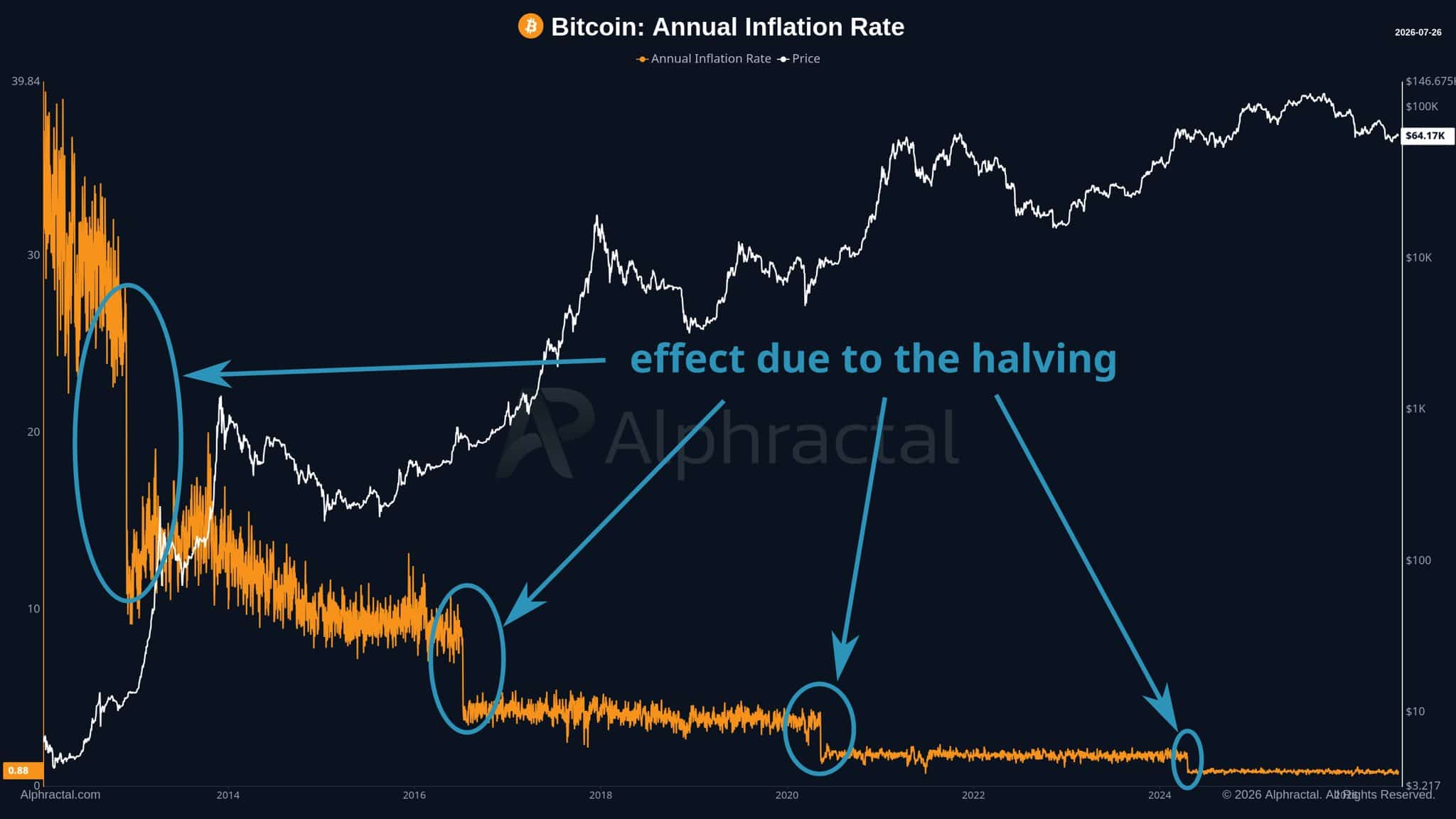
Here, “inflation” is a measure of how quickly Bitcoin’s circulating supply is expanding. Because these reward cuts are built into the protocol, Bitcoin’s issuance follows a predictable path towards its supply cap of 21 million coins.
This issuance slowdown has a direct effect on miners
That’s not all though as CryptoQuant data showed that reserves held in wallets linked to miners have fallen to approx. 1.19 million BTC. There’s been a longer-term decline in miner holdings, so they’re retaining less Bitcoin than before.
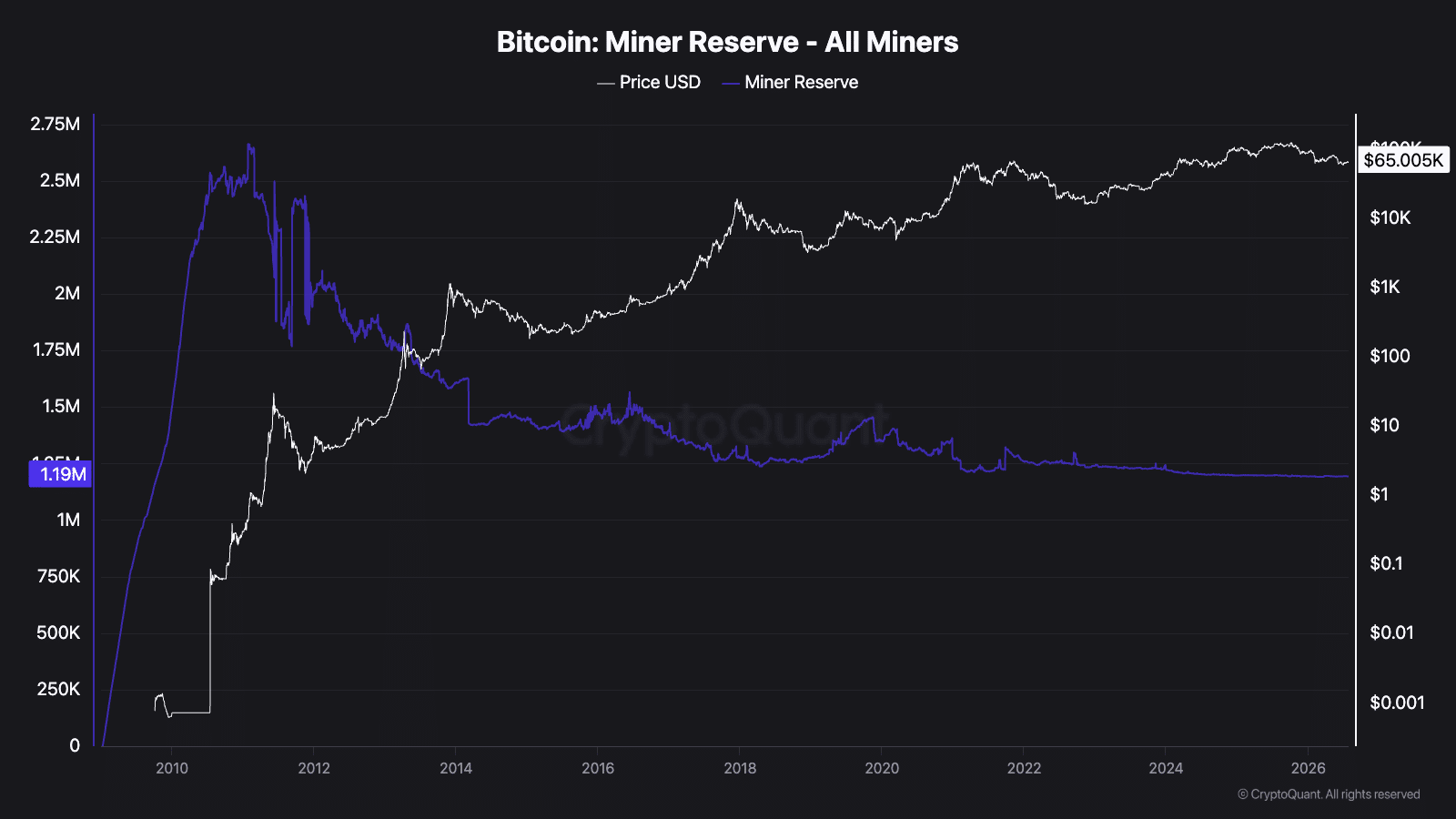
Each halving cuts the block reward, while electricity, equipment and maintenance costs continue. Less-efficient operators may need to draw on their BTC reserves to cover expenses.
Not every withdrawn coin is sold, but shrinking rewards put miners under strain.
Effect on miner activity
There have been several spikes in miner withdrawal transactions since 2024.
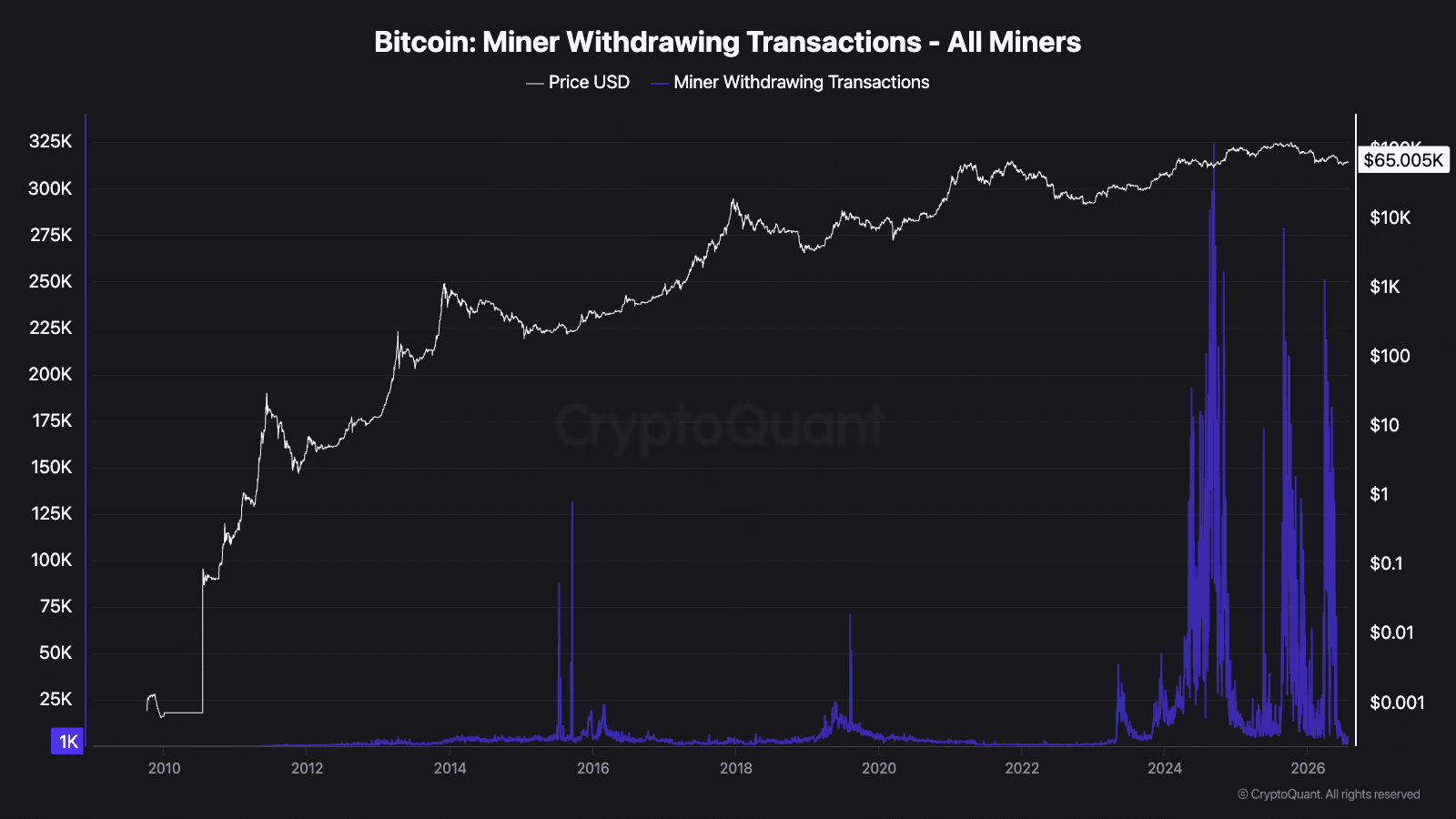
A withdrawal means Bitcoin has moved out of a wallet linked to a miner. If large amounts are sent to exchanges, they could increase the available supply and create short-term sell pressure. This is especially the case during times of weaker demand.
However, that’s not always the case.
Miners may also move Bitcoin between their own wallets, transfer it to custody services, use it as collateral or complete private transactions. So, while Bitcoin’s long-term supply is still becoming scarcer, this is something for traders to keep an eye on.
Final Summary
- Bitcoin’s annual supply inflation fell to 0.88%.
- Miner reserves dropped to 1.19 million BTC as withdrawals rose across the board.