Crypto exchange Binance sues RedotPay over 470,000 diverted users, claims $472.8M in losses
Binance's legal battle with RedotPay highlights the growing value of crypto payment ecosystems.



Binance Exchange has sued crypto card provider RedotPay. The exchange platform alleges that the company diverted hundreds of thousands of users in breach of their commercial agreement.
According to Bloomberg, the lawsuit claims RedotPay redirected more than 470,000 Binance users. This resulted in the exchange incurring alleged losses of $472.8 million.
Binance argues that the diverted users generated significant commercial value, making the dispute far more than a contractual disagreement.
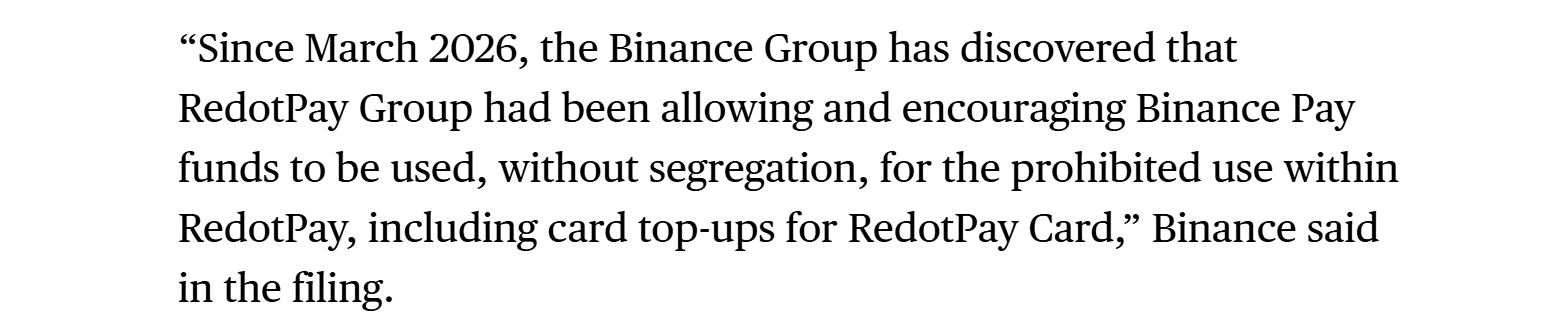
Instead, it raises broader questions about who owns customers in cryptocurrency payments as well as how the competitive market operates. Meanwhile, RedotPay has rejected the allegations, saying it will defend itself through the appropriate legal process.
The dispute also extends beyond Hong Kong, and a related lawsuit against affiliates of RedotPay is scheduled for a hearing this Friday, the 7th of August.
As this legal battle plays out, its result could affect plans for RedotPay to expand and reshape competition in the rapidly growing crypto payments sector.
Partnership terms in focus
As the lawsuit progresses, attention now shifts from the financial claims to the agreement that governed the Binance–RedotPay partnership. According to the agreement, the arrangement initially allowed Binance users to access selected RedotPay services while requiring payment flows to remain operationally separate.
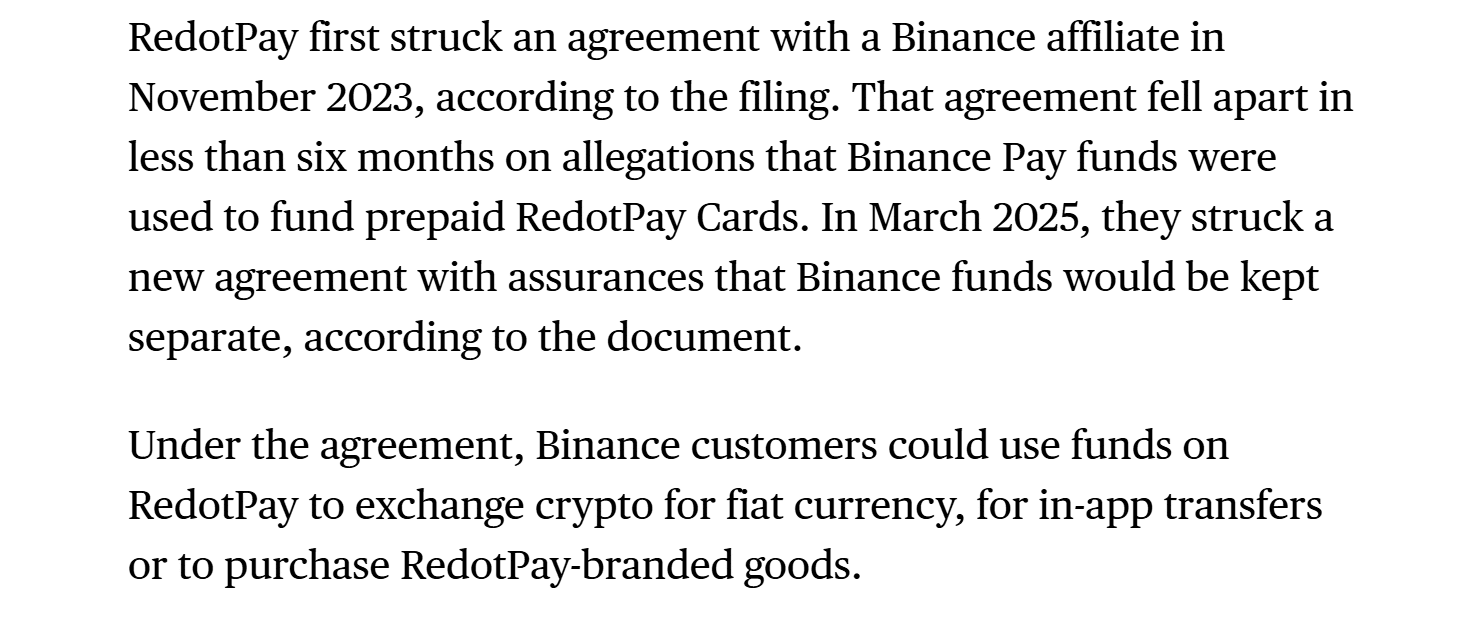
Binance now alleges those safeguards broke down after Binance Pay funds were used to top up RedotPay Cards, making contractual execution central to the dispute.
That distinction is significant because segregation of funds remains a core safeguard in partnerships for crypto payments. Meanwhile, RedotPay is pursuing a reported valuation of $4 billion, and so scrutiny is heightened on controls supporting expansion.
Yet, the outcomes of this dispute could shape how future partnerships define access for customers, flows of payments, and compliance responsibilities.
The outcome of the dispute could shape how future crypto payment partnerships define customer access, payment flows, and compliance responsibilities.
Competition moves beyond transactions
Those contractual questions also highlight how competition within crypto payments is evolving. As digital asset payments gain wider adoption, providers increasingly compete for long-term customer engagement instead of one-time transactions.
More than 470,000 disputed user relationships illustrate how payment ecosystems now derive value from recurring activity rather than simple account growth. That shift makes cards for payments, merchant networks, and integrated financial services more commercially important.
Meanwhile, retaining active users also becomes more valuable as competition intensifies. Looking ahead, providers are likely to invest more in the expansion of ecosystems rather than focusing on standalone products.
Success may increasingly depend on building durable payment networks that keep users interacting across multiple financial services rather than isolated transactions.
Final Summary
- Binance sued RedotPay, putting crypto payment partnerships and customer ownership under greater legal scrutiny.
- The Binance–RedotPay lawsuit could reshape how crypto payment firms structure partnerships, retain users, and expand their ecosystems.