Ethereum explores UTXO-style model as storage demands grow — Can it scale more efficiently?
Ethereum is now exploring lighter data storage to support network scaling.



Ethereum [ETH] is reconsidering how it scales as the growing amount of network data makes running a full node increasingly demanding. As accounts and smart contracts expand, full execution nodes now require roughly 0.9 to 1.3 TB of storage.
Moreover, baseline state growth can approach 100 GB annually, meaning higher throughput could make running nodes progressively more demanding.
This explains why Ethereum’s Vitalik Buterin is looking beyond simply processing more transactions and towards reducing what nodes must retain.

On a post on X, he credited Bitcoin developers for Utreexo, a system that lets nodes store far less data. According to Buterin, Ethereum’s scaling proposals are now exploring similar ideas.
In simple terms, he desires Ethereum to allow multiple methods of managing the state of nodes. This, as it decreases the amount of data nodes must retain.
Solving the issue of state growth can enable Ethereum to scale without increasing the cost of decentralizing with scaling. The long-term scalability path for Ethereum is now dependent upon achieving this balance.
Ethereum targets lighter data storage
The proposed change matters since approximately 80% to 82% of the data held on Ethereum is produced as new permanent records. This, in comparison to the 14% from accounts and 4% from contract code.
Each full node will need to store more information in order to follow the network. As token balances and other types of records grow, a UTXO-style approach can provide an alternative way to process payments that do not add large amounts of permanent records.
In fact, estimates indicate that if Ethereum utilizes a UTXO-style approach for targeted payments, the storage requirements for nodes would fall by nearly 99.8%.

In simple words, this means that as transactions take place, Ethereum could potentially see hikes in the amount of transactional activity taking place. This would be without experiencing increases in storage proportional to those hikes.
Additionally, Ethereum could still maintain its current method of storing permanent, complex data for applications requiring it.
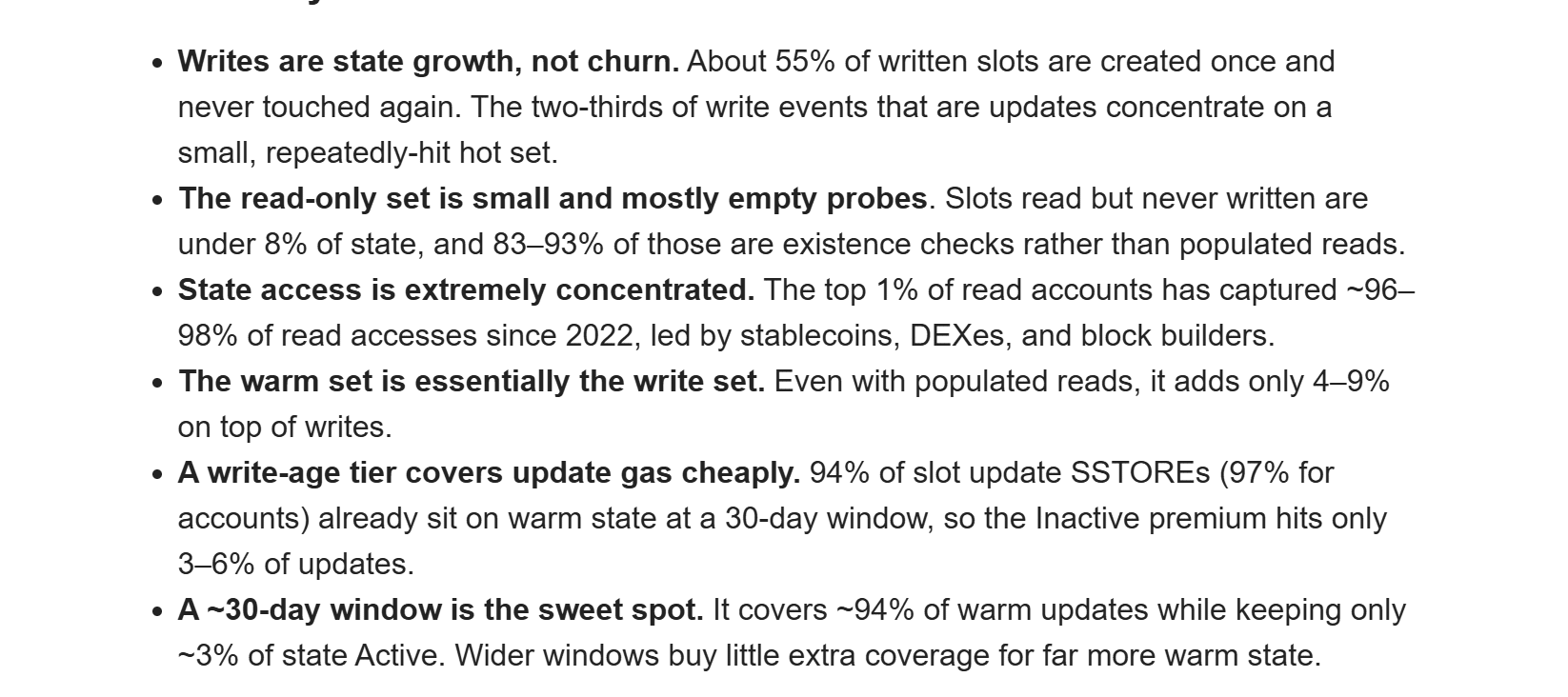
That lighter storage model might just be more practical when considering how little of Ethereum’s stored information sees regular use. Less than 4% of both account and storage records are accessible in 30 days.
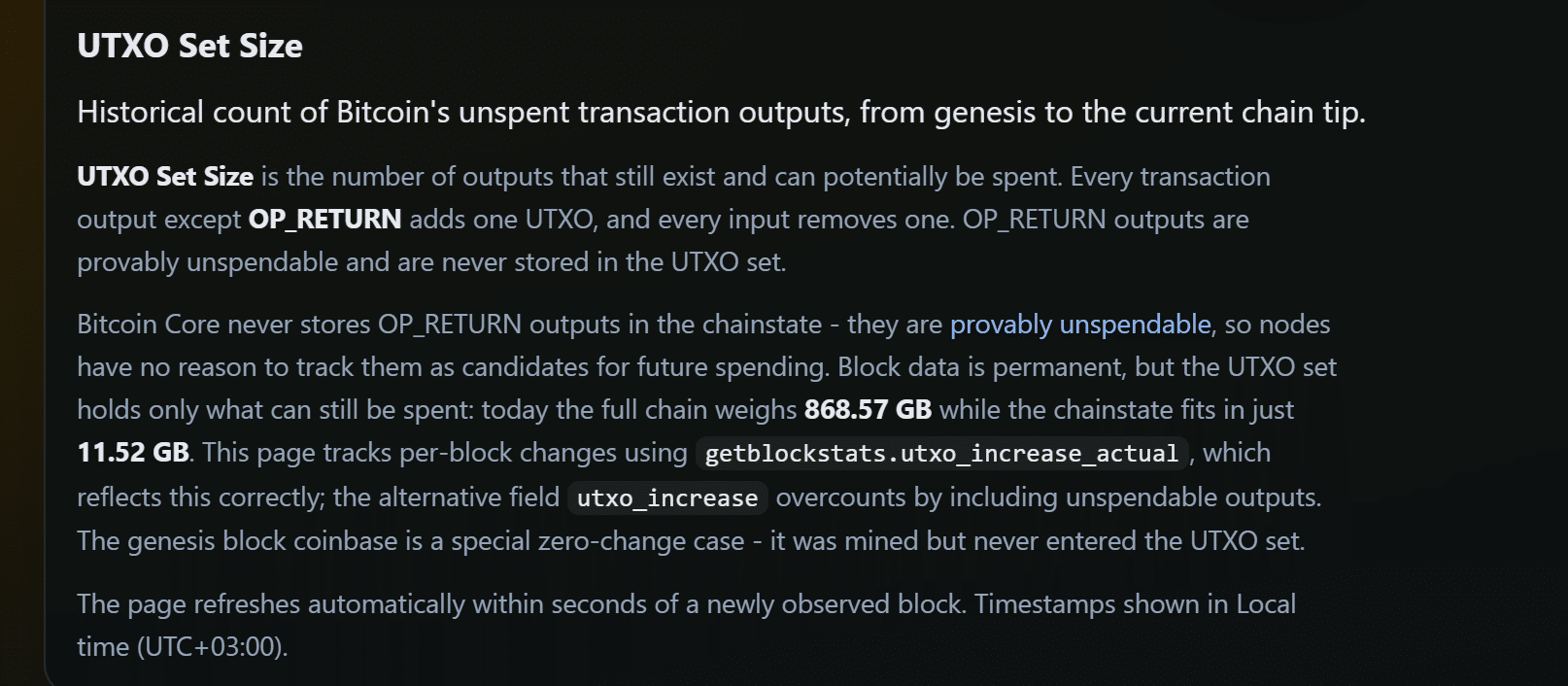
Normally, the UTXO database occupies roughly 11–11.5 GB, whereas Utreexo reduces locally stored information to under 1 KB. The trade-off comes through additional proof data during verification.
For Ethereum, a similar balance could keep frequently used information readily available while moving dormant records elsewhere. This would result in easing node storage without removing historical information.