How the Bank of Japan’s September interest-rate meeting will risk Bitcoin’s 21% rally
Could Japan’s rate hike threaten Bitcoin’s current 21% weekly rally?



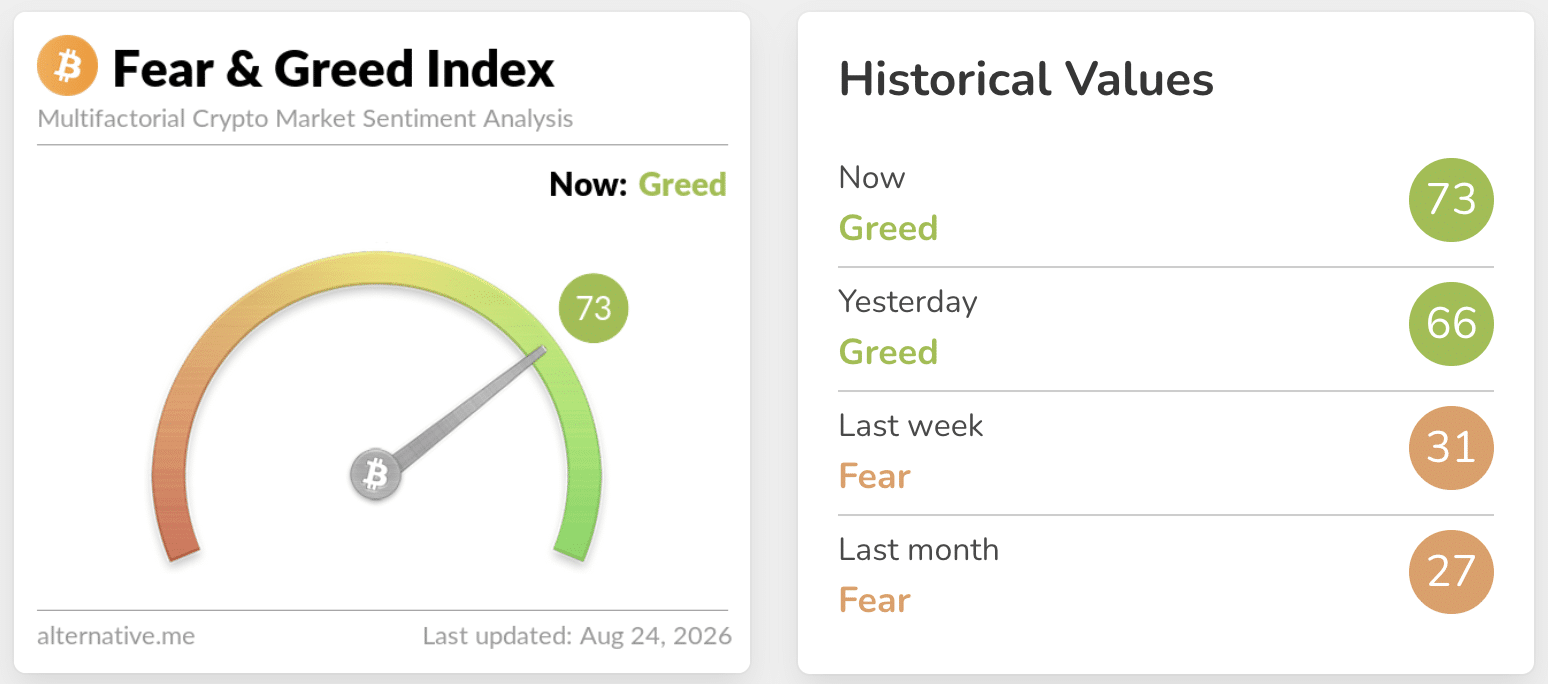
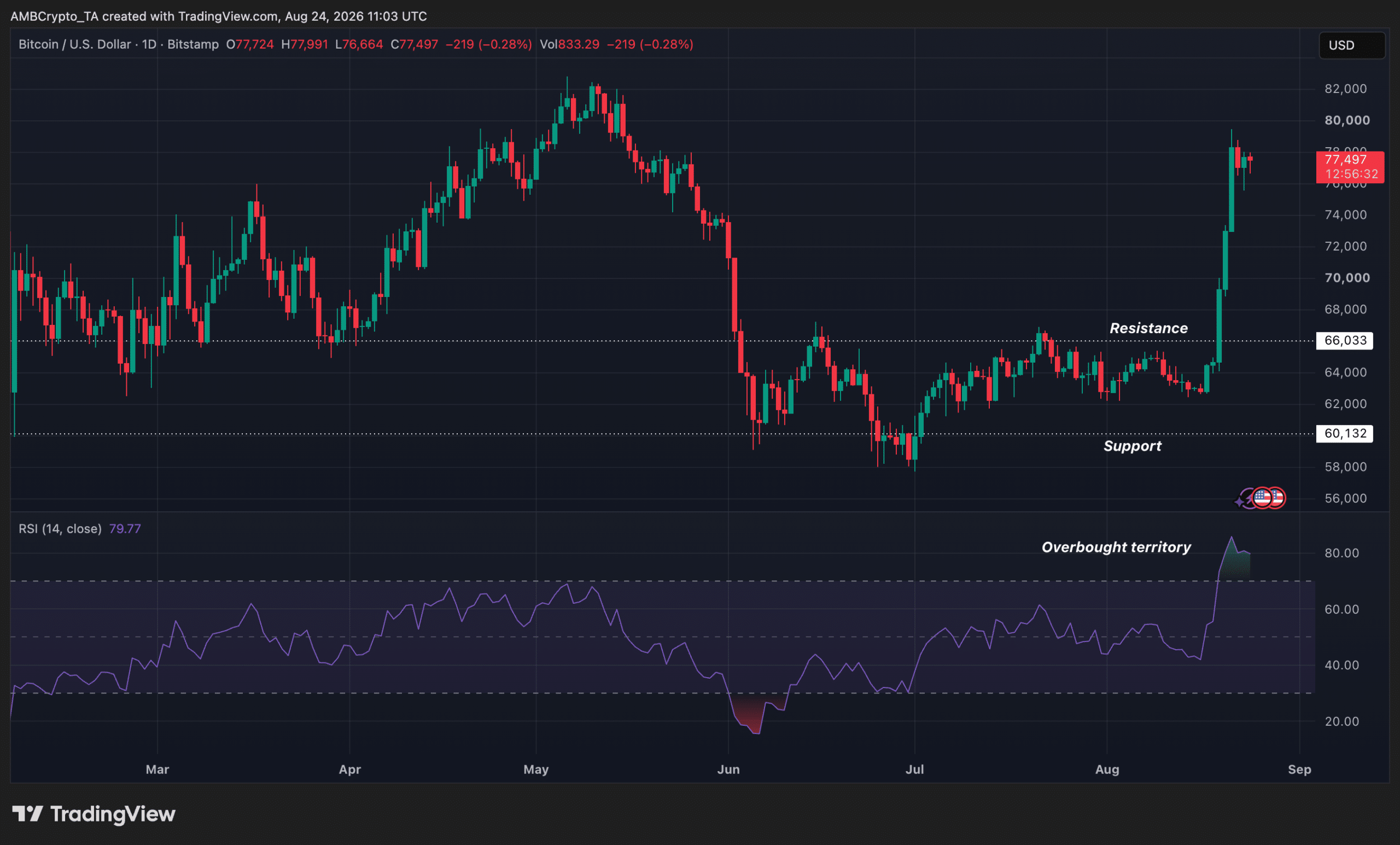
At press time, Bitcoin [BTC] was trading at $77,202.63 after a hike of over 21% in the past week. This shift has ignited fresh sentiments in the market, as confirmed by the Crypto Fear and Greed Index sitting at 73 in the greed zone.
For those unaware, the Crypto Fear and Greed Index jumped to 62 on the 20th of August, up by 16 points in a single day, as Bitcoin surged beyond $72,000.
However, the RSI lying in the overbought territory at the time of writing is hinting at a pullback from the sellers.
Will a Japan rate hike harm Bitcoin’s current rally?
This comes as the Bank of Japan (BOJ) prepares its financial markets for another interest-rate hike in September.
For those unaware, markets have increasingly started betting that the BOJ will raise rates at its policy meeting on the 18th of September, and several upcoming speeches from senior BOJ officials could either strengthen those expectations or weaken them.
This is important, as back in July 2024, there was a surprise hike that led to a sharp global market selloff. Hence, remarking on the same, Kento Minami, senior economist at Daiwa Securities, said,
The BOJ probably won’t explicitly say the next hike will come in September. Instead, officials are likely to indicate the need for an early hike by emphasizing upside inflation risks. Markets will take that as a nod for September.
Market bets
Learning lessons from the past, markets have sharply increased their bets on a rate hike.
Overnight-index swaps were pricing in around an 82% probability, up from roughly 23% before the July meeting. Traders are therefore positioning for higher Japanese rates, which can affect the yen, Japanese bonds, stocks, and global markets.
However, with this shift, Bitcoin and the wider crypto market fall under the bearish radar. But, with the currency still changing hands near the 160-per-dollar mark, the BOJ has some room to sound dovish without risking renewed depreciation.
Japan’s bond market adds further stress
This comes as the Japan’s bond market is already undergoing a major shift. For context, its 10-year government bond yield has risen to around 2.95%, the highest since 1996, as inflation and expectations of further BOJ tightening increase.
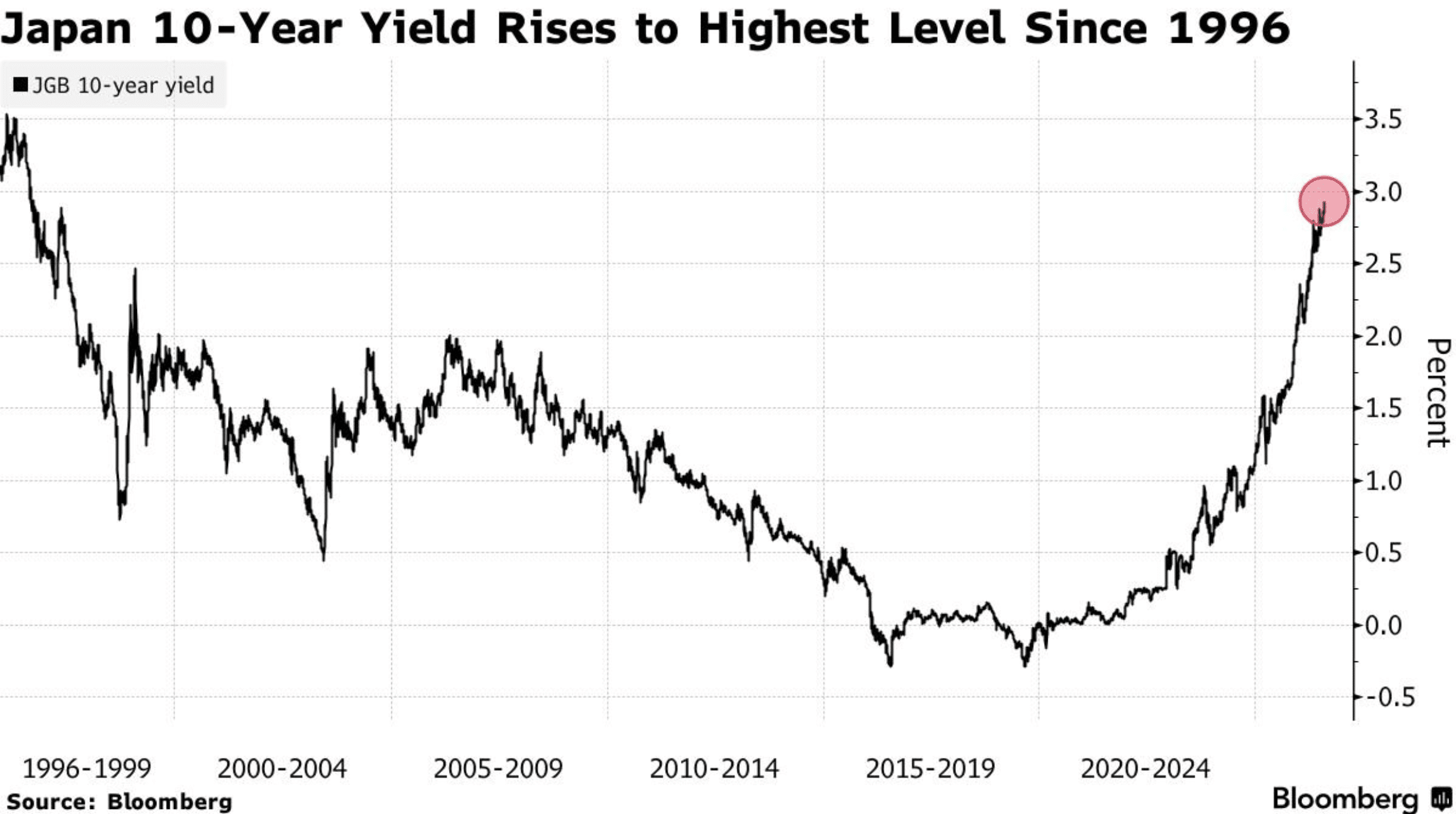
For decades, Japanese yields were extremely low, encouraging investors to put money into higher-yielding overseas assets such as U.S. Treasuries and European bonds. Now, rising JGB yields are making Japanese bonds more attractive, potentially reducing Japanese demand for foreign debt.
Remarking on which, Global Markets Investor noted,
That matters far beyond Japan.
So, if Japanese investors buy fewer U.S. Treasuries, Treasury prices could fall and yields could rise, increasing U.S. government borrowing costs. Higher Treasury yields can also raise mortgage and corporate borrowing costs and put pressure on U.S. stocks.
All in all, as Japanese rates and bond yields normalize, the effects could extend well beyond Tokyo and add another layer to global debt and market risks.
Ergo, the Global Markets Investor put it best when it noted,
The debt CRISIS is not just a U.S. story.
Final Summary
- The BOJ prepares its financial markets for another interest-rate hike in September.
- Japan’s 10-year government bond yield has risen to around 2.95%, the highest since 1996.