Tether faces crypto lawsuit over $42.4M in frozen USDT – Here’s why
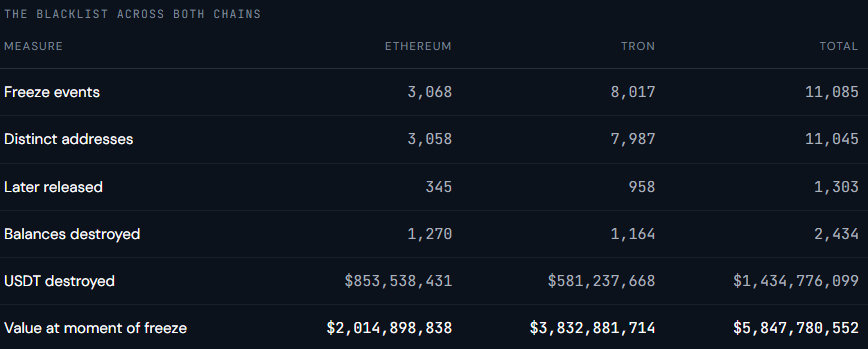
Tether freezes have surged to nearly $6 billion in 2026, mainly dominated by Tron.


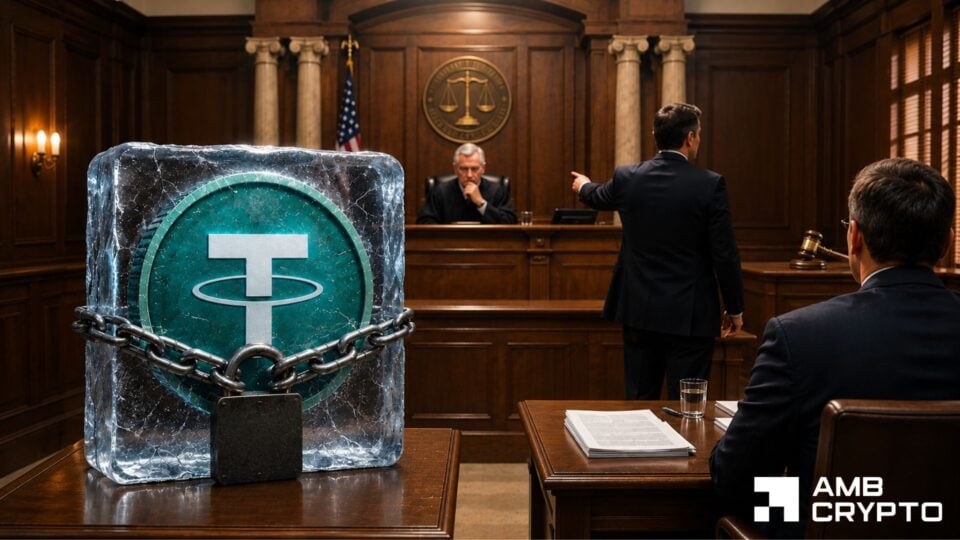
Tether’s USDT freezing spree is now under legal scrutiny after two Thai nationals sue the stablecoin issuer for locking their $42.4 million.
The lawsuit was filed on the 31st of August at the Southern District of New York (SDNY). According to the plaintiff, Nutthawat Rukthammachalern and Natthawat Kasamvilas, Tether has been driving deceptive USDT marketing and has profited from the frozen funds.
The duo added that Tether does not clearly state that it has arbitrary powers to freeze one’s USDT at a moment’s notice. Additionally, they claimed that the issuer has been earning interest from the reserves backing their frozen $42.4 million worth of USDT tokens.
The victims’ primary argument is that Tether froze their funds without a warrant or court order. This happened on 30th October 2026, resulting in the seizure of victims’ funds across 10 wallets on the Ethereum [ETH] network.
According to the defendants, Tether’s action occurred after an informal request by U.S. Homeland Security Investigations (HSI). But there was no immediate legal warrant or court order before the action.
Besides, the formal seizure warrant came only three months later, in February, tied to a pig butchering romance scam investigation in North Carolina.
As a result, the duo sought the court to declare Tether’s seizure had no legal basis and prevent it from destroying their USDT. Additionally, the victims want their funds, plus all earned interest income.
Unsurprisingly, the lawsuit has elicited mixed reactions from analysts and policy experts.
Is Tether or the U.S. government at fault for USDT freezes?
According to Austin Campbell, adjunct professor at Columbia Business School, money transmitting businesses (MSBs) have a “100% obligation to freeze” if they suspect illegal activity.
However, Campbell noted that ignoring such activity is what got Binance founder Changpeng Zhao (CZ) jailed. However, he cautioned the plaintiff that since the funds were tied to scams, they may have exposed themselves.
Well, this seems insane, and I would suggest these two gentlemen have probably put themselves in the crosshairs of US law enforcement…Not great!
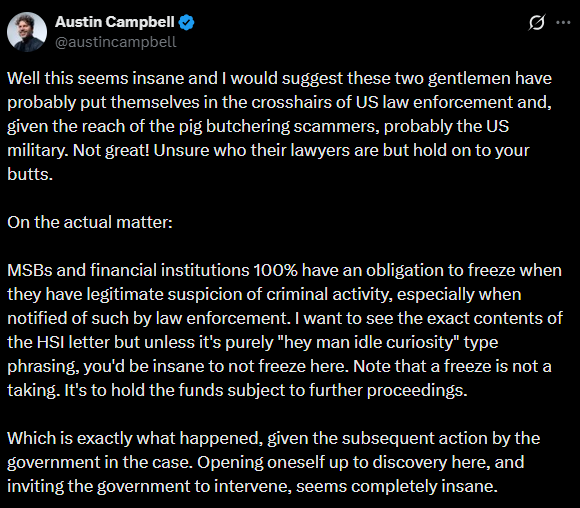
For Campbell, the victims should have sued the U.S. government, not Tether.
If the DOJ or HSI shows up and tells a bank to freeze your funds because they are criminal activity, you’re not going to have a cause of action against the bank. It will be against the government if they were grossly negligent or lied.
But another analyst viewed Circle’s slow response to freezes as a better approach.
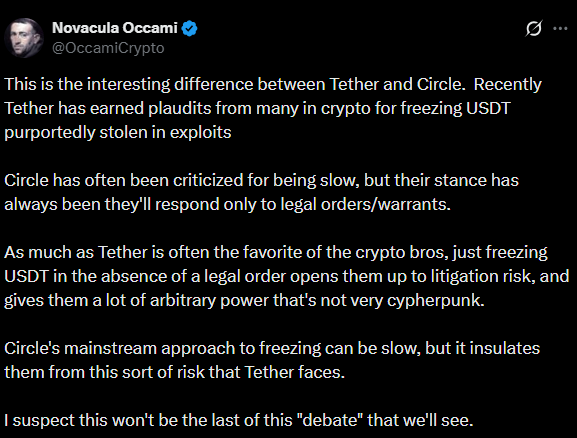
Therefore, it will be interesting to get the court’s judgment on this.
That said, stablecoins account for 84% of illicit crypto volume, and Tether has been actively trying to resolve part of it.
As of mid-August, Tether has done over 3000 freezes, translating to $5.8 billion across Tron and Ethereum. Additionally, over $1 billion has been linked to OFAC sanctions against Iran.
Final Summary
- Tether has been sued for a $42.4 million USDT freeze and profiting from the interest income on locked funds.
- Tether has frozen nearly $6 billion in 2026 amid regulatory pressure from the U.S.