Bitcoin leverage cools after $82K retest – Miners show little urgency to sell
Bitcoin’s pullback tests whether cooling leverage and subdued selling can support a healthier recovery.



Bitcoin’s rebound toward its May highs has drawn leverage back into the market, making derivatives increasingly important to the recovery.
As Bitcoin [BTC] retested $82,000, Binance Open Interest (OI) jumped nearly 8% within 24 hours and briefly exceeded $10 billion.
In other words, the move up was being driven by leverage versus just Spot demand.
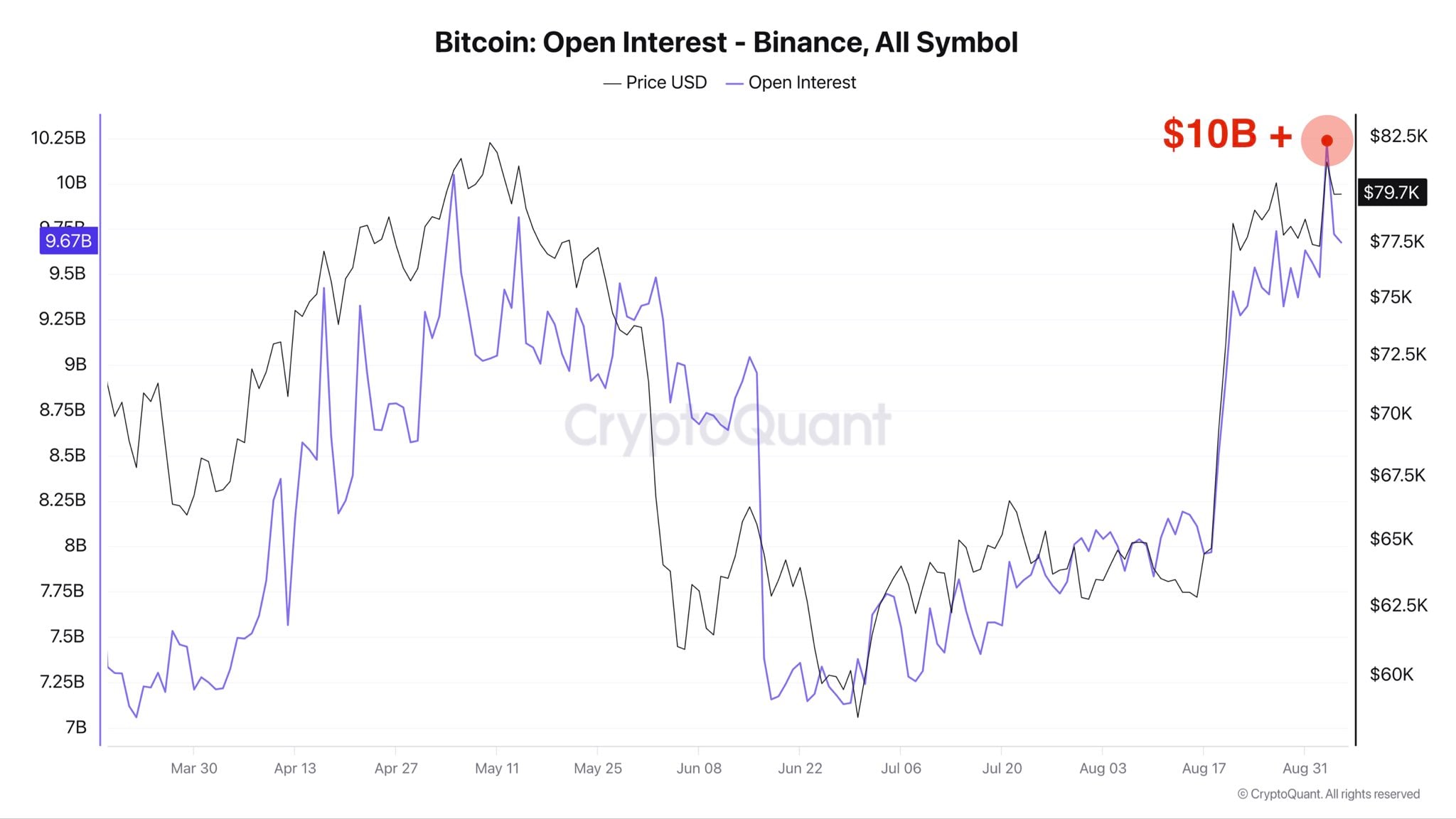
Crucially, BTC-denominated OI also climbed to 125,830 BTC, confirming traders opened fresh positions rather than merely benefiting from higher prices.
As a result, this speculative increase in Open Interest propelled Binance’s overall OI dominance to 37.1%, thereby focusing even more leverage on one exchange, which will be capable of amplifying price movements via liquidations much faster.
BTC, however, fell under $80,000 after Binance’s OI cooled off to $9.67 billion. Thus, there may already have been some unwinding of excess leverage.
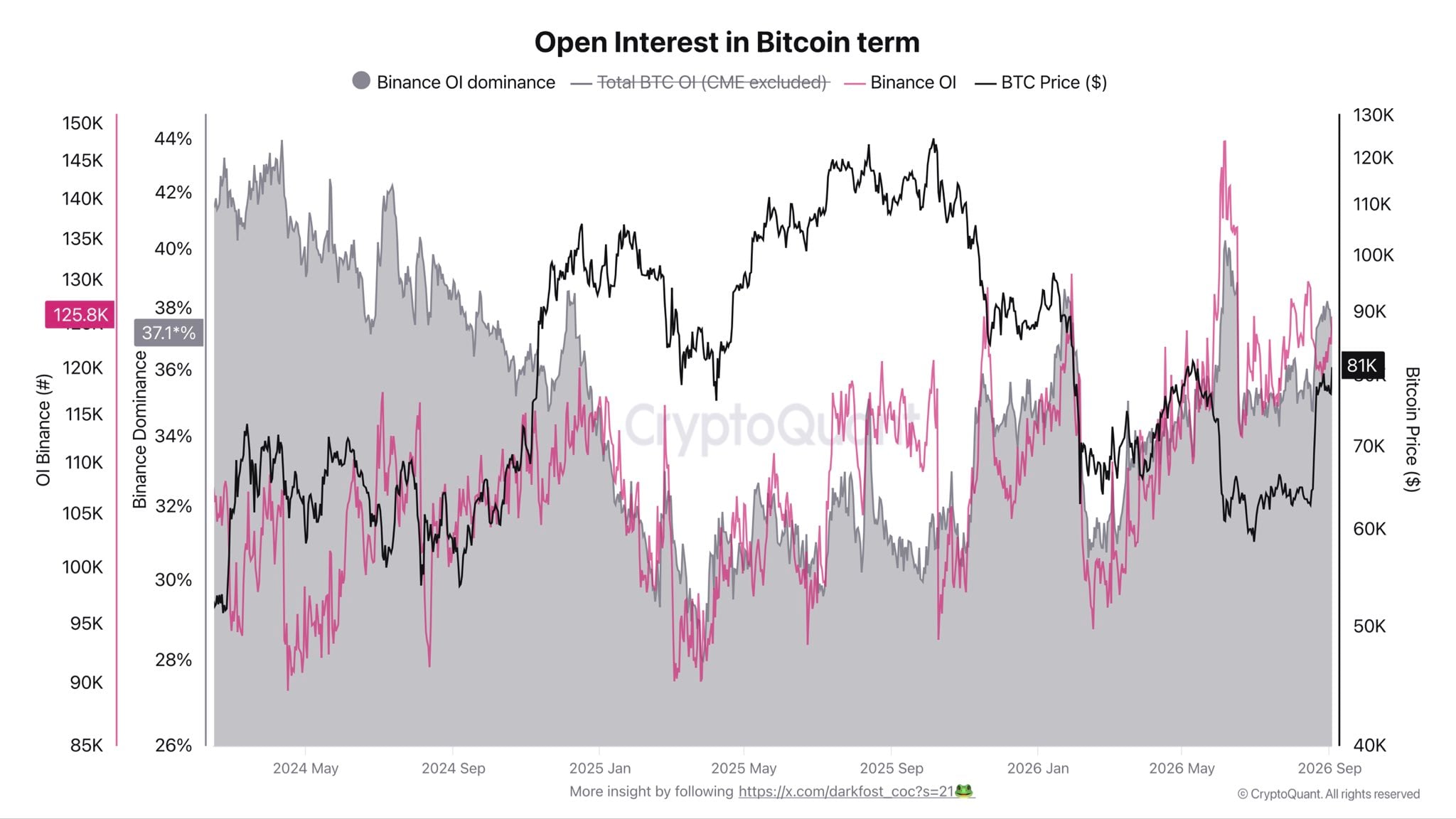
That reset could improve the rally’s structure by reducing liquidation risk. Still, Futures demand cannot sustain recovery alone.
Spot buying strength combined with stable OI levels would create healthier confirmation. Conversely, if futures demand increases without spot participation, then Bitcoin may be vulnerable to another sharp reversal.
With leverage already cooling, Bitcoin’s next support may come from miners showing little urgency to sell into the recovery. The Miners’ Position Index (MPI) sits near neutral at -0.036.
This is much lower than the high of 2.0, which is typically seen during large-scale transfers.
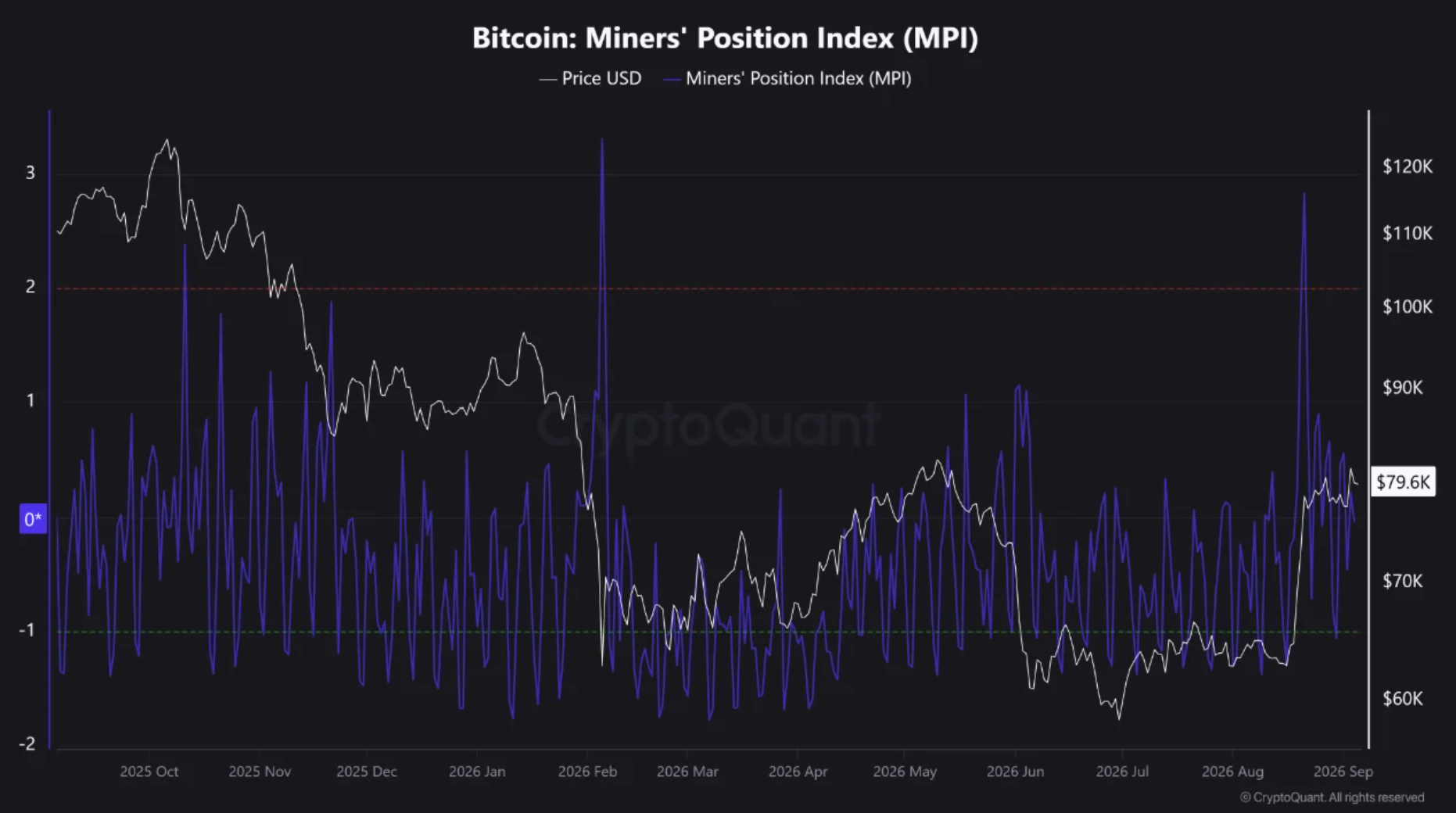
Notably, the metric briefly surged toward 2.8 in August before quickly retracing to 1. This suggests that the distribution spike failed to develop into sustained pressure.
Since then, the indicator has fluctuated around zero. This simply shows miners are neither aggressively distributing nor accumulating through exchange transfers.
For Bitcoin, this leaves demand increasingly important. Persistent neutral MPI would support stabilization, while another sustained move above 2.0 could introduce fresh supply and weaken recovery attempts.
Bitcoin-gold correlation nears six-year high
With immediate supply pressure subdued, Bitcoin’s broader market relationship is also shifting toward a more defensive profile. Its 90-day gold correlation has climbed toward +0.50, more than doubling from early-2026 levels and approaching its 2020 peak.
Meanwhile, the Nasdaq correlation has fallen toward +0.30, suggesting Bitcoin is moving less closely with technology-driven risk appetite.
In fact, the divergence between the Nasdaq price correlation and gold price correlation expanded Treasury long-dated buybacks, renewing concerns around liquidity and currency debasement.
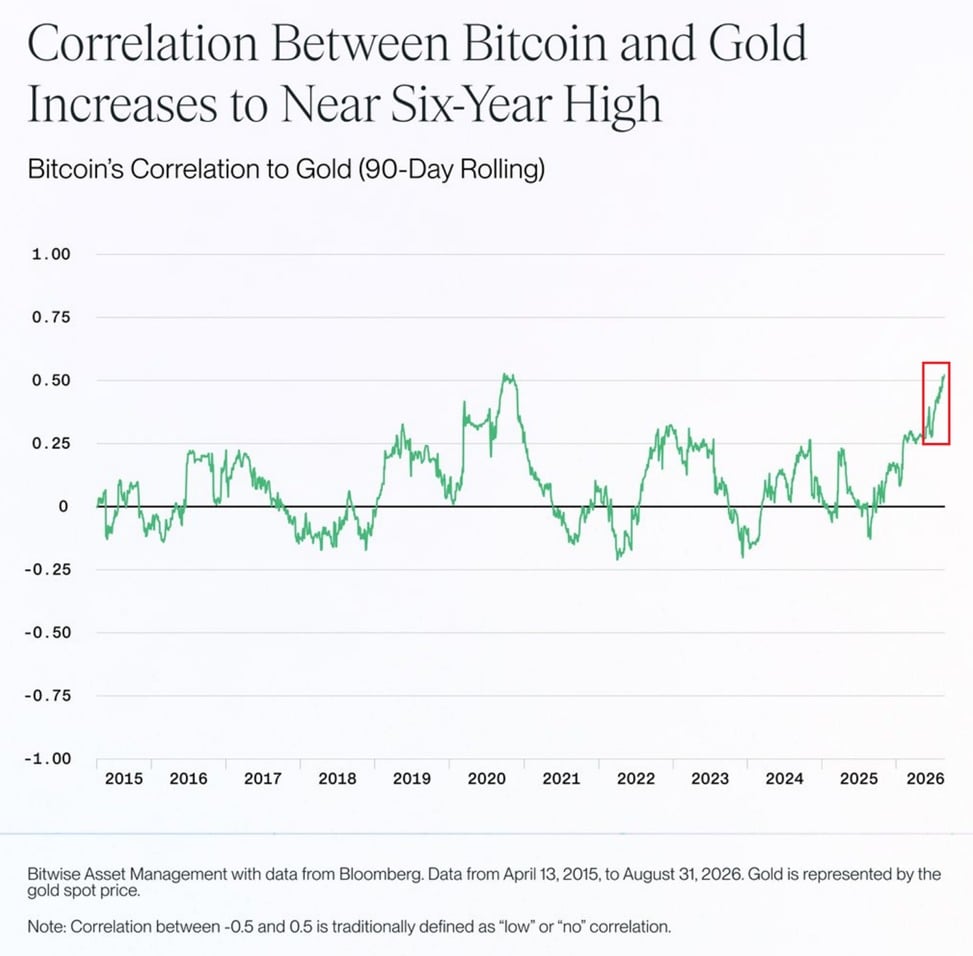
As such, investors are beginning to treat Bitcoin similarly to gold as a monetary hedge. However, correlation alone cannot establish lasting demand.
Therefore, further validation of this hedge trend will need to come from the Spot market participation in order for the narrative to hold true
Yet, holding near +0.50 alongside improving spot flows would reinforce the hedge narrative, while renewed Nasdaq alignment could restore risk-asset sensitivity.