Skip to content
Active Currencies: 21,260
Market Cap: $2.590T
Bitcoin Dominance: 58.48%
24h Market Cap Change: $-6.57

Tokenized funds expand across chains, yet liquidity remains fragmented – Why?

Tokenization is expanding across markets and blockchains, but institutional adoption still needs deeper liquidity.

UK tokenization advances beyond pilots as funds expand across blockchains - Can institutions keep up?

As tokenized markets continue gaining traction, the UK is moving beyond pilots and toward permanent financial infrastructure.

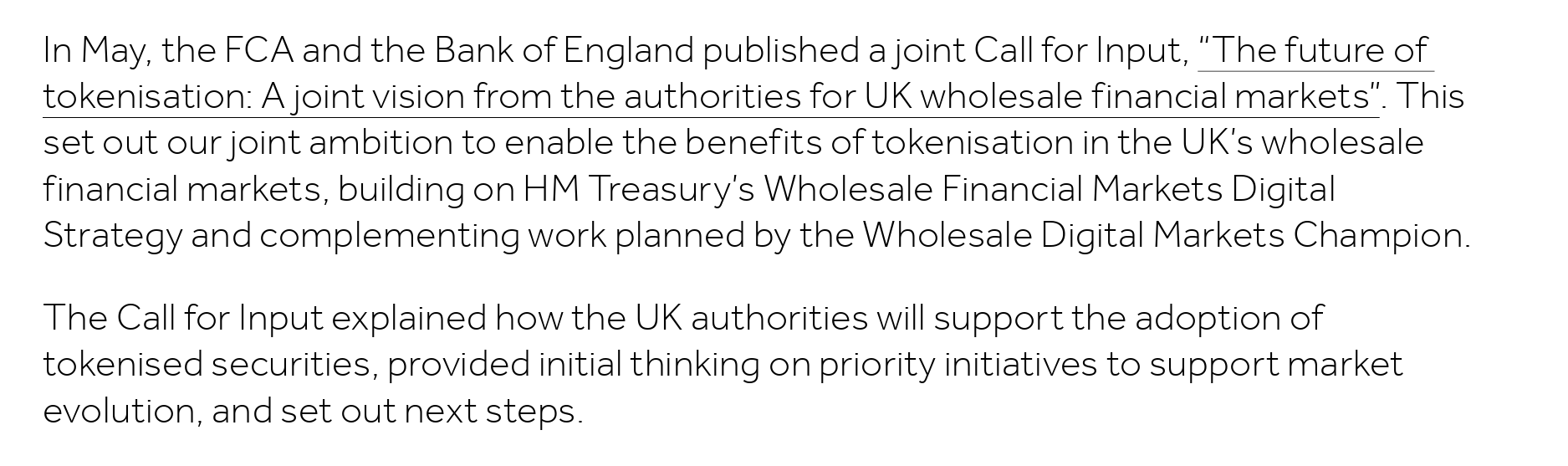
In May, the FCA and Bank of England set out this direction through a call for input. The response drew 123 submissions, showing industry interest.

Now, firms are progressing through the Digital Securities Sandbox. This includes key players such as HSBC, Euroclear, and LSEG. Their work tests tokenized securities across issuance, trading, and settlement under controlled limits.
Source: FCA

According to the FCA, the framework will also expand settlement assets eligible to be qualified as stablecoins. This will create new ways for tokenized markets to function. Meanwhile, planned synchronization infrastructure targets 2028, linking tokenized ledgers with existing payment systems.

In contrast to other approaches, this strategy prioritizes efficiency in settling transactions, reducing risks associated with using tokens as collateral, and increasing efficiency in markets rather than attempting to create speculative opportunities for investors.

Therefore, it creates a much clearer path for institutions to adopt tokenization.

Tokenized funds expand across chains
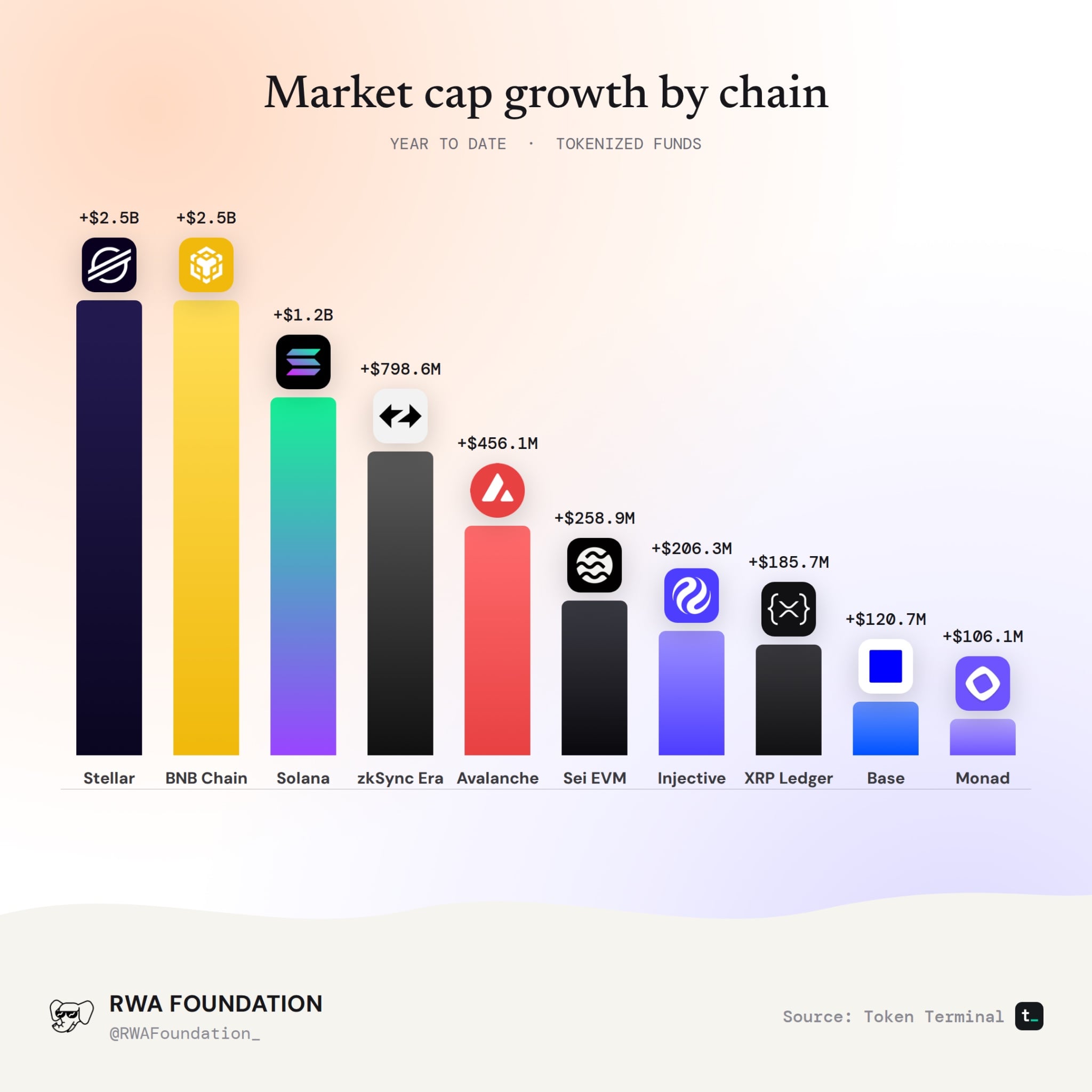
Rather than staying concentrated on a few networks, this is a sign that tokenized funds will be able to become a multi-chain market.

Meanwhile, Stellar [XLM] and BNB Chain both increased their market caps by an additional $2.5 billion in year-to-date growth, while Solana [SOL] gained $1.2 billion.

zkSync Era and Avalanche followed with $798.6 million and $456.1 million. With over ten networks represented, it appears that issuers are now widening distribution instead of relying on one settlement network.

This provides institutions with more alternatives for custody, access, and settlement.

Source: RWA

However, the uneven growth also points to fragmented liquidity across networks. If capital remains split between chains, larger tokenized funds may still struggle to build deep secondary markets.

The next phase therefore depends on whether adoption translates into stronger cross-chain liquidity.

Tokenization faces its institutional utility test

The next test is whether this growing market can support real institutional activity. Rising trading volume alone does not prove that tokenized assets improve financial markets. Institutions must use these assets for settlement, collateralization, and lending.

So far, those uses remain limited. Most all activity still occurs on crypto-native exchanges. Settlement and custody remain tied to each individual platform. This limits how easily an institution can move or pledge their asset across different markets.

Restrictions between chains are additional barriers, especially when there are disparities in KYC rules and transfer permissions. As a result, adding more chains can expand access without creating deeper liquidity.

The shift becomes meaningful when tokenized assets move through regulated custodians and settlement systems. Until then, rising AUM may show adoption but will not fully demonstrate institutional utility.


Final Summary

  • FCA and Bank of England are moving UK tokenization toward permanent financial infrastructure.
  • Tokenized funds are spreading across chains, but fragmented liquidity still limits institutional utility.

Disclaimer: AMBCrypto's content is meant to be informational in nature and should not be interpreted as investment advice. Trading, buying or selling cryptocurrencies should be considered a high-risk investment and every reader is advised to do their own research before making any decisions.

Muriuki Lazaro

Journalist

Muriuki Lazaro is a on-chain data analyst with a B.Sc. in Data Science. Muriuki specializes in dissecting complex on-chain data into clear and accurate insights for readers in the crypto ecosystem, with a particular focus on Bitcoin.

AMBCrypto was founded in 2018 with a mission to simplify and bring the latest blockchain and cryptocurrency news to our readers. We have quickly grown into the digital news source for an emerging generation of cryptocurrency enthusiasts, reaching more than a million readers on a monthly basis, across the globe.