The $71B mess: How prediction markets became the U.S. Supreme Court’s problem
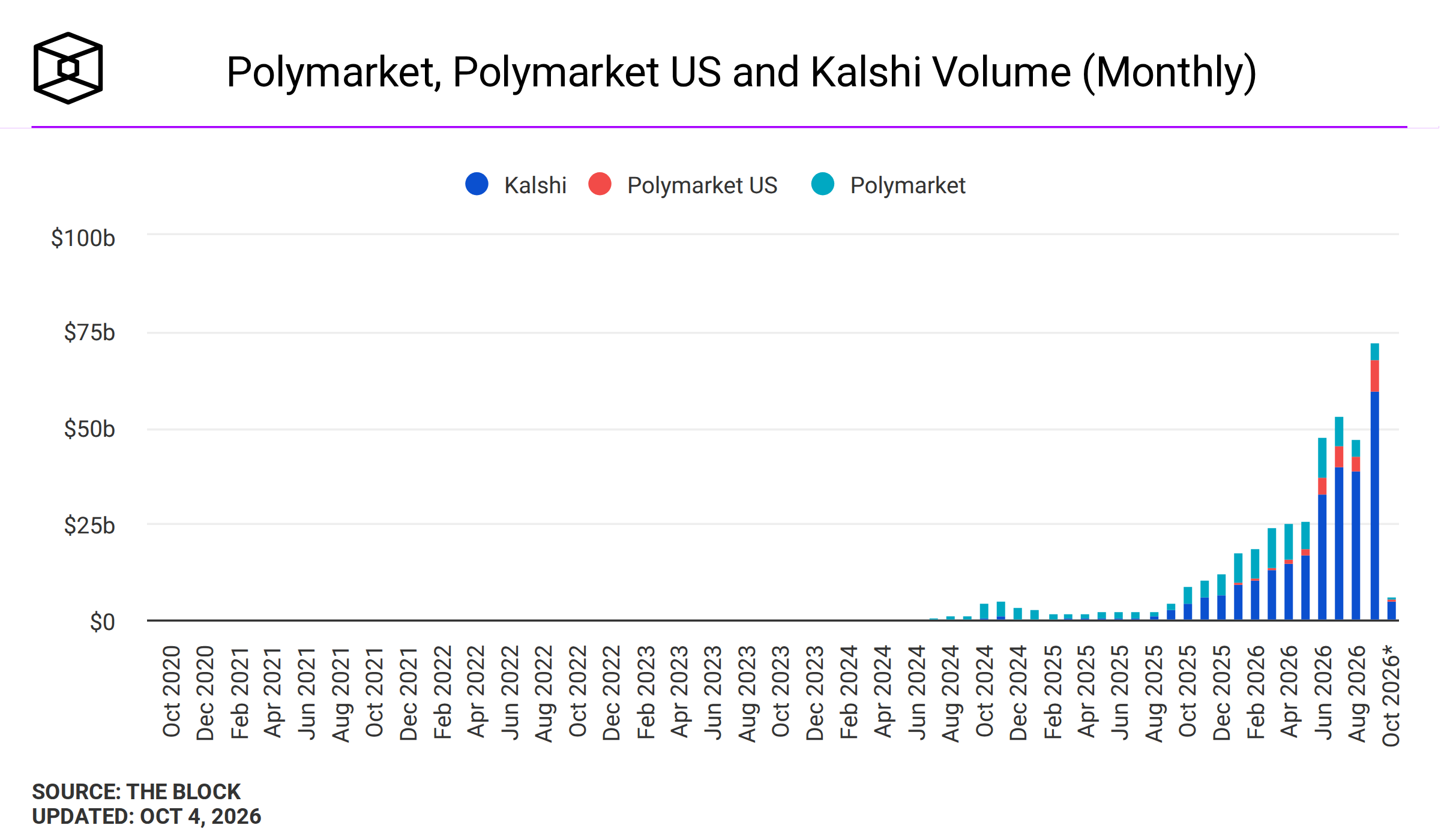
Prediction markets' monthly volume hit a record high ahead of the U.S. November midterms.


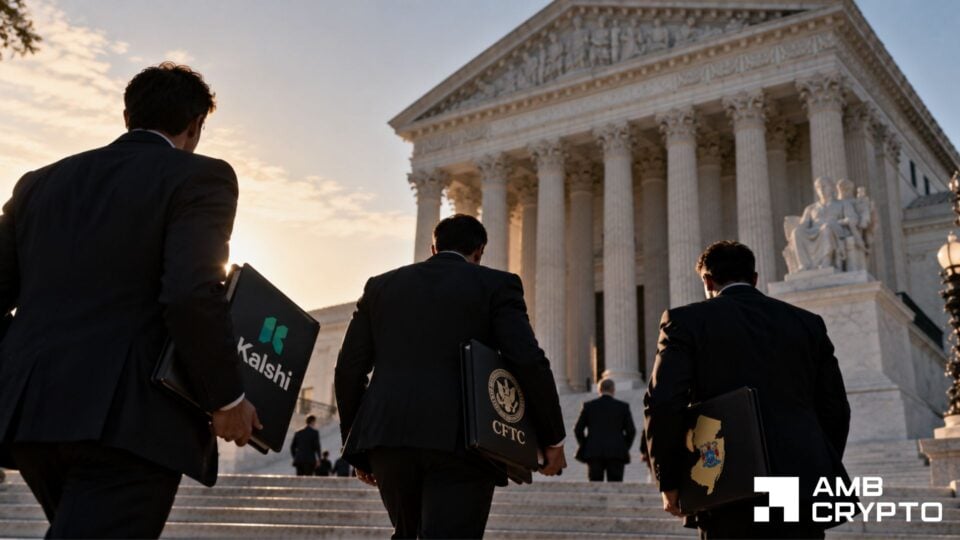
The prediction markets fight has escalated to the U.S. Supreme Court (SCOTUS) amid conflicting rulings by lower courts over Kalshi’s sports event contracts.
On the 3rd of October, two groups representing gambling regulators, IAGR (International Association of Gambling Regulators) and North American Gambling Regulators Association (NAGRA), asked the Supreme Court to intervene in the fight.
Conflicting appellate decisions have created uncertainty as to whether regulators may apply state gambling laws to the same sports event contracts while related litigation is pending in other jurisdictions.
IAGR and NAGRA’s request was in support of the formal appeal made by the state of New Jersey on the 2nd of September. New Jersey sought SCOTUS to clarify the role of state gambling laws and overturn the ruling that sided with Kalshi and the CFTC over sports event contracts.
Courts’ different read on prediction markets
The split deepened on the 2nd of October. An Illinois federal district court sided with Kalshi, Coinbase, and the CFTC against the Illinois state officials. In the ruling, Judge Martha M. Pacold found Kalshi’s event contracts are likely swaps and fall within the Commodity Exchange Act (CEA).
Many of the financial instruments at issue are likely swaps as defined by the Commodity Exchange Act—they just happen to be swaps that people find entertaining and fun.
Most states believe prediction markets, especially contracts tied to sports events, fall within their local gambling laws. In contrast, the CFTC claims sole oversight, noting that the CEA preempts state laws for its licensed entities such as Kalshi.
Reacting to the Illinois update, Daniel Wallach, a sports betting and gaming lawyer, said,
This creates an intra-circuit split with the Wisconsin decision, now on appeal to the CA7.
Notably, in September, Kalshi sued Ohio and Tennessee but was dealt a blow as the court ruling was pro-state. The ruling noted that sports-prediction contracts are not financial swaps and that states’ gambling rules can be applied.
However, in separate cases in New Jersey and Illinois, the courts upheld the CFTC-led federal oversight. The conflicting readings by the lower courts on the same prediction market question, thus, create uncertainty that the concerned parties now want the Supreme Court to clarify.
Prediction markets have grown into a multi-billion-dollar market. In September alone, Polymarket and Kalshi collectively did a record $71B volume. But the growth has attracted insider trading and triggered a probe by Congress into the top prediction market firms.
Final Summary
- The state-Kalshi fight over prediction markets is heading to the Supreme Court
- Prediction markets’ monthly volume (Kalshi and Polymarket) crossed $70B for the first time.