U.S. crypto rules shift as FinCEN drops wallet and mixing proposals
U.S. crypto rules are changing as regulators ease self-custody requirements and reshape market oversight.


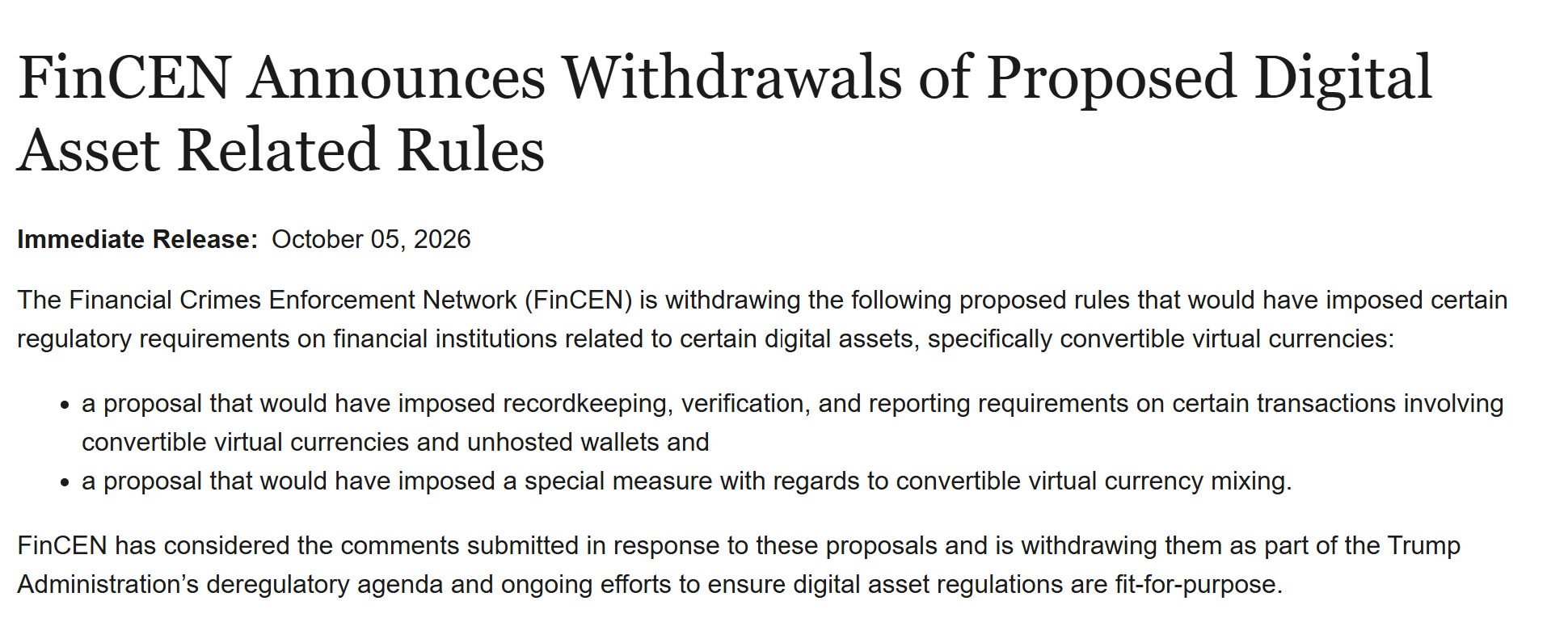
The Financial Crimes Enforcement Network (FinCEN) has withdrawn two proposed regulations regarding cryptocurrency. This may signal a shift toward a more measured approach to crypto regulation in the United States, as regulators reassess proposed rules in light of industry feedback.
According to FinCEN, withdrawing these proposals was part of an ongoing process to develop better rules that are relevant to regulating cryptocurrencies with regard to public comment.
One proposal that was withdrawn focused on transactions with non-hosted wallets, while another addressed the practice known as crypto-mixing.
The “wallets” proposal would have potentially required financial institutions to report all transactions involving a customer’s unhosted wallet that were greater than or equal to $10,000.
Additionally, if the transaction was greater than or equal to $3,000, the institution would have been required to maintain records related to the transaction.
Since neither of these proposals resulted in final rules, their withdrawal will not result in a reduction in current compliance obligations. Instead, the withdrawal prevents these new proposed requirements from developing into future rules for financial institutions.
Thus, as a result of this action, there is reduced uncertainty related to regulation of self-custody, and existing Anti-Money Laundering (AML) sanctions requirements remain intact.
CFTC’s broader crypto market framework
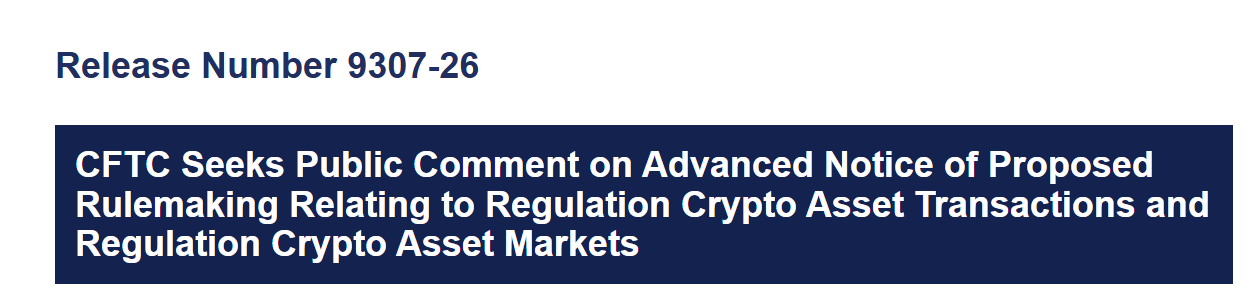
Building on FinCEN’s efforts to address potential compliance friction, the CFTC is now moving toward clearer rules for crypto markets. The CFTC has established a public-comment period for retail crypto transactions under Section 2(C)(2)(D).
This is an initial step toward establishing a national framework for regulating U.S. crypto markets.
Rather than targeting individual products, the CFTC seeks input on a broader national framework. That framework would include defining a new market category for cryptocurrencies and other digital assets.
Still, it will simultaneously provide a framework to prevent abusive practices and establish minimum compliance requirements.
Moreover, proposed rules could require customer-asset segregation, capital safeguards, anti-money-laundering controls, and proof of reserves. The CFTC also intends to accept external wallet deliveries within 28 days as evidence of “actual” delivery.
Therefore, the process could give regulated platforms a clearer path to offer crypto markets, with public comments due within 60 days.
Will the reset reshape crypto markets?
The next question is how these rules could reshape access to leveraged crypto markets. Under the proposed framework, platforms offering margin, leverage, or financing could enter a dedicated federal registration pathway.
That route would require stronger controls around customer assets, proof of reserves, and market conduct. Moreover, registered futures commission merchants could become the main intermediaries for covered retail transactions.
This would shift compliance toward platforms that take greater responsibility for customer trading and asset handling. Meanwhile, pure spot markets would remain outside this proposed category, preserving a separate regulatory path.
Therefore, the framework could create a clearer divide between ordinary crypto trading and higher-risk leveraged activity, giving regulators greater oversight where customer exposure becomes more complex.
Final Summary
- U.S. crypto regulation shifts as FinCEN withdraws proposed unhosted-wallet reporting and crypto-mixing rules.
- U.S. crypto markets face a new CFTC framework for retail crypto transactions and leveraged trading.