IMF backs tokenized stocks’ 24/7 trading appeal but warns of liquidity risks
IMF wants clear policy frameworks, connected liquidity, and monitoring to scale tokenized markets globally.


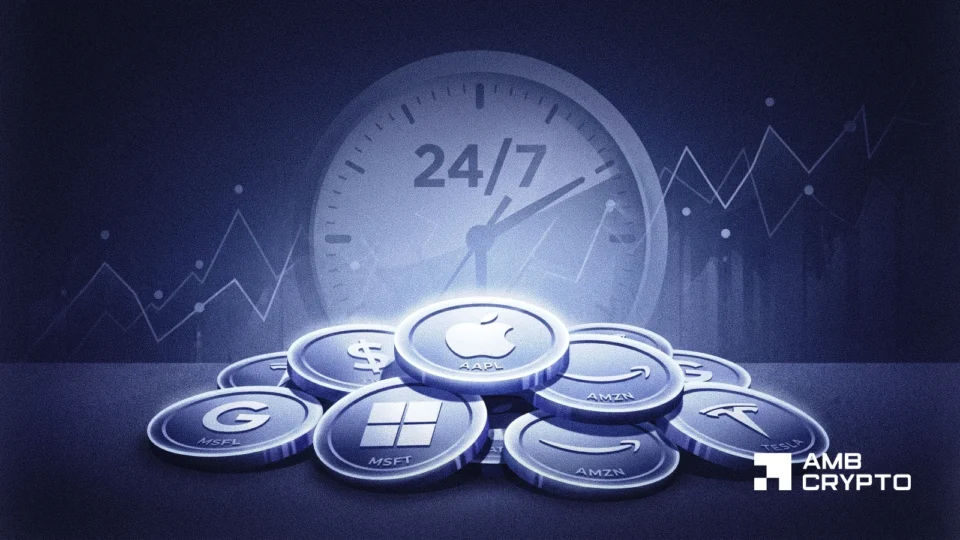
The International Monetary Fund (IMF) has hailed the utility of tokenized stocks in round-the-clock market access. In a recent report, the IMF noted,
More than half of trading in tokenized equities takes place outside regular market hours. The demand for 24/7 access is real.
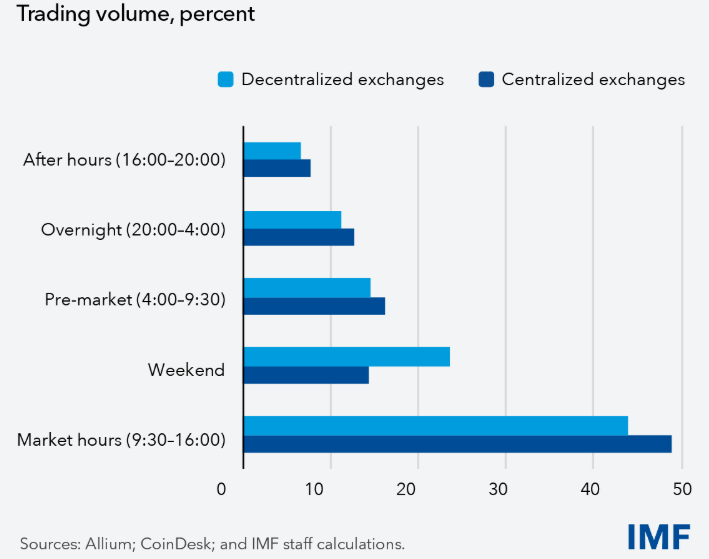
Tokenized securities are on-chain representations of traditional stocks and other physical assets. They allow users to trade them without the need for a brokerage account.
Beyond round-the-clock trading, the IMF also noted that tokenized securities trading involves sizes smaller than one share, suggesting fractional ownership uptake. Simply put, it allows for retail participation in financial markets with lower entry costs.
For his part, Bitwise CIO Matt Hougan billed the IMF’s coverage as bullish. He added,
I did not have the IMF pumping tokenization on my 2026 bingo card.
IMF on potential tokenized securities risks
As bullish as the IMF may be, it still raised some reservations that need improvement in the segment.
The challenge is building markets that are also deep, liquid, and resilient. Tokenized markets today remain relatively illiquid and exhibit higher volatility than their traditional counterparts.
Current tokenized markets, including credit, commodities, and stocks, account for $60B in supply. In comparison, the traditional global market is worth $300T in assets. This may be further evidence that there is room for growth.
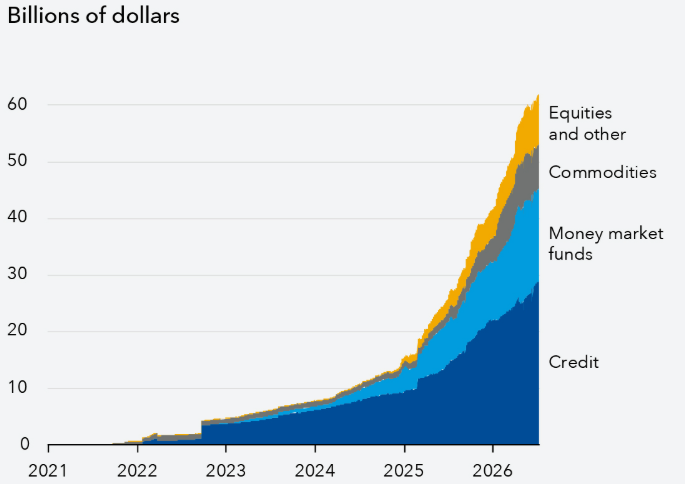
While the growth potential is promising, the IMF also noted that issuance and liquidity are fragmented. The issuance is dominated by the U.S and a few major offshore jurisdictions.
On liquidity, the products are siloed across select crypto platforms and networks that do not communicate with each other. According to the IMF, these factors could derail tokenized markets from fully scaling.
Fragmentation across various platforms, and the lack of both interoperability and common settlement assets undermine the network effect that could help tokenized markets grow faster.
The IMF has always echoed the potential risk the segment could pose to global financial market stability if not well legislated and monitored.
To balance the risks and advance the segment, the international lender called for proactive policies across countries. These would include clarifying legal rights linked to tokenized assets.
Tokenization may yet transform finance, but its future will be determined less by technological possibilities than by policies that ensure market depth, trust, and sound safeguards.
The U.S. has already clarified some of the rules tied to the sector and has even launched an ‘innovation exemption’ to scale and export its financial markets. Other jurisdictions such as the EU are also following the United States’ steps.
Final Summary
- IMF believes tokenized securities satisfy the growing demand for 24/7 trading.
- Still, the global lender claimed the sector needs proper policy and removal of liquidity fragmentation for it to scale.