Google tests crypto custody amid rising security hacks: ‘Our biggest launch to date!’
Wallet key compromise contributed to over half of crypto hacks.


Google is testing its crypto custody solution for institutions amid rising security risks that have dented users’ trust. Dubbed Google Multi-Party Computation (MPC), the solution is scheduled to be commercially available for the general public by early 2027.
But the idea behind Google’s MPC isn’t unique or new. It involves splitting components of a key across various infrastructure systems or teams to prevent a single point of failure. That’s what Coinbase Custody, BitGo, Fireblocks, and other institutional custody providers use.
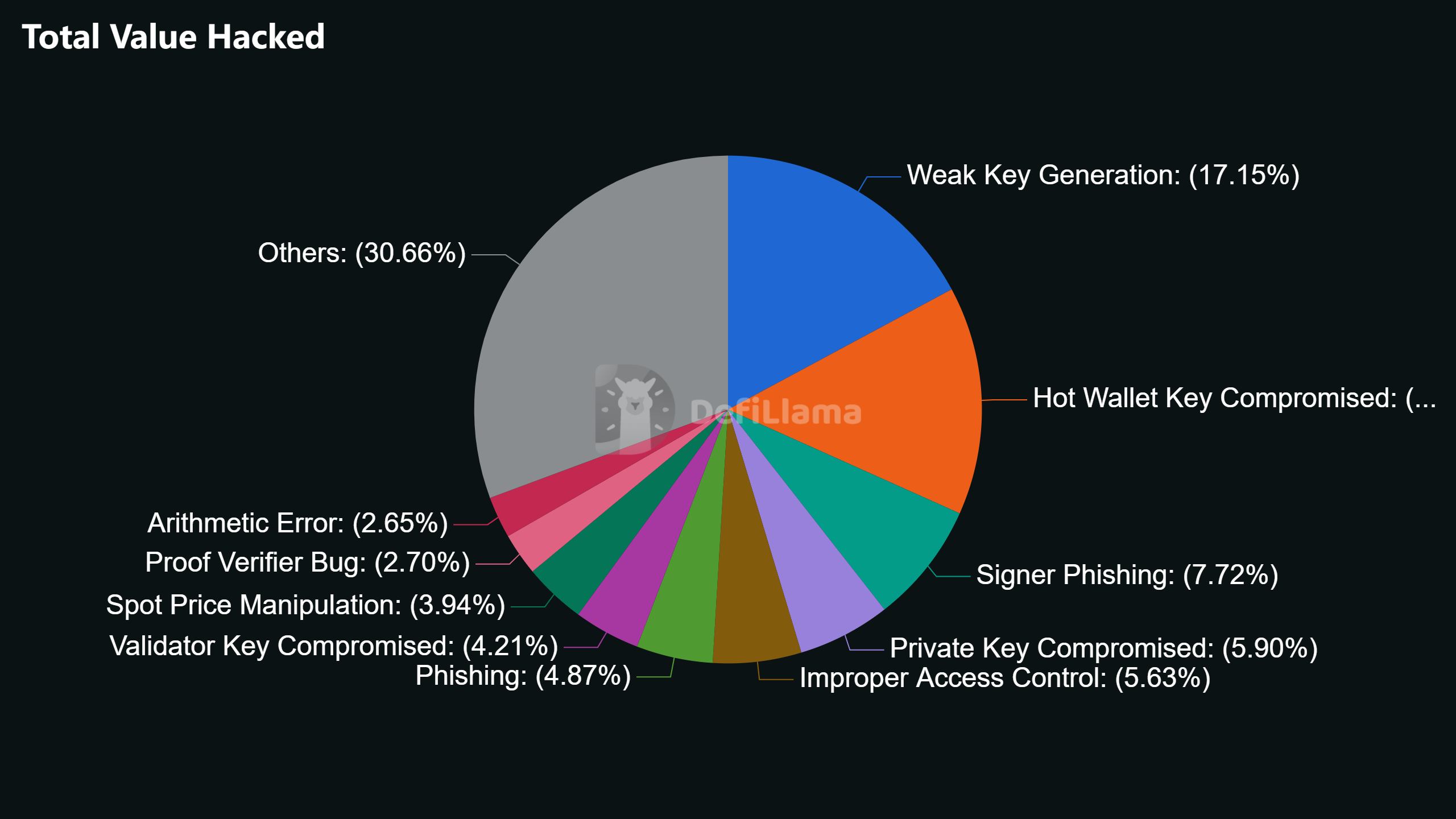
One needs keys to sign off transactions between wallets or even for validator operations. Some of the systems run hot wallets (online), while some are compatible with cold wallets (offline). Still, wallet key compromise remains the largest attack vector, contributing to more than half of crypto hacks.
Can Google rebuild trust in crypto custody?
That’s over $8B in the past two years. In particular, Bybit’s $1.5B exploit in 2025 involved its Safe{Wallet} cold storage infrastructure system. Coldcard, a hardware wallet provider, also suffered over $100M in losses across several wallets due to a firmware vulnerability.
Fireblocks, another key institutional custody provider, has been flagged for a bug that can compromise its MPC design and expose keys.
Ledger has also experienced a massive supply chain attack, with victims losing +$100M. Other wallet providers such as Keystone, Foundation, and Trezor have also suffered data breaches, which elevate the risk of physical attacks and kidnappings against victims.
And AI advances and quantum breakthroughs are escalating the risks further, putting crypto investors on edge. In short, trust in current crypto custody systems is largely fractured.
But Google has pitched its MPC as the best way to address some of these risks. According to the tech giant, its MPC ensures keys are split between Google Cloud, users’ on-premises hardware, and another third party like AWS (Amazon Web Services).
To minimize spoofing (UI/API) at the application layer, Google MPC is isolated in a hardened confidential space with policy checks before transaction approvals. Additionally, it is fast (supports 100-microsecond signing) and provides pathways to upgrade to post-quantum security at the infrastructure level.
Nalin Mittla, Google Cloud’s digital assets lead, added that
This is our biggest launch in the digital assets space to date. If you need to custody crypto at scale, Google MPC provides security without trading performance.
For his part, Rich Widmann, head of strategy for Web3 at Google, billed the update as a way of rebuilding trust.
Every transaction in digital assets begins and ends with custody. And we’re excited to extend our work to the most critical part of the stack – trust.
Google has been providing node support to blockchains for years. Last year, it announced plans for its own blockchain designed for payments and tokenized assets. Still, cloud outages will be one of the shortcomings of its MPC.
Final Summary
- Google is testing a crypto custody solution, saying it is critical to maintaining trust in the sector
- More than half of crypto hacks (+$8B) are due to key compromise