Binance says 95% of hack losses covered – Can users withdraw normally?
Binance tapped its liquidation safety net to replace stolen assets. How should that reserve be rebuilt?



Binance said it has covered $6B, or 95% of the $6.34B in lost funds, and resumed withdrawals on Sunday, the 1st of November.
How did Binance cover the stolen funds?
The coverage funds have come from three sources in a record 3 days since the hack on Thursday, the 29th of October. It took $581M (7,499 BTC) from the Secure Asset Fund for Users (SAFU), an emergency reserve fund. Binance promised to replenish the SAFU fund to $1B.
Similarly, it pulled about $425M from the Futures Insurance Fund, designed to cover liquidation risks in its derivatives segment. Binance said it also used some cash from its corporate balance sheet for the coverage. But it didn’t specify if the remaining $4.7B shortfall came from the corporate balance sheet.
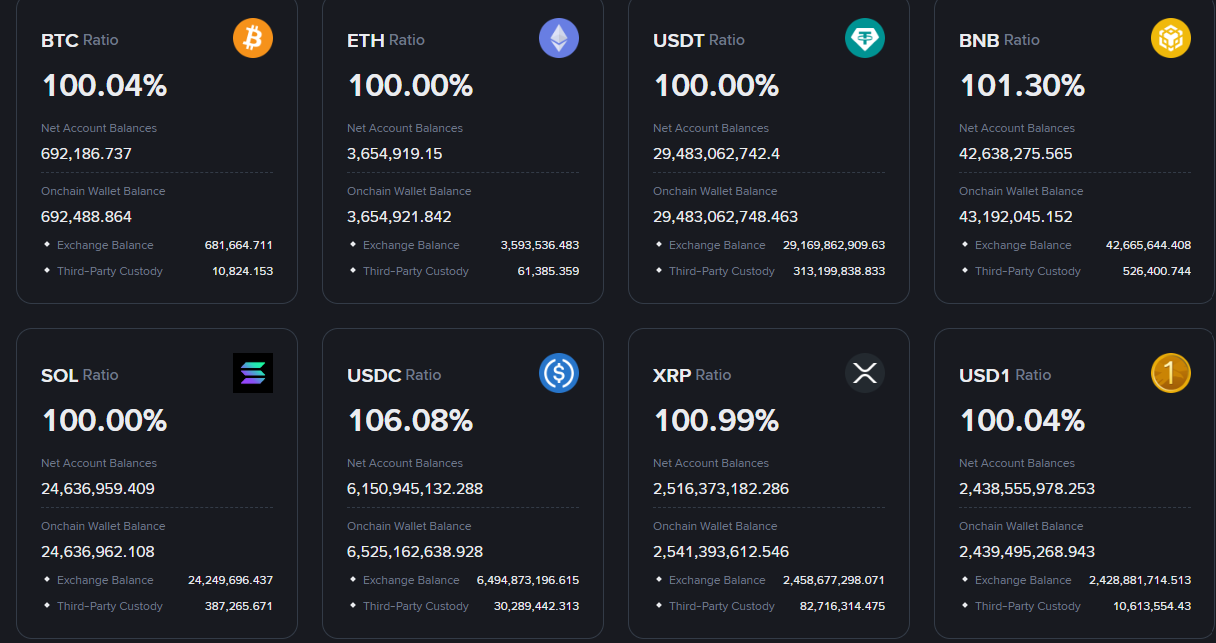
The funds have been used to buy and replenish stolen user assets, including BTC, ETH, USDT, BNB, SOL, USDC, XRP, USD1, RLUSD, and ZEC. The exchange added that it will use an OTC (over-the-counter) channel to buy the remaining assets to fully back them 100%. It added,
Binance will absorb the financial impact of these stolen funds, not our users.
As of writing, there were only 5% of the lost assets left for full coverage, but the majors were now 100% fully backed, per shared proof-of-reserves.
Binance plans phased withdrawals
With most of the stolen funds now covered, Binance said it will resume phased withdrawals on Sunday, 1st November, 2026, between 6:00 UTC and 9:00 UTC. Since Thursday, withdrawals have been paused to harden security.
Withdrawals will be based on last week’s user demand, starting with BTC, ETH, major stablecoins (USDT, USDC), ZEC, XRP, and more assets across 15 networks.
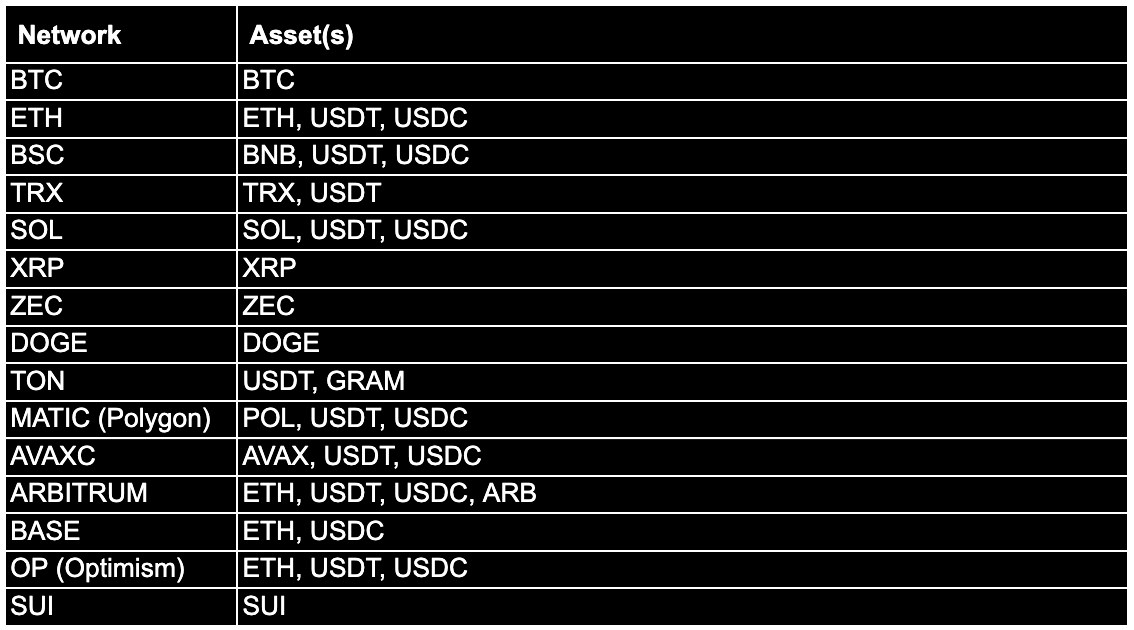
Support for other networks will be added later on, after stability has been achieved. But the exchange cautioned that
During the initial rollout, users may experience temporary delays or longer processing times due to traffic volume.
Users are advised to retry withdrawals after a short while if the initial attempt fails.
What happens to the $3B in frozen funds?
That said, the U.S. Federal Bureau of Investigation (FBI) attributed the hack to North Korea’s state-backed TraiderTraitor. The FBI warned the DeFi protocols being used to launder the stolen funds, including THORNode operators, to block the funds.
Some security analysts said the FBI warning could come with legal implications for THORChain and its operators. But Chard Barraford, co-founder of THORChain, retorted,
THORNode operators have zero information that isn’t already public and readily available in real time. No subpoenas required, a best-case scenario for investigations.
Worth noting that the covered $6B is not part of the $3B frozen funds by Binance partners. The frozen funds will go through separate legal channels to be recovered.
Final Summary
- Binance has covered over 95% of stolen funds across major assets such as BTC, ETH, and stablecoins
- It has resumed phased withdrawals across 15 networks but cautioned about likely delays due to traffic spikes