NEAR TVL declines to $191M as price falls 10% – Will THIS spur more decline?
NEAR has extended its decline after breaking below a key demand zone as the network's Spot ETFs record zero inflows and activity fades.


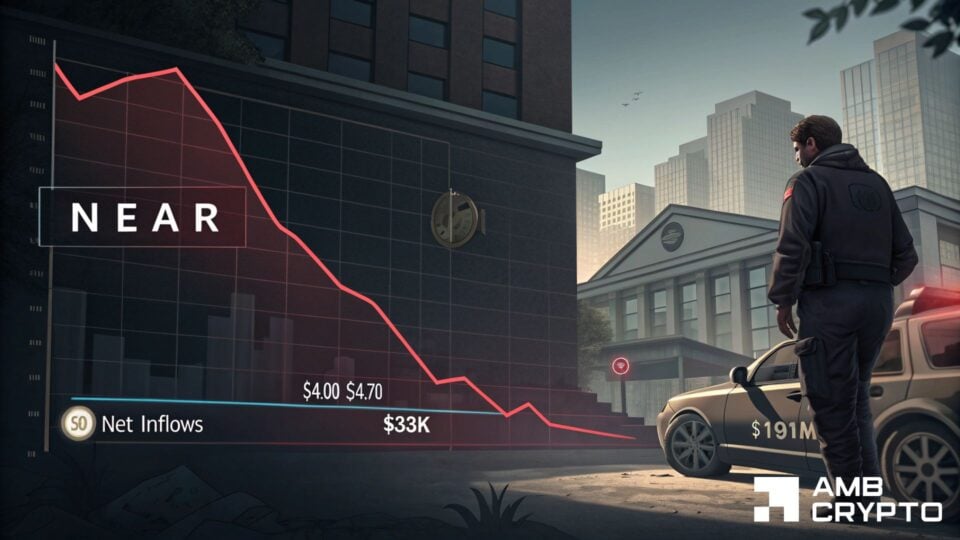
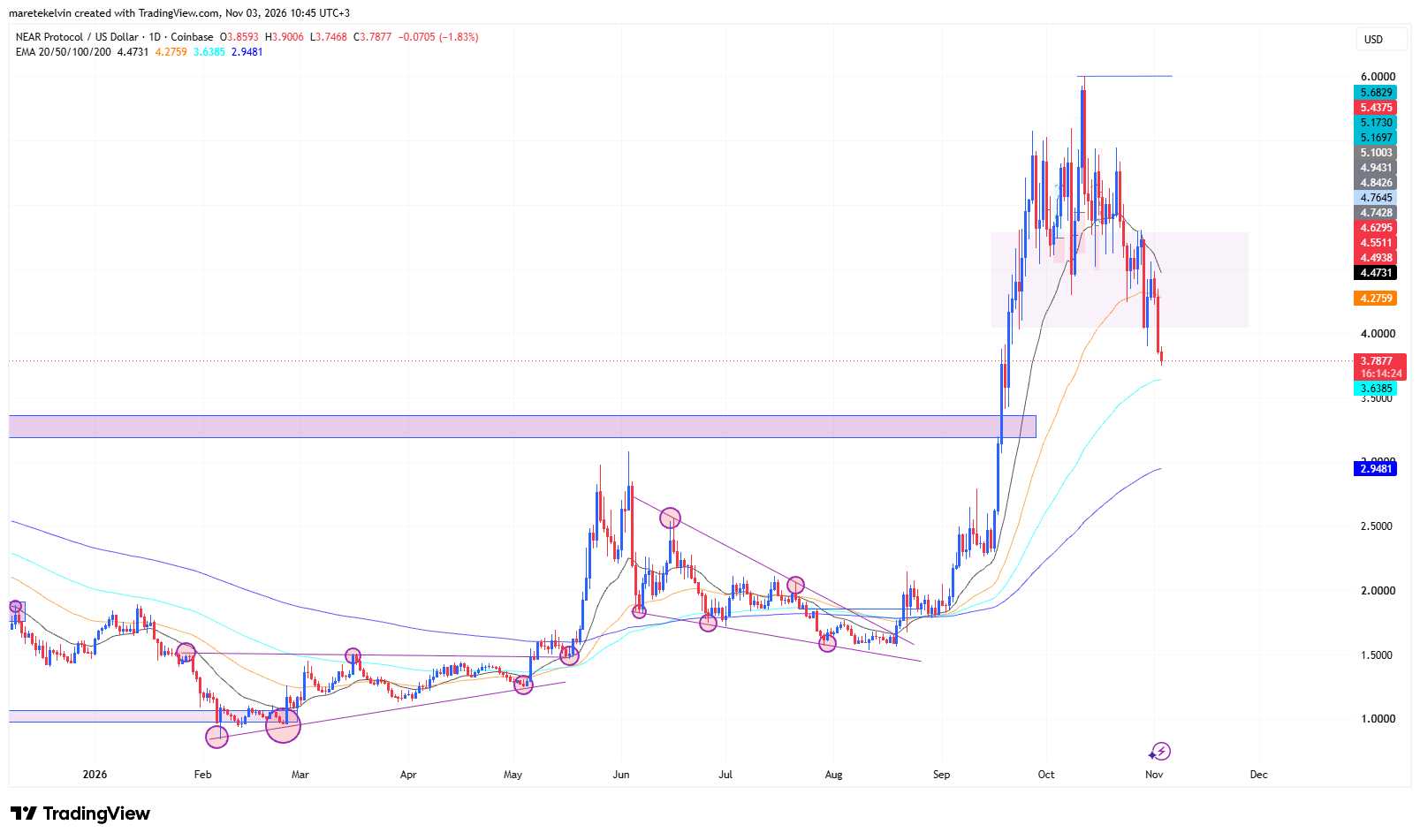
NEAR has extended its bearish run by recording a 10% price drop over the last 24 hours just after closing below the $4.0-$4.7 demand zone. The drop comes after big players shy off the market following the recent crypto developments.
The NEAR Spot ETF recorded zero inflows over the last 24 hours, while network revenue also dropped to its lowest level in the last week. Will the negative sentiment keep NEAR’s bearish run going?
ETF inflows and network metrics show weakening demand
The absence of net inflows into NEAR Spot ETFs over the past 24 hours points to a lack of fresh institutional demand through these products.
While one day of zero inflows does not establish a sustained withdrawal trend, it offers little support during the current decline.

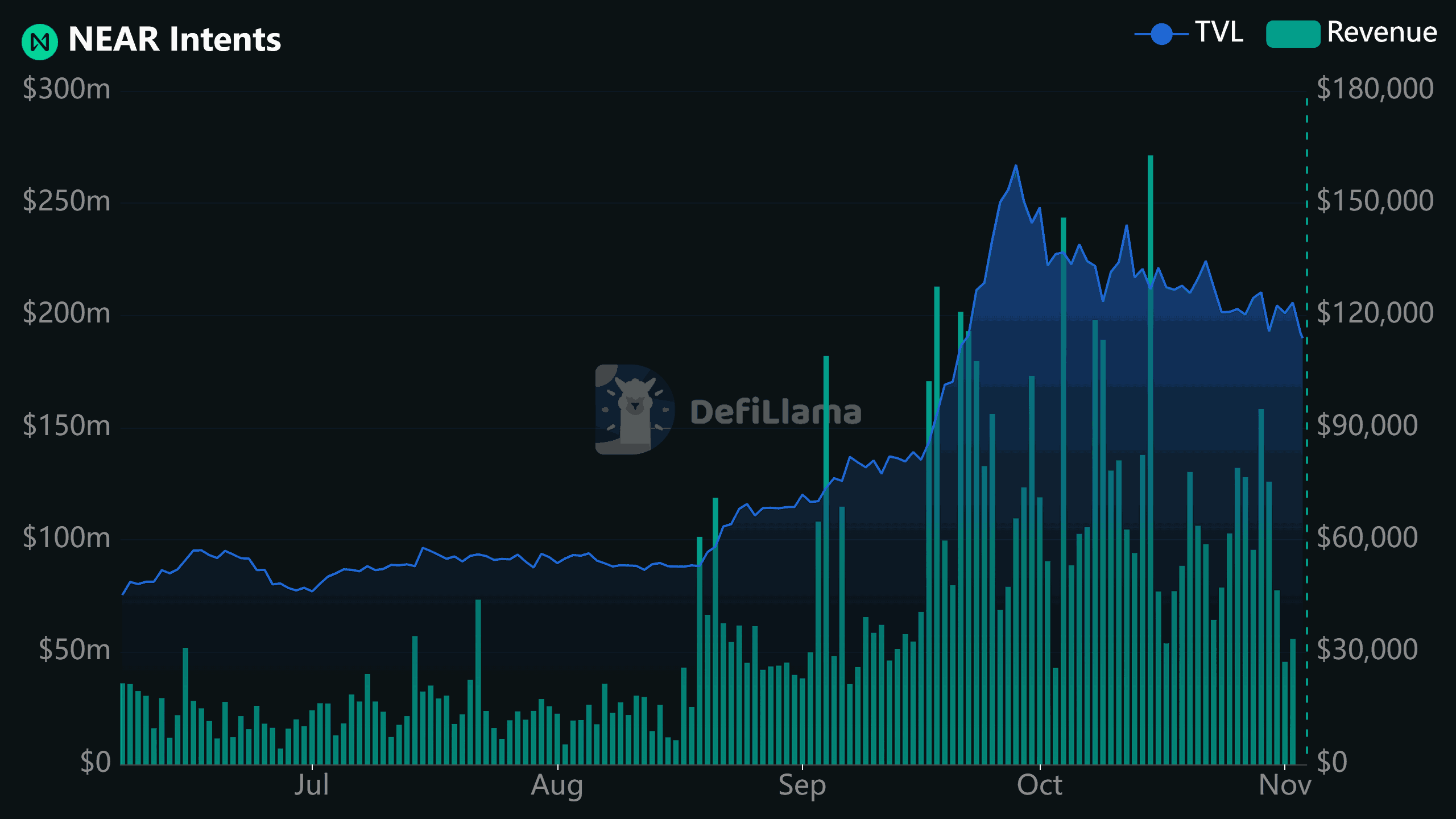
Besides, per AMBCrypto’s analysis of the token’s recent data, its daily revenue has fallen to approximately $33,000, its lowest level this week.
At the same time, holders’ sentiment weakened. Near Intent’s Total Value Locked has booked a sharp $15 million decline to $191 million over the last 24 hours.
The TVL reduction suggests that capital deployed across NEAR’s DeFi ecosystem has decreased. Combined with weaker revenue, these figures raise questions about near-term ecosystem demand.
Will NEAR’s downtrend hold?
Presently, NEAR faces pressure from both its technical breakdown and declining network metrics. Declining ETF inflows, shrinking DeFi activity, and a move breakdown below its demand zone between $4 and $4.7 all point to a weakening demand.
With the token currently trading below its key 20-day and 50-day EMA, a continued bearish run is likely to be prolonged in the short run.
Final Summary
- NEAR has extended its bearish run after closing below the $4.00–$4.70 demand zone.
- The network’s zero Spot ETF inflows, weekly-low network revenue, and sharp TVL decline point to cooling ecosystem demand.