DeFi vault regulation splits Aave, Kamino and Veda from Morpho: Details
Aave and Morpho are split on how human intervention in vaults can trigger SEC securities law.



The DeFi industry is split on the best way for the U.S. SEC to regulate popular yield-generating crypto vaults.
On Tuesday, the 3rd of November, Aave, Solana-based Kamino, and crypto vault infrastructure firm Veda wrote to the SEC on how vaults should be treated.
The trio said,
Our argument: securities regulation should follow the rights, obligations, and powers an onchain arrangement actually creates. Who owns the assets? Who promises repayment? Who exercises control?
According to the trio, human discretion or active management by a DAO on crypto vaults should not automatically trigger the SEC’s securities laws. The lending protocols contend that, provided users still own assets and can withdraw them at will, such vaults can be deemed non-custodial.
For Aave, Kamino, and Veda, most vaults sit outside the current SEC’s security definition. This is slightly different from the approach sought by Morpho and the Crypto Council for Innovation (CCI).
Crypto vaults regulation split: Aave vs. Morpho
Vaults are like managed funds such as mutual funds or ETFs, but on-chain and run by smart contracts. They allow users to have automated yield strategies to make their idle assets productive. Some are managed by risk curators like Steakhouse or Gauntlet, while others are fully run by code.
For the Morpho-backed CCI framework, some vaults run by risk curators could be deemed securities, because they act as managers who pick lending markets. In fact, even DAO-run protocols may partly be viewed as centralized managers and trigger securities law.
However, Aave, Kamino, and Veda disagree with some parts of this argument. For them, DAOs are for “governance, not management.” On the vaults managed by risk curators, Aave added,
A curator paid to make investment decisions about securities may be an investment adviser, but it does not have custody, because the code does not let it take the users’ assets.
That’s part of the user control and asset ownership argument the trio put across. In other words, the DeFi players agree that some of the current crypto vaults may be non-securities. But they split on how human intervention (risk curators and DAOs) impacts how the SEC should treat vaults.
The SEC did acknowledge that not all vaults are the same in a recent guideline. It will be interesting to see how the SEC addresses the human intervention question in vaults.
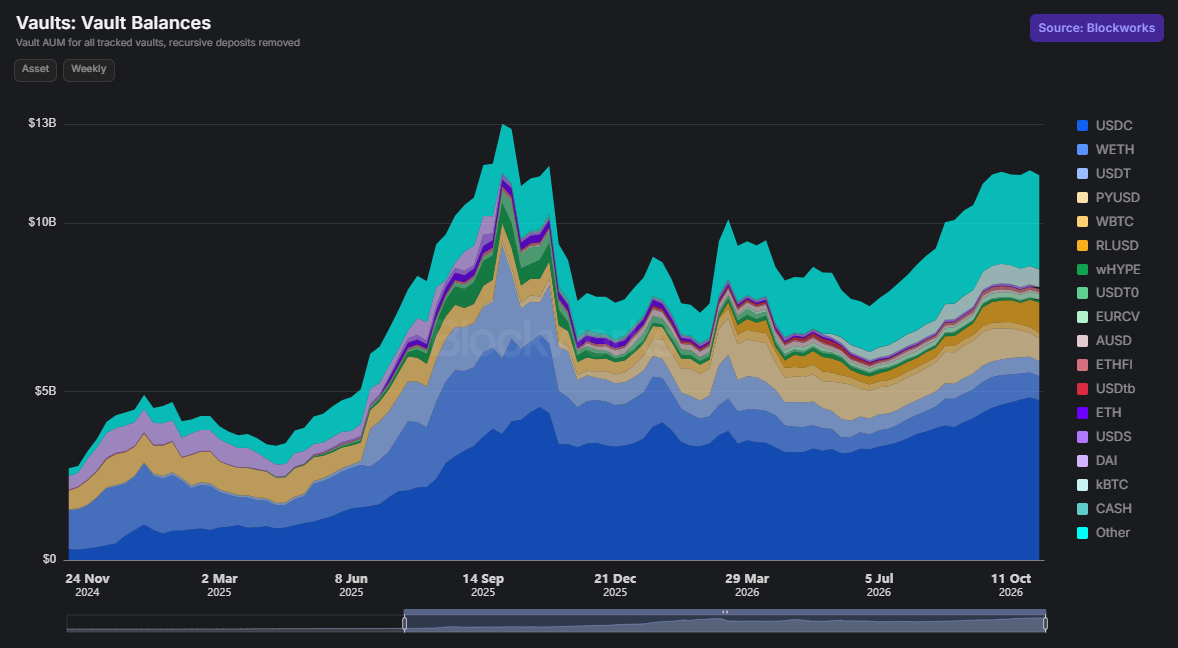
That said, vaults’ traction increased by 61% in H2, rising from $7B to $11B in assets under management (AUM), and are expected to explode alongside the tokenization boom.
Final Summary
- Aave, Kamino, and Veda argue that most crypto vaults do not trigger SEC securities law.
- Crypto vaults have increased 61% in H2 2026 and now handle $11B in AUM