Skip to content
Active Currencies: 17,336
Market Cap: $2.261T
Bitcoin Dominance: 56.18%
24h Market Cap Change: $2.34

Aave mobilizes DeFi united effort to rebuild rsETH backing – All the details!

Recovery efforts depend on execution and ecosystem alignment.

Aave mobilizes DeFi united effort to rebuild rsETH backing- Will governance speed sustain confidence?

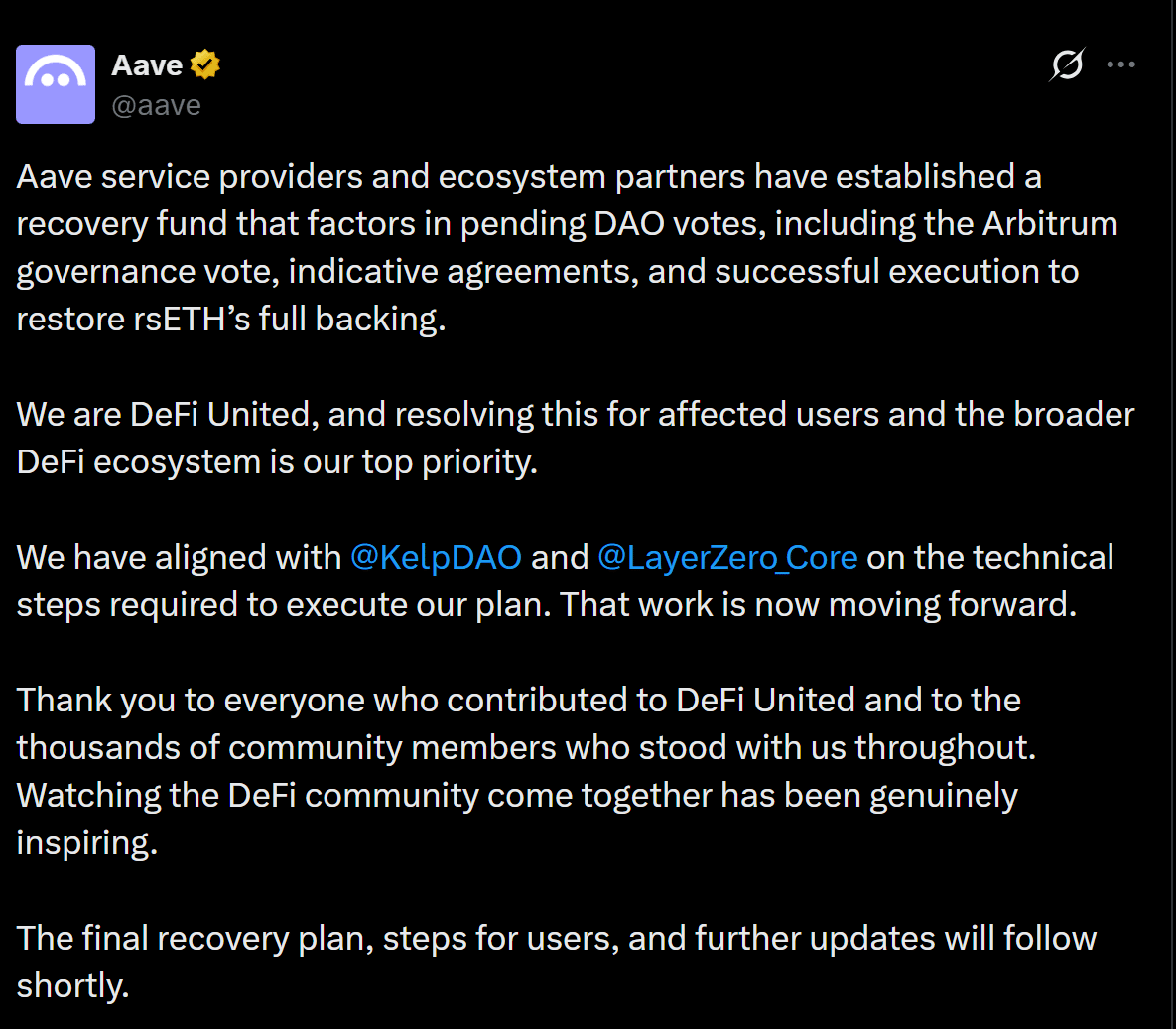
Aave’s [AAVE] recovery efforts began when Stani Kulechov opened defiunited.eth to gather contributions for restoring rsETH backing after the KelpDAO exploit. This move signaled urgency and set the foundation for broader ecosystem coordination.

Service providers then proposed allocating 25,000 ETH through the Aave DAO to support the recovery plan and rebuild rsETH collateral. As this proposal advanced, the focus shifted towards normalizing market conditions and restoring user confidence.
Source: Aave on X

As coordination expanded, KelpDAO and LayerZero aligned on the technical steps required for execution. This joint effort is more evidence of how protocols act collectively during systemic stress, while governance timelines still influence the speed of recovery.

Loss absorption order defines recovery

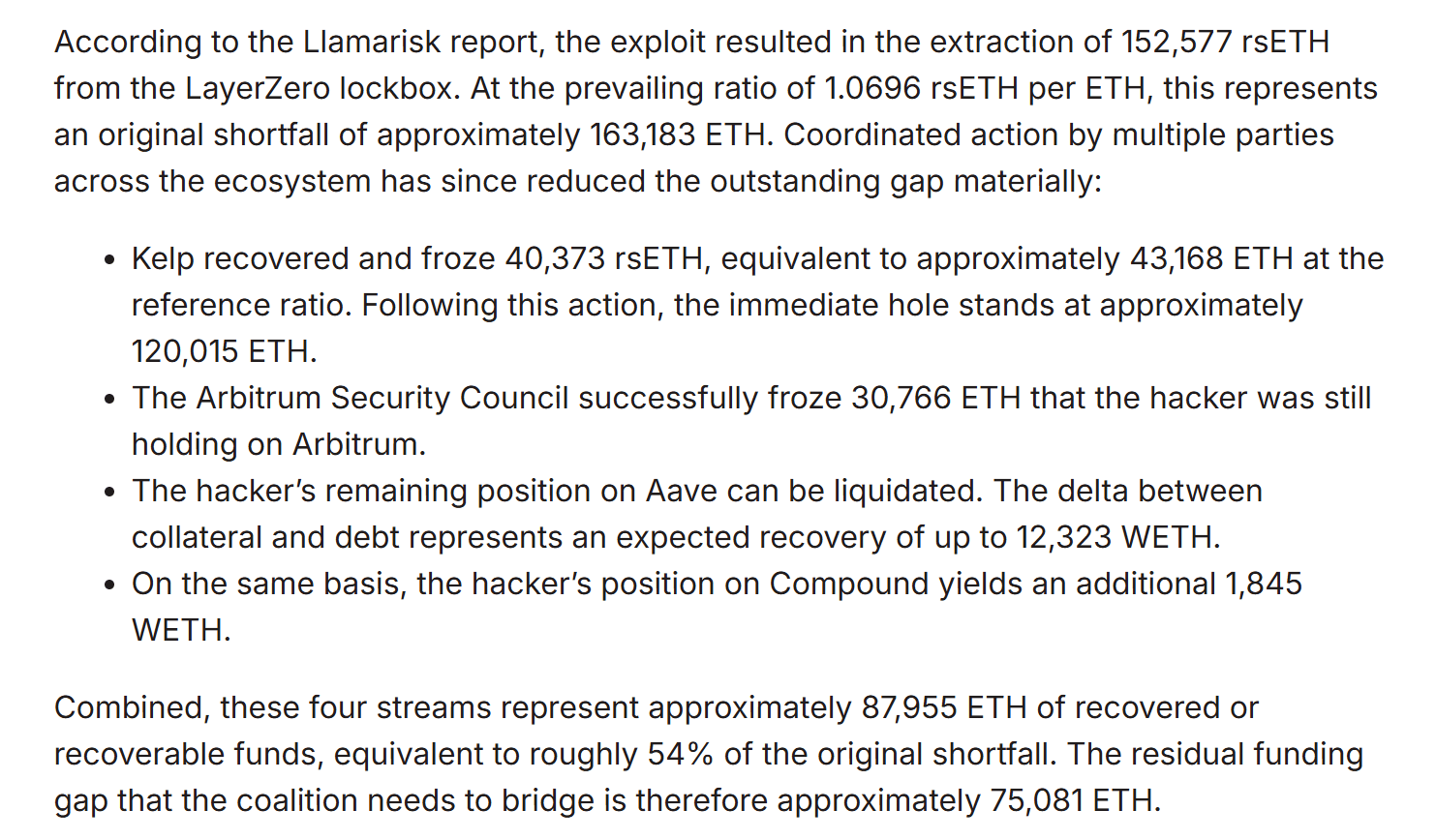
Aave’s recapitalization is now focused on who took the losses first as the protocol tries to make up for the rsETH shortfall. The deficit, once near 163,183 ETH and now closer to 75,081 ETH, sets the scale of recovery pressure.

Source: Aave governance


Within this structure, the Umbrella module, holding about $54 million in WETH, absorbs initial losses. This protects users and limits immediate market shock.

As this first layer engages, ecosystem contributions of roughly 14,570 ETH follow, spreading losses across partners rather than concentrating risk. Such a shift underlines a move from protocol protection towards shared responsibility.

Above this, Aave DAO’s 25,000 ETH proposal and Mantle’s 30,000 ETH facility provide deeper support, shaping whether recovery stabilizes or prolongs uncertainty.

Aave’s governance speed under stress

Aave’s governance response highlights execution speed as a key variable, rather than funding structure, under stress conditions. The Protocol Guardian froze rsETH markets within hours – A sign of how centralized safeguards still anchor early containment.

As this immediate action stabilized exposure, governance moved towards formal proposals where a 25,000 ETH allocation surfaced within six days.

This timeline matters because historical treasury decisions often take weeks. And yet, here, latency compressed significantly, reflecting urgency and alignment among delegates. However, voting power remains concentrated, which means outcomes still depend on a limited group, despite broader participation trends above 60%.

As decisions remain pending, the process tests whether faster coordination can sustain confidence or if delays reintroduce uncertainty into markets.


Final Summary

  • Aave is coordinating ecosystem support and layered loss absorption to contain rsETH fallout.
  • Aave stabilized short-term risk through rapid response, but delayed approvals or weak participation could extend uncertainty across DeFi markets.
Disclaimer: AMBCrypto's content is meant to be informational in nature and should not be interpreted as investment advice. Trading, buying or selling cryptocurrencies should be considered a high-risk investment and every reader is advised to do their own research before making any decisions.

Muriuki Lazaro

Journalist

Muriuki Lazaro is a on-chain data analyst with a B.Sc. in Data Science. Muriuki specializes in dissecting complex on-chain data into clear and accurate insights for readers in the crypto ecosystem, with a particular focus on Bitcoin.

AMBCrypto was founded in 2018 with a mission to simplify and bring the latest blockchain and cryptocurrency news to our readers. We have quickly grown into the digital news source for an emerging generation of cryptocurrency enthusiasts, reaching more than a million readers on a monthly basis, across the globe.