Aave restores lending activity as rsETH recovery refills 117K tokens – Details
Aave strengthened recovery defenses as governance worked to contain lingering risks across interconnected DeFi lending markets.



As Aave [AAVE] transitions out of the rsETH recovery phase, liquidity conditions in major V3 lending markets remain stable. Earlier emergency restrictions had already frozen WETH collateral flexibility after exploit-driven panic intensified across interconnected DeFi liquidity systems.
That stress strengthened further once WETH utilization rates surged toward extreme 99% saturation levels during the peak recovery phase.
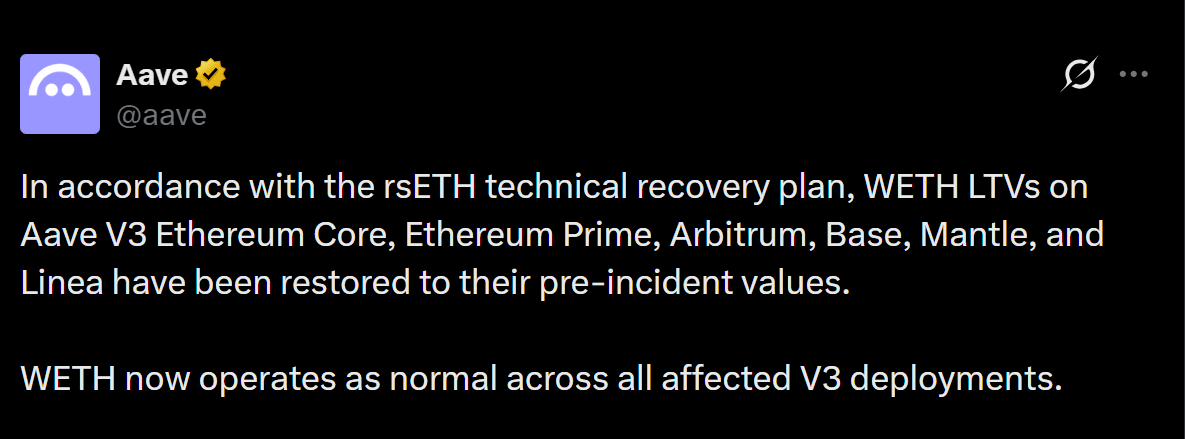
Conditions later began easing once governance restored pre-incident WETH loan-to-value parameters across Ethereum, Arbitrum, Base, Mantle, and Linea deployments.
More importantly, borrowing activity also gradually normalized as coordinated recovery efforts reduced broader systemic bad debt exposure beneath improving liquidity conditions. However, bridge and restaking dependencies still continue exposing DeFi markets to rapid liquidity contagion risks.
rsETH recovery efforts gradually stabilize DeFi lending markets
As rsETH recovery operations continued to progress, DeFi markets started to shift focus from emergency containment toward gradual liquidity normalization. Earlier recovery milestones had already reduced immediate contagion fears after attacker liquidations stabilized stressed Aave lending positions.
That stabilization strengthened further once KelpDAO and Aave initiated phased refills for roughly 117,132 rsETH across affected recovery reserves. Liquidity conditions also gradually improved as WETH utilization rates retreated from the extreme 99% to 100% stress levels recorded earlier.
Notably, borrowing demand recovered across V3 markets as collateral flexibility returned under easing emergency restrictions. Meanwhile, Aave’s total value locked (TVL) stabilized near $14.5 billion, signaling that users were cautiously resuming normal lending activity. Still, the episode underscored how quickly liquidity shocks can ripple through interconnected DeFi systems.
Aave strengthens defenses as hidden DeFi risks persist
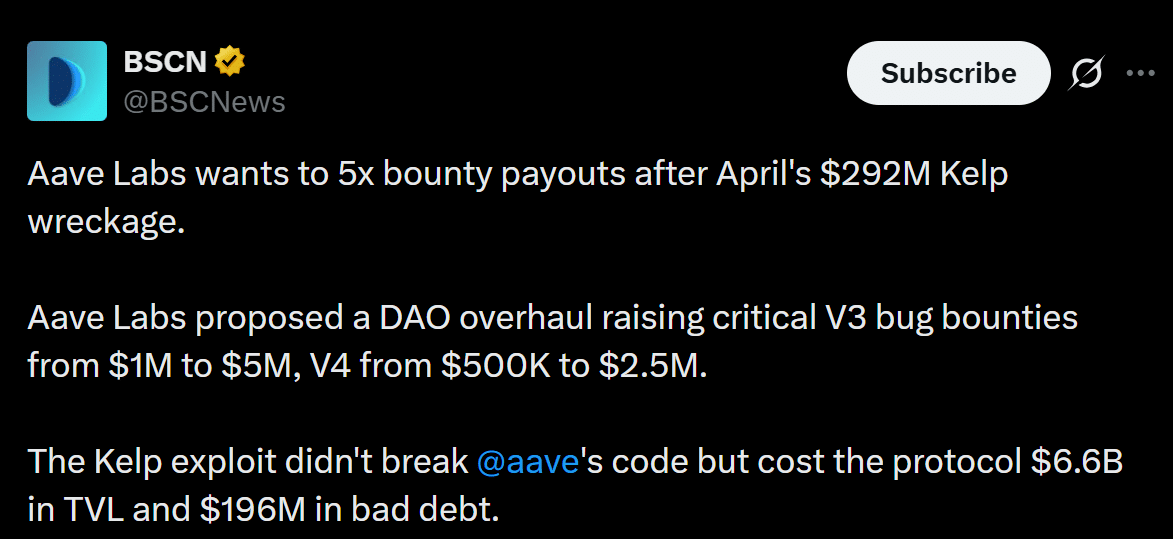
As Aave gradually restores normal lending conditions, deeper concerns around hidden collateral dependencies continue surfacing beneath improving liquidity stability. Earlier rsETH-related stress had erased roughly $6.6 billion from Aave’s TVL during peak contagion fears.
That pressure also exposed nearly $196 million in bad debt despite Aave’s core contracts remaining technically uncompromised throughout the exploit recovery phase.
Governance later responded by proposing major security bounty increases, raising V3 payouts from $1 million to $5 million. The suggested V4 bounty rewards also climbed from $500,000 toward roughly $2.5 million beneath rising systemic caution.
Those measures increasingly reflect growing operational maturity across DeFi governance. However, they also reinforce how lending markets remain heavily exposed to bridge, restaking, and interconnected collateral risks.
Final Summary
- Aave liquidity conditions continue stabilizing as rsETH recovery efforts reduce bad debt exposure and restore broader lending market confidence.
- AAVE still faces persistent bridge and restaking risks despite stronger governance defenses and rising security-focused intervention measures.