Aave turns 7 tokenized stocks into collateral for USDC loans on Base
Aave is turning tokenized stocks into usable collateral, opening a new path for equity-backed borrowing.


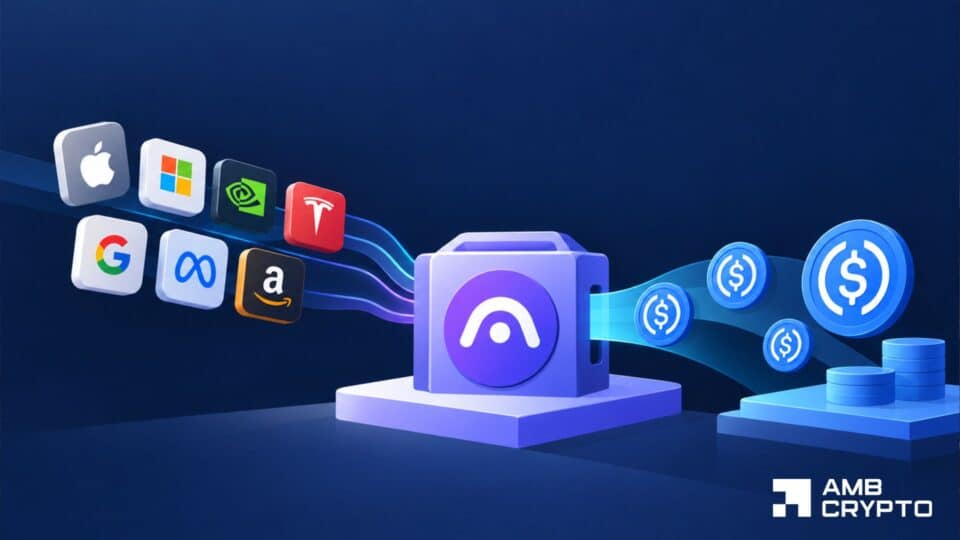
Tokenized equities are evolving from stock ownership as Aave [AAVE] V4 turns them into collateral for borrowing through Base.
The integration of tokenized equities in DeFi allows equity holders to utilize their holdings to unlock their potential for access to capital.
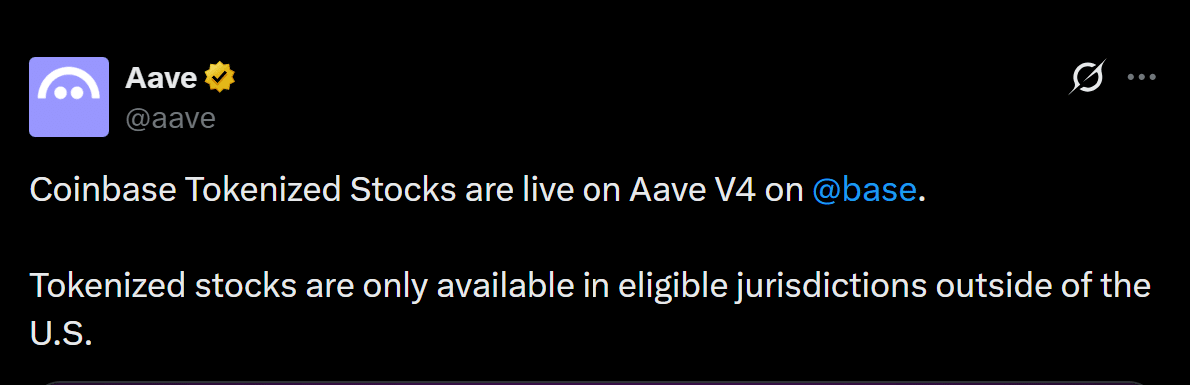
Collateral values will continue to be valued using Chainlink [LINK] pricing. Still, at this time the market remains limited to eligible non-U.S. users.
However, once more assets are approved, this model could potentially become a larger option for lending using equity-backed lending across DeFi.
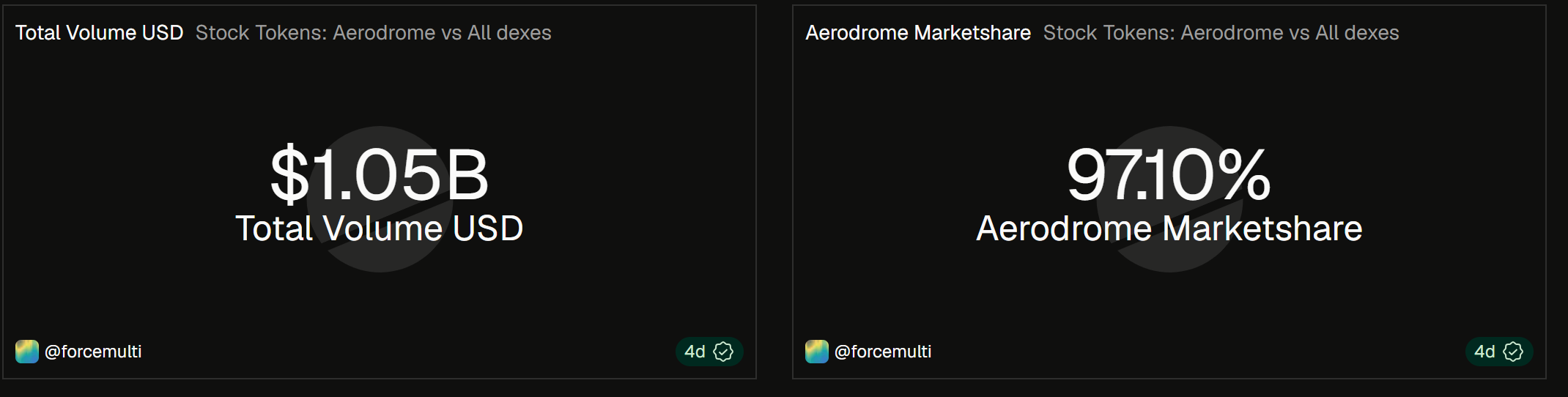
The rapid growth in tokenized-equity trading on Base is now exposing a liquidity gap beneath the headline volumes. About $1 billion changed hands over 30 days, yet most activity remains concentrated in a few stocks and Aerodrome.
This creates strong turnover without providing enough depth for larger positions.
Price changes caused by forced sales will also have an impact on Aave‘s ability to use collateral when liquidating. This is because many pools do not have enough capital reserves to cover the losses.
Consequently, the forced sale of a sizable collateral position could trigger sharp price declines, further reducing the value of the remaining collateral.
Therefore, until additional market liquidity develops to allow for safe, larger credit positions, increasing trading volume does not necessarily translate into safety.
Can tokenized stocks handle DeFi risk?
As Aave incorporates equities into its DeFi lending, it must manage the risk of stock prices moving faster than market liquidity can absorb, particularly during periods of volatility.
The Equities Hub limits borrowing through 65%–79% collateral factors across seven stocks, thus providing a layer of protection from volatile movements.
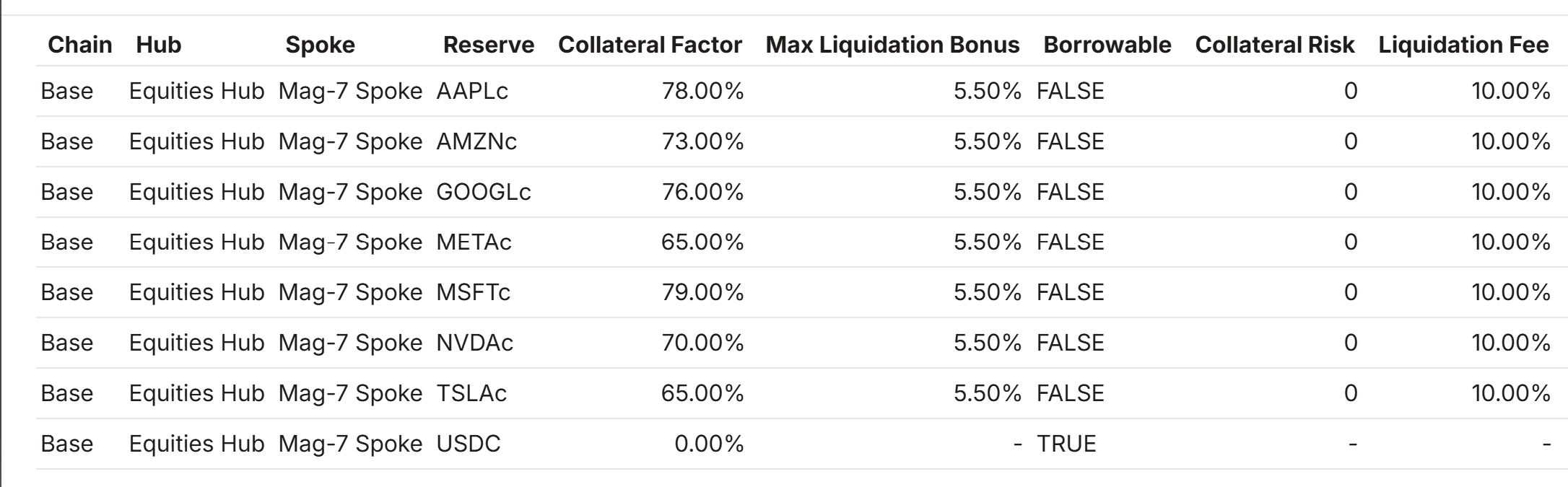
The Equities Hub’s protection weakens when traditional markets close. Chainlink holds the last stock price over weekends and U.S. holidays, while borrowers continue accruing interest on their positions.
Therefore, a borrower’s health factor may decrease prior to new market pricing.
Final Summary
- Tokenized equities are gaining a new DeFi use case as Aave enables stock-backed USDC borrowing on Base.
- Limited liquidity and market-hour constraints could restrict how quickly tokenized stocks scale as DeFi collateral.