



Whales accumulate while liquidation risk builds
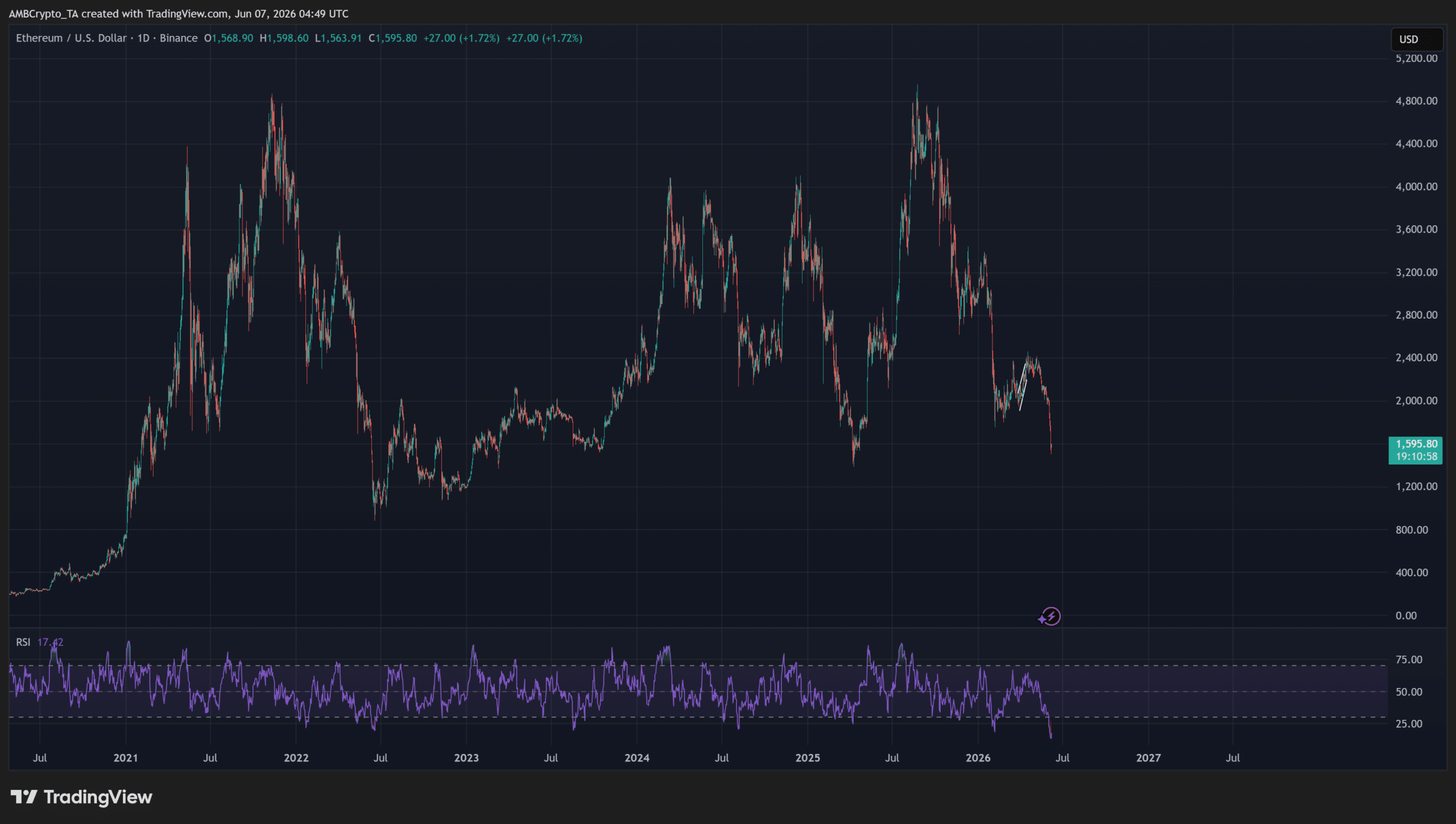
Ethereum’s decline has started attracting aggressive dip-buying from large holders. One whale spent $55.8 million acquiring 35,723 ETH near $1,563 after previously selling 60,000 ETH and 9,442 wstETH around $2,040.
Meanwhile, another investor borrowed $142 million in Tether [USDT] from Aave [AAVE] and accumulated 87,680 ETH at an average price of $1,620. The activity suggests some large holders view current prices as attractive despite persistent market weakness.
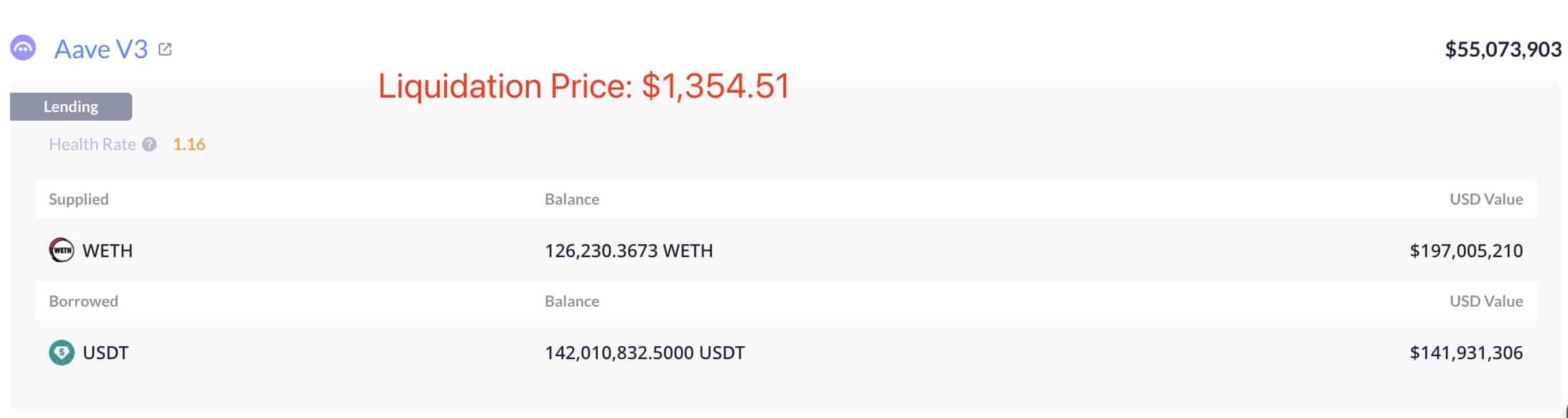
However, the leveraged position carries a health factor of 1.16 and faces liquidation near $1,354, making Ethereum’s next move increasingly important for determining whether this conviction proves correct.
What’s next for Ethereum?
Ethereum’s selloff has not unfolded in a vacuum.
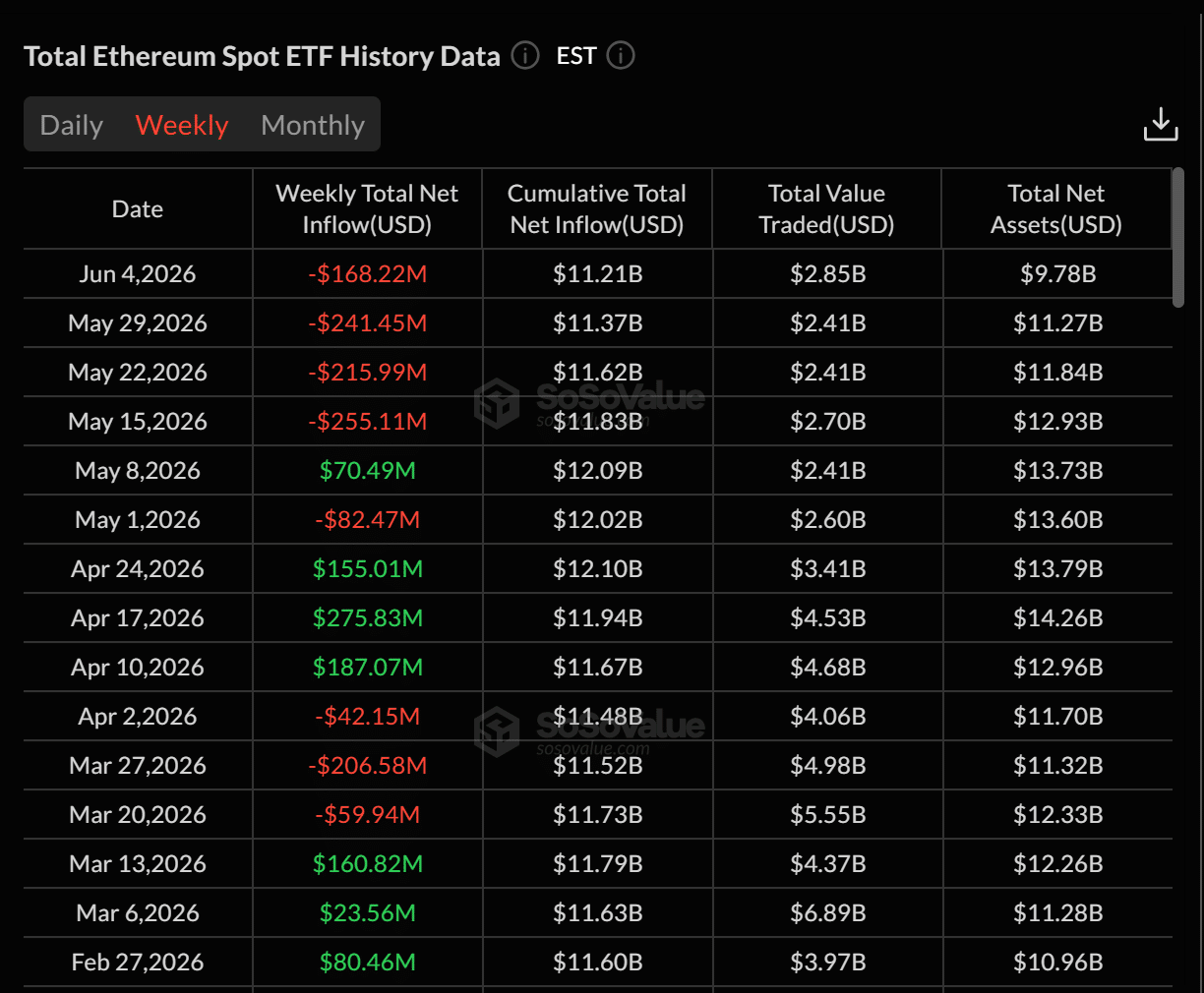
While ETF investors have continued pulling capital from the market, on-chain data shows other participants stepping in. Exchange Reserves remain near multi-year lows around 15 million ETH, while large holders continue withdrawing coins and adding to positions during the decline.
Yet not all of that demand looks the same. Some buyers are using borrowed capital to accumulate ETH through lending protocols such as Aave. That explains why buying interest has persisted despite weeks of institutional outflows.
The market now faces a different question. Whales appear willing to absorb supply, but leveraged demand is far less stable than spot accumulation. Whether that buying can offset ETF selling remains one of the key forces shaping Ethereum’s next move.
Final Summary
- Ethereum [ETH] remains caught between persistent ETF outflows and growing whale accumulation, leaving demand absorption as the key market test.
- Ethereum whale buying continues supporting the market, but leveraged positions keep liquidation risks elevated near critical levels.