



Bitcoin has seen accelerated adoption by major global banks, but the traction is “still early.” This, according to Michael Saylor, founder of Strategy, the world’s largest BTC treasury firm. In a newly released Bitcoin Banking Adoption Index, covering ETF trading, credit and more, Saylor added,
Major-bank Bitcoin adoption is accelerating, but still early: 32% overall as measured by the index.
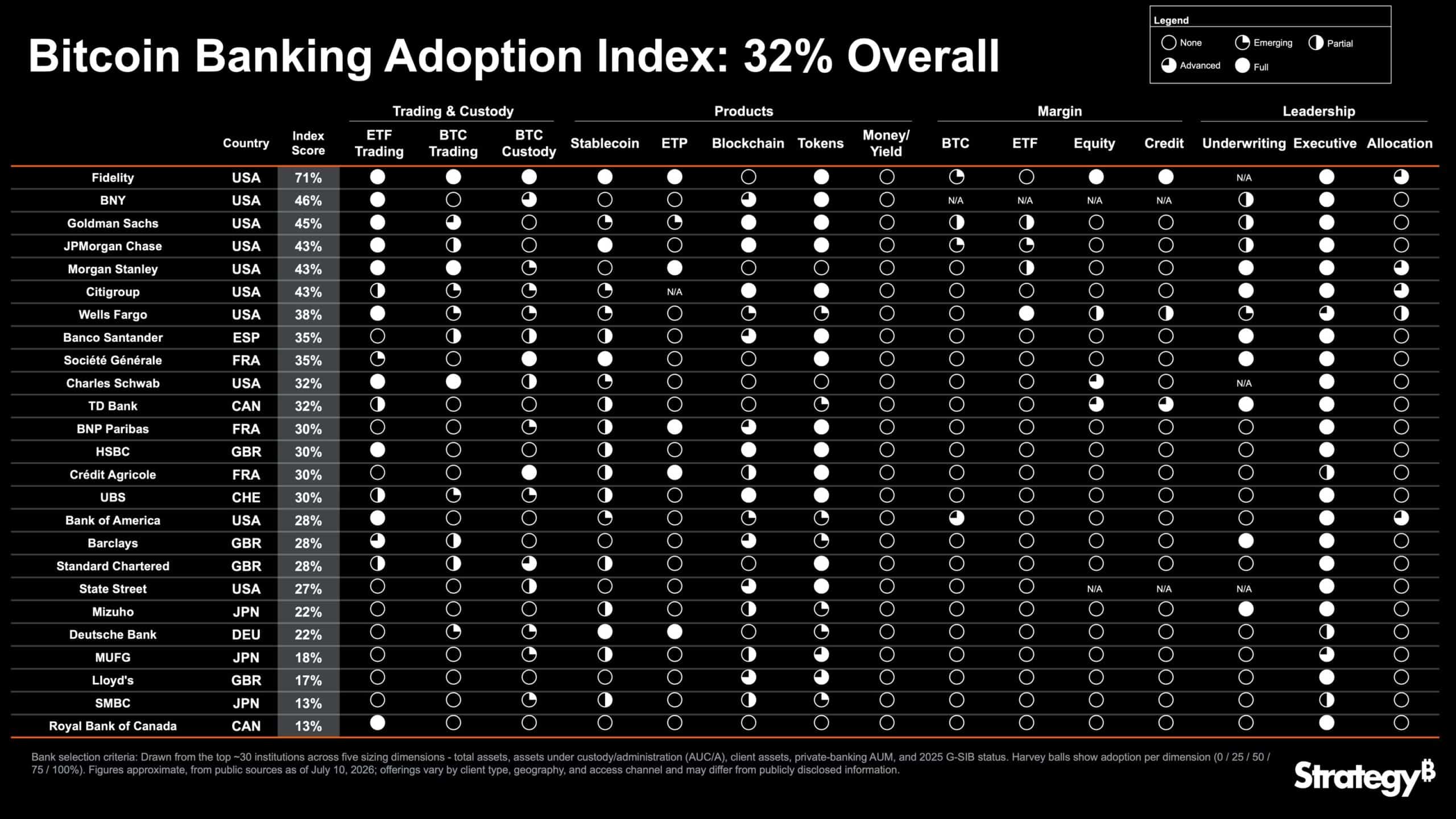
Fidelity leads in the adoption race with a 71% rating, with a full score for custody, BTC, and ETF trading alongside stablecoin issuance. BNY Mellon comes in second with a 46% score, while Goldman Sachs closed the top three list with a 45% rating.
Other top-ranking global players were Spain’s Banco Santander, France’s Société Générale, and the UK’s Standard Chartered.
Is Strategy still eyeing ‘Bitcoin bank’ vision?
The most interesting part of the new composite index is the ‘credit’ section, or banks enabling credit against spot BTC or derivatives like BlackRock’s iShares Bitcoin Trust (IBIT). In other words, banks that allow leverage or offer credit using Spot BTC or ETFs as collateral.
As of 2026, most banks were more inclined towards Spot BTC ETFs for collateral, rather than spot BTC. However, given the empty circles, it meant adoption of BTC or ETF margin was still relatively low.
This is particularly important because Saylor has floated positioning Strategy as the “world’s first Bitcoin bank.” According to him, the firm could use its vast BTC holdings as collateral to create new credit instruments beyond STRC and partner with leading banks for the same.
The 32% bank adoption is commendable. However, the adoption index clearly shows that BTC is not fully treated as high-quality collateral, at least as of 2026. By extension, it means its vision of being a “BTC bank” could still be far from being viable.
Interestingly, Metaplanet is exploring something similar but for the Japanese bond market.
In other developments, Strategy has increased its cash reserve to $3B after a $467M MSTR share sale. This has effectively increased its coverage for its financial obligations to 20 months.
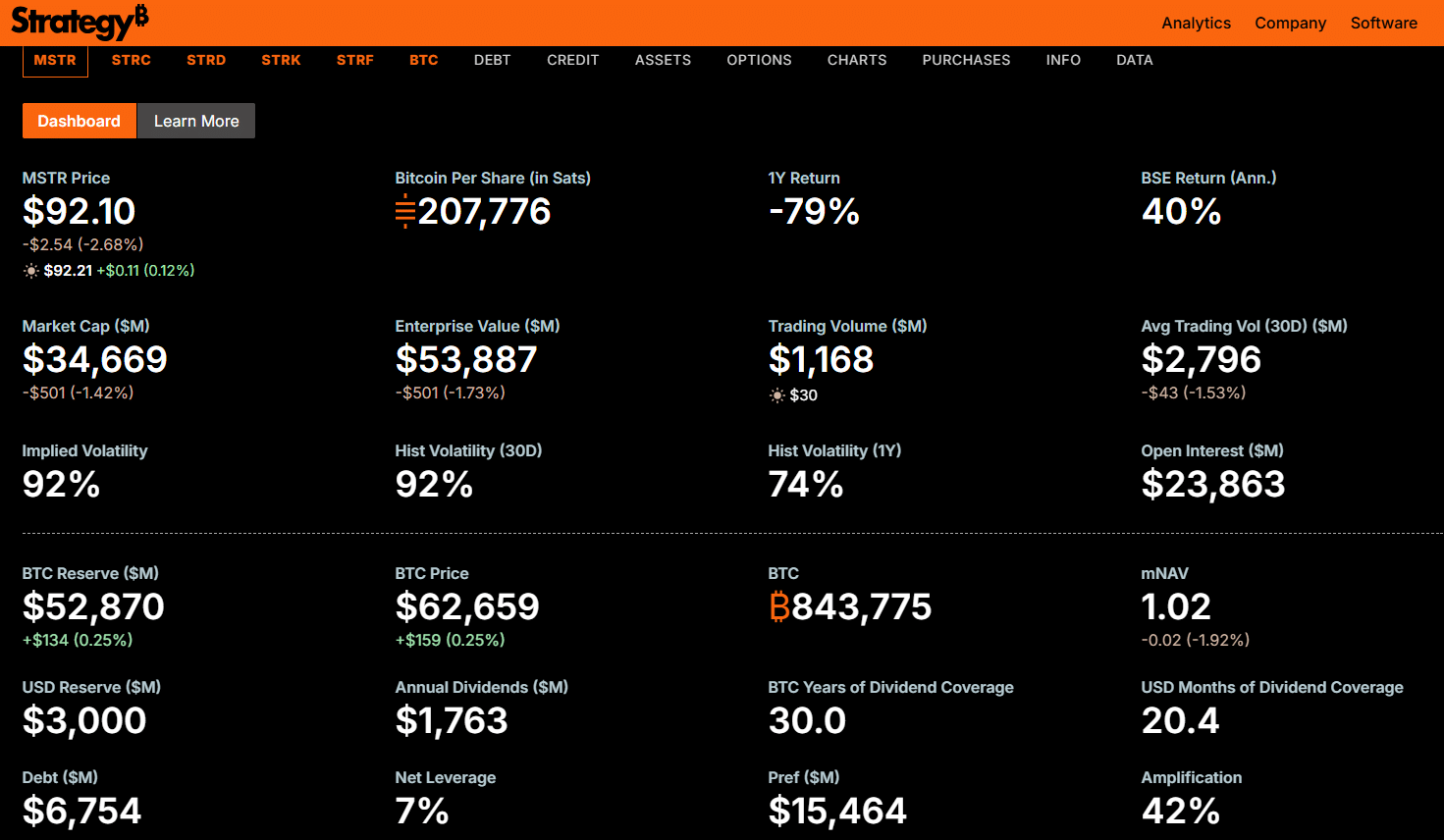
It seems that the firm was partly following the recommendations by JPMorgan analysts who urged for a 24-36 months cash reserve by selling more MSTR, not its BTC holdings.
Overall, Strategy’s “Bitcoin bank” dreams may still be far from reach right now. Even so, there is traction across banks that could determine whether it will be viable in the future.
Final Summary
- Bitcoin adoption among banks has surged by 32%, but Spot BTC ETFs may be preferred for margin than physical BTC.
- Strategy increased its cash reserves to $3B and 20 months of coverage, just shy of 24 months recommended by JPMorgan.