



Bitcoin’s [BTC] rally is losing strength. For much of history, American capital has been one of the biggest drivers of BTC; now, that’s not the case.
With ETFs bleeding in addition, is the market set for chaos?
U.S. Bitcoin demand loses strength
One key metric to keep an eye on is the U.S. to The Rest Reserve Ratio, which compares Bitcoin held by U.S. entities with the rest of the world. After rising in strength through this cycle, the ratio has now fallen from its recent peak near 1.79 to around 1.59.
Because U.S. capital is a major force behind Bitcoin’s rally, BTC is struggling to hold when this demand falls. Interestingly, this ratio was going weak before BTC price started to.
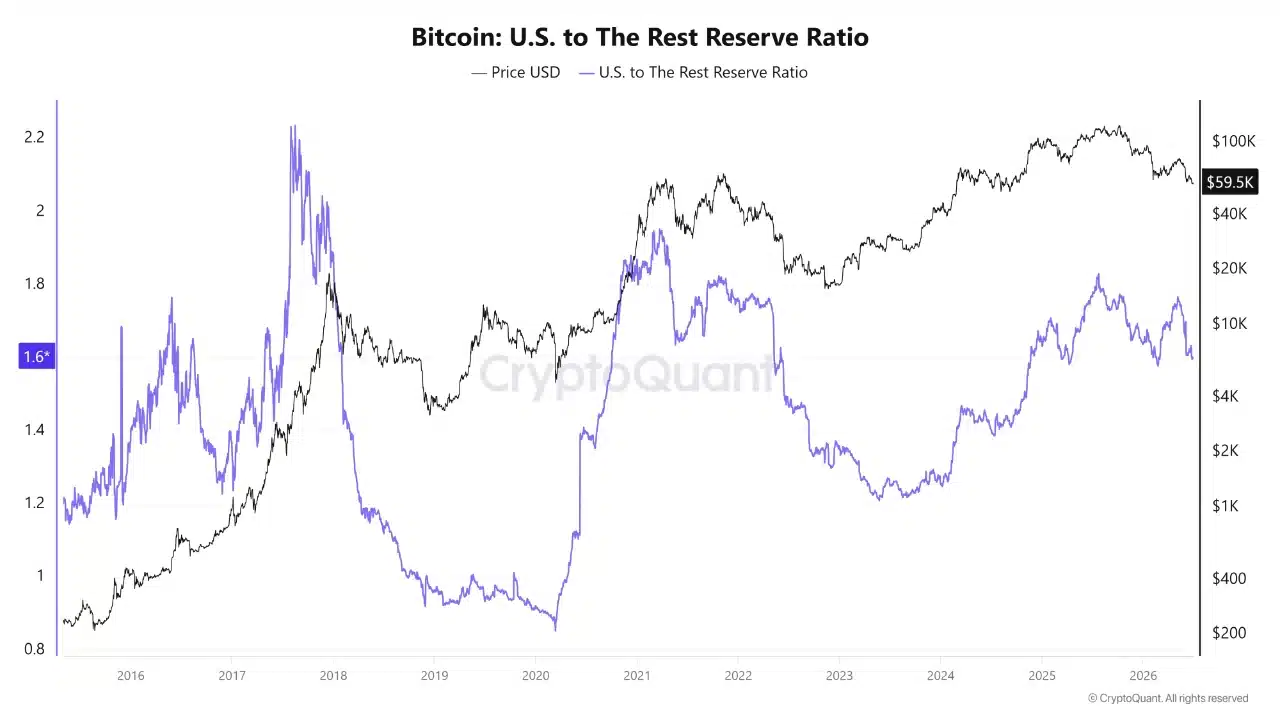
The first cryptocurrency will most certainly face resistance and more downside pressure, unless U.S. demand starts recovering.
Spot ETF outflows confirm the fall
After months of green, the ETF trend has now flipped. The latest monthly net flow saw a huge outflow of around $4.29 billion. Considering ETFs were one of the clearest signs of institutional buying during rallies, this is concerning.
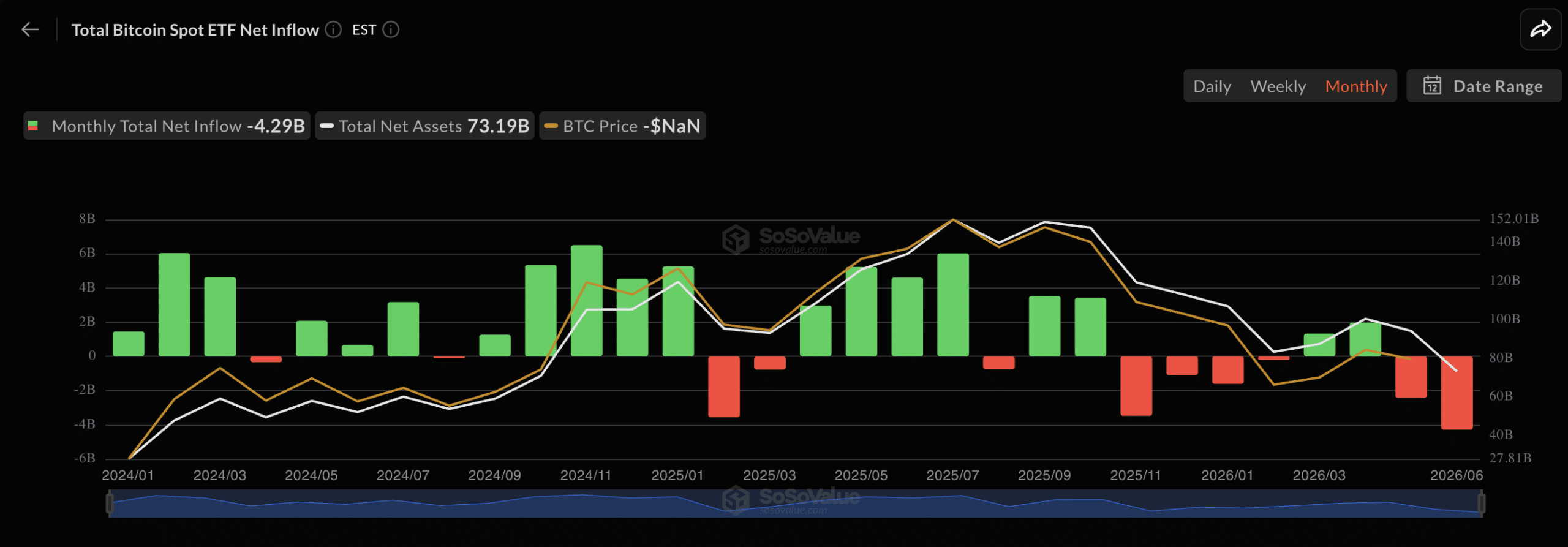
When ETF demand was strong, BTC found steady support. But now, with two weak months, the market looks nervous.
Price tests $58K support
Bitcoin slipped below the $60K area and was trading close to $58,500 at the time of writing. Sellers were very much still in control. The RSI was near the oversold zone, so the market is under pressure. However, we’re not ready for a big bounce yet.
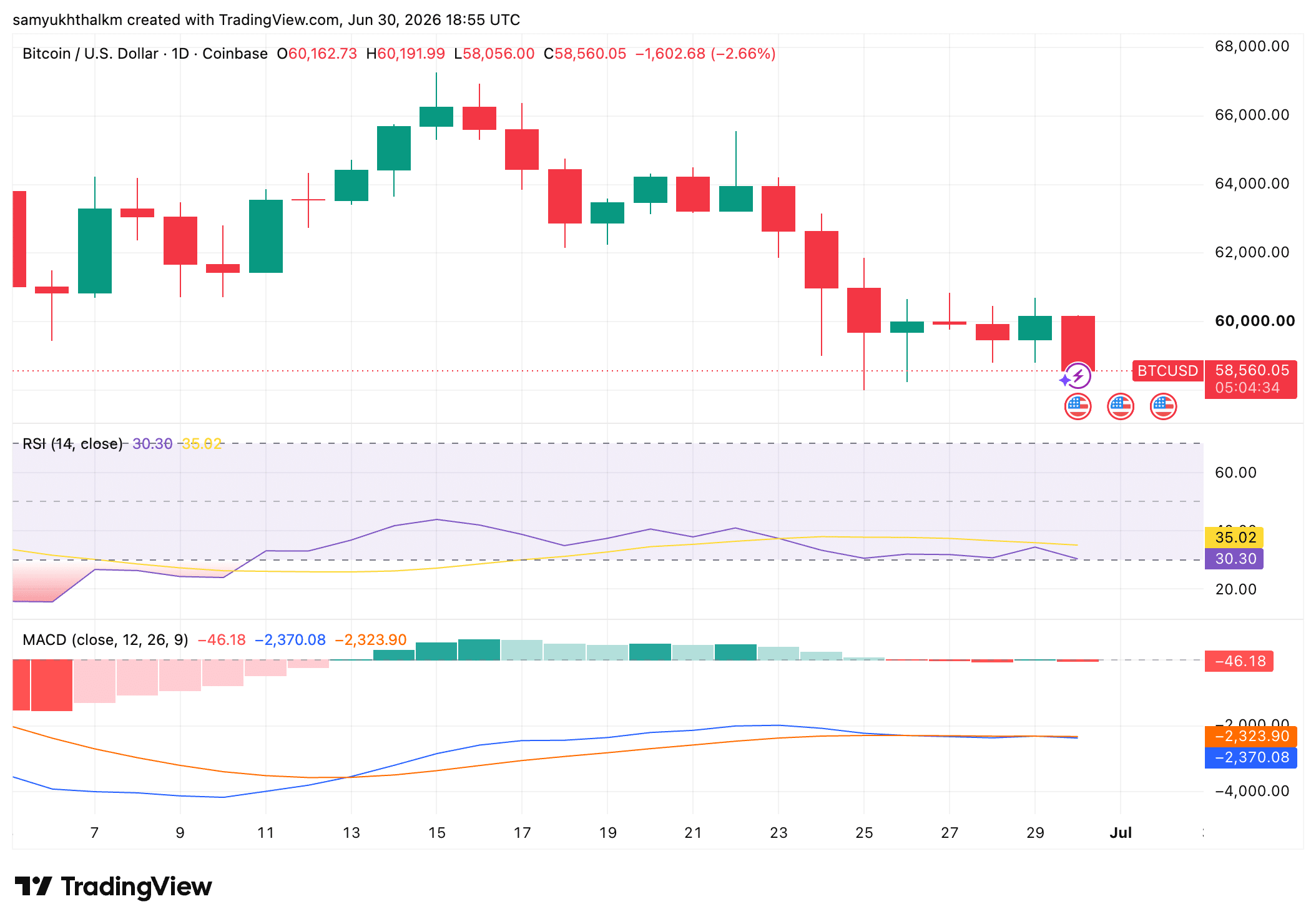
Pace has not gone back in favor of the buyers. A short relief move is possible after this decline, but greater picture is still unclear. Unless BTC makes it back to the $60-$62K range, a bigger fall to lower support levels is possible.
Final Summary
- U.S. demand for Bitcoin is weakening, with Spot ETF outflows reaching $4.29 billion. This signals reduced investor confidence.
- Bitcoin is struggling to hold the $58K support zone, while the U.S. reserve ratio has dropped to 1.59 – reinforcing downside risks.