Bitcoin volatility falls to 45% – Here’s what it does NOT mean for BTC
Bitcoin volatility falls to 45% as institutional adoption grows and crypto sectors become less dependent on BTC.



Crypto evaluation, especially for Bitcoin [BTC], tends to be shifting from highly volatile to a mature asset. Bitcoin volatility has fallen to 45% over its 18 years of existence, within the range of common large-cap U.S. stocks.
For instance, JPMorgan and Amazon are at 80% and 90%, respectively, meaning they are a bit more volatile than BTC. Oracle, Coinbase, Micron, and Sandisk are more stable, with their volatilities well below 20%.
This current reading of Bitcoin volatility reflects an asset that has matured with greater institutional participation. However, this does not mean that BTC is now a low-risk asset.
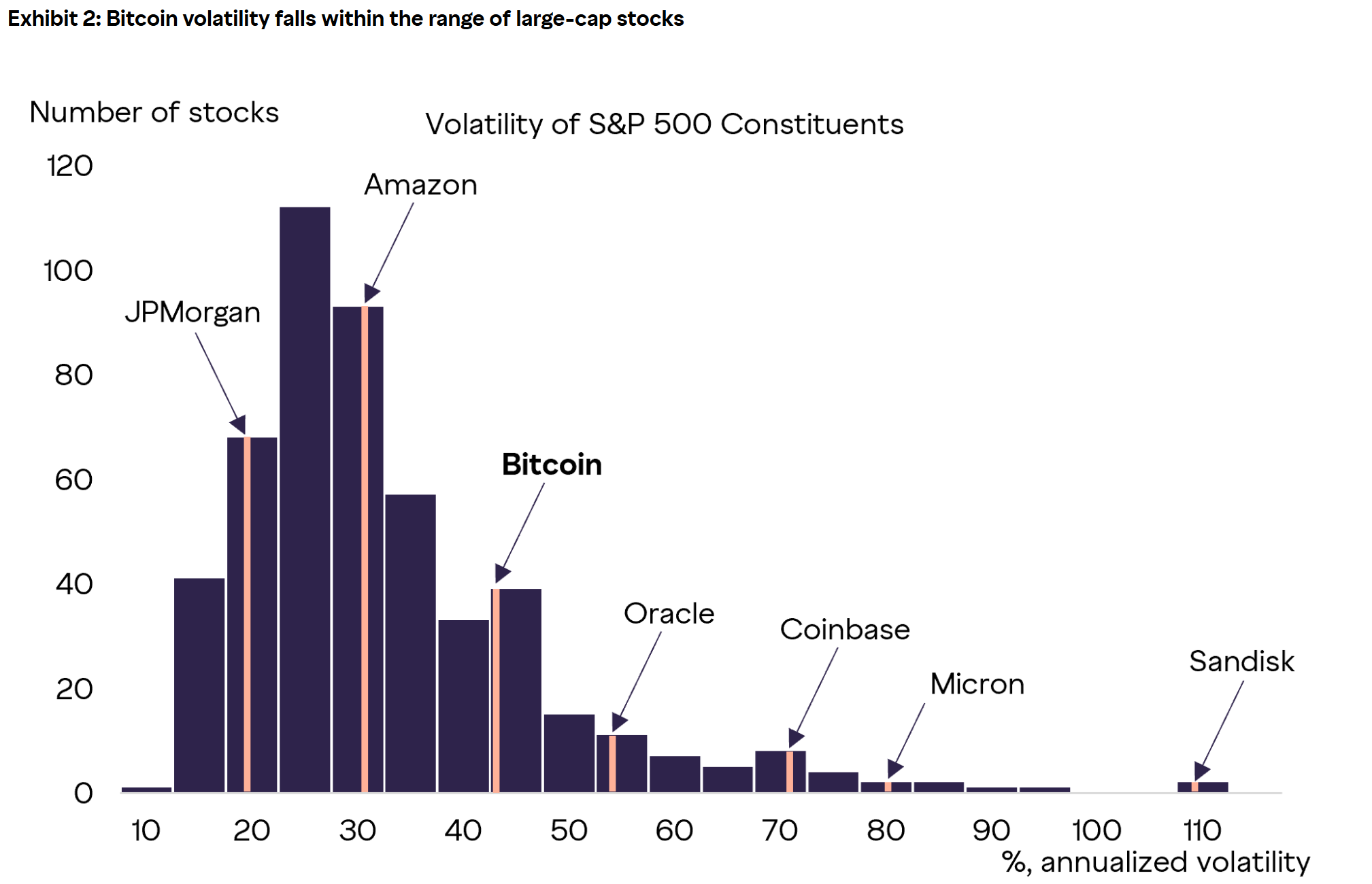
Therefore, the asset deserves another risk framework different from how it was viewed in the past 10 years. During its initial stages, the volatility was exceeding 100% against a capitalization of single-digit billions.
Interestingly, during periods of strong positive momentum, Bitcoin’s gains were achieved faster than the downside deviation as per the Sortino ratio. Still, that does not negate sudden and more aggressive nosedives.
Therefore, maturity has been driven by clearer regulations, more secure investment vehicles like ETFs, and institutional involvement. BlackRock, Grayscale, Strategy, and Morgan Stanley are a few of the deeply involved institutions in BTC adoption.
Crypto sectors less dependent on Bitcoin’s performance
The maturity of Bitcoin has created opportunities for a more diversified crypto portfolio. Other crypto sectors are becoming less tied to Bitcoin’s price performance, an edge ahead of traditional assets.
Most traditional assets are related to one another.
For instance, the annualized volatility of Smart Contracts Platforms is at 58%, with BTC contributing 38% while sector-specific drive was 20%.
However, Artificial Intelligence (AI) was at 85%, probably because it was somehow new in the financial markets. For this, Bitcoin-driven volatility was 35%, while sector-specific was 50%.
Events like the resignation of the CEO of Nvidia, Jensen Huang, after having an affair with a Chinese spy, have greatly impacted the AI market sector.
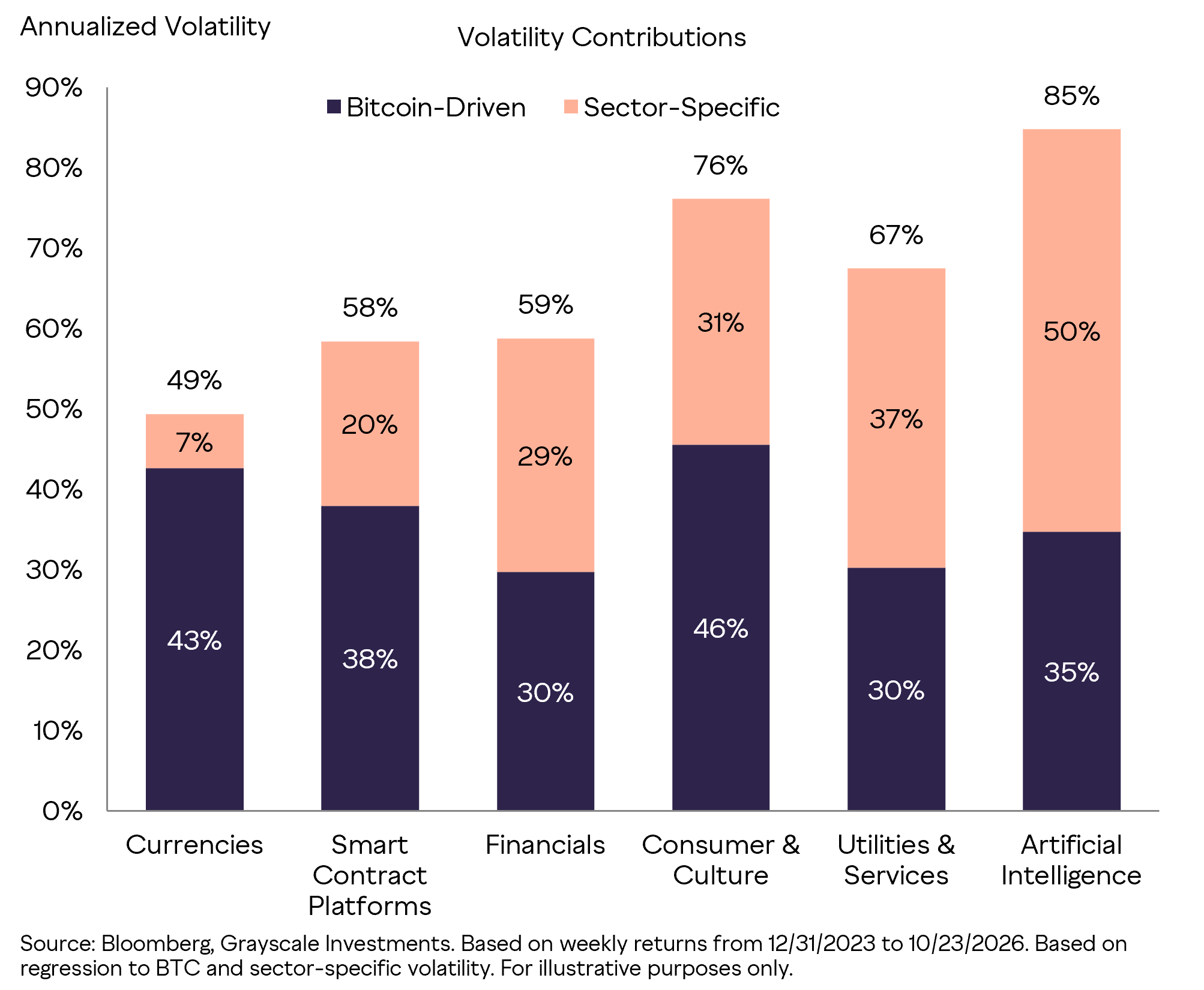
Other sectors in crypto, like financials, are at 59%, with 30% being Bitcoin-driven. This phenomenon is quite evident with seasonality in the crypto market.
But Bitcoin seasons are characterized by selective altcoin performance. On the other hand, altcoin seasons have BTC being performed by more than 75 alts in the top 100 by capitalization. Currently, only 45 altcoins have performed better than Bitcoin in the past 90 days.
All in all, crypto maturity is not only on Bitcoin but also in the whole sector. Therefore, a crypto risk framework should be done across more than one dimension to reflect its evolution.
Final Summary
- Bitcoin volatility has fallen to around 45%, reflecting a greater market maturity and institutional participation.
- Crypto sectors are becoming less dependent on Bitcoin’s performance, contrary to how most large-cap U.S. stocks are related.