Bitcoin’s sustainable energy usage reaches new ATH of 55%
Bitcoin's greenhouse emissions were at an all-time low as of this writing.



- About 55% of Bitcoin’s energy needs were from renewable sources.
- The network’s hash rate has also grown exponentially in recent years.
Bitcoin’s [BTC] sustainable energy usage hit a fresh all-time high (ATH) in February, as perceptions of the blockchain’s green credentials shift dramatically.
According to analysis by Daniel Batten, a well-known Bitcoin environmental impact analyst, the network was getting 55% of its energy requirements from renewable sources, up from 54.5% last month.
To assess how the narrative has changed, the figure was below 40% just four years back.

What led to the uptick?
Batten attributed three factors behind this month’s rise.
The first was Bitcoin mining company Luxor Technology’s strategic foray into Ethiopia, harnessing 200 MW of power from its vast renewable energy resources, primarily hydroelectric power.
Secondly, Argentina-based Bitcoin miner Unblock Global used 15 MW of flared gas from the country’s crude oil reserves to power its operations.
Lastly, U.S. mining firm CleanSpark, which uses low-carbon power, amped up its mining operations.
Bitcoin mining, the process through which new Bitcoins are brought into circulation, has been the subject of much debate and discussion over the years.
Since the process requires a lot of electricity to power big mining rigs, environmentalists and crypto skeptics have dubbed it to be one of the largest emitters of greenhouse gases.
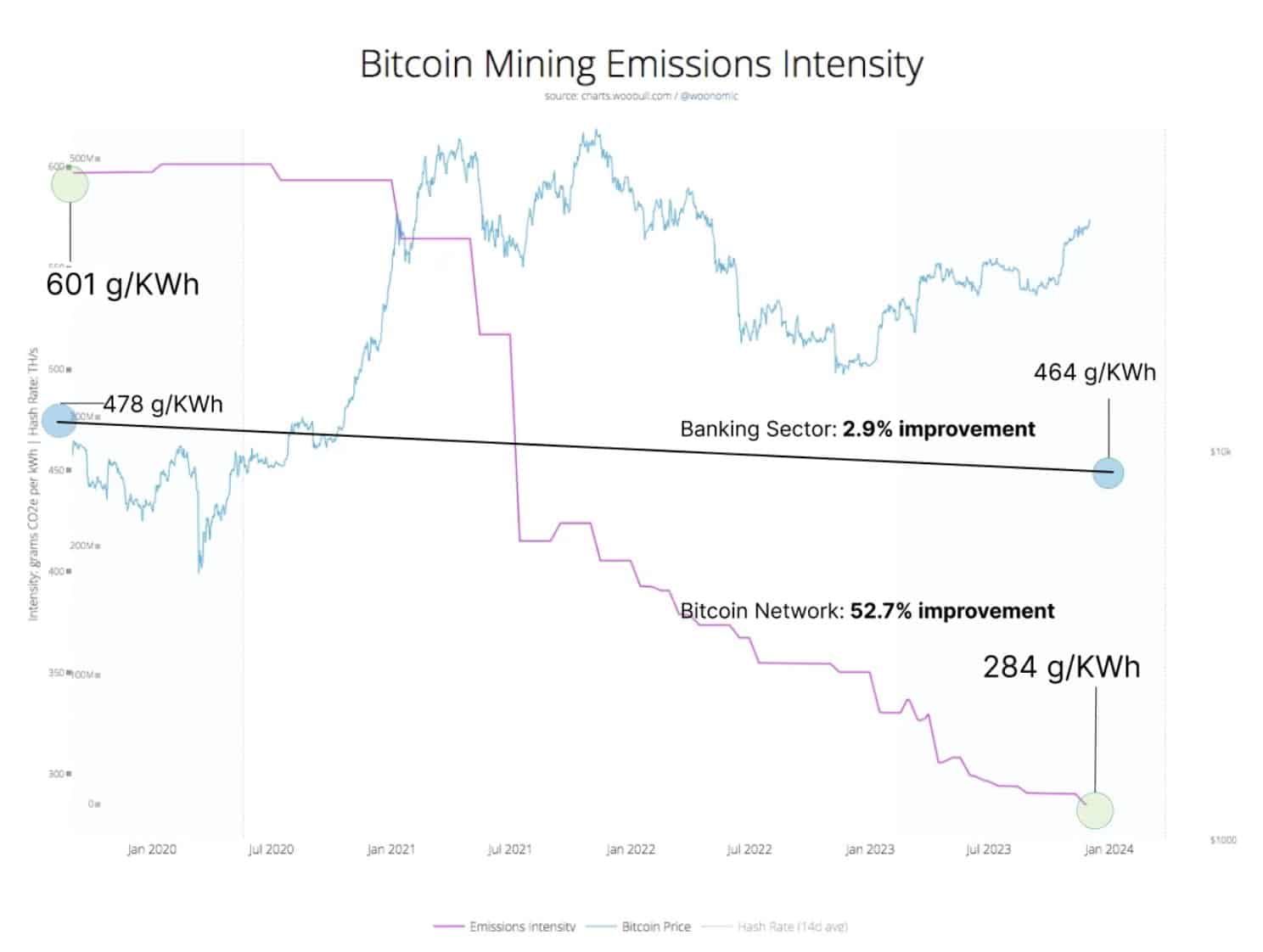
However, the emissions have dropped drastically in recent years. In fact, Bitcoin’s mining emissions intensity was at an all-time low, falling 52% in four years.
Owing to the sharp reduction, Bitcoin’s environmental efficiency was higher than many other sectors as of this writing.
The demands of a growing industry
The Bitcoin blockchain has grown significantly in size as mainstream acceptance has increased.
Read Bitcoin’s [BTC] Price Prediction 2024-25
According to AMBCrypto’s analysis of Glassnode’s data, daily transactions on the network have more than doubled on average in the last four years.
To service the higher demand, the network’s hash rate has also grown proportionately, leading to an ever-increasing demand for electricity.