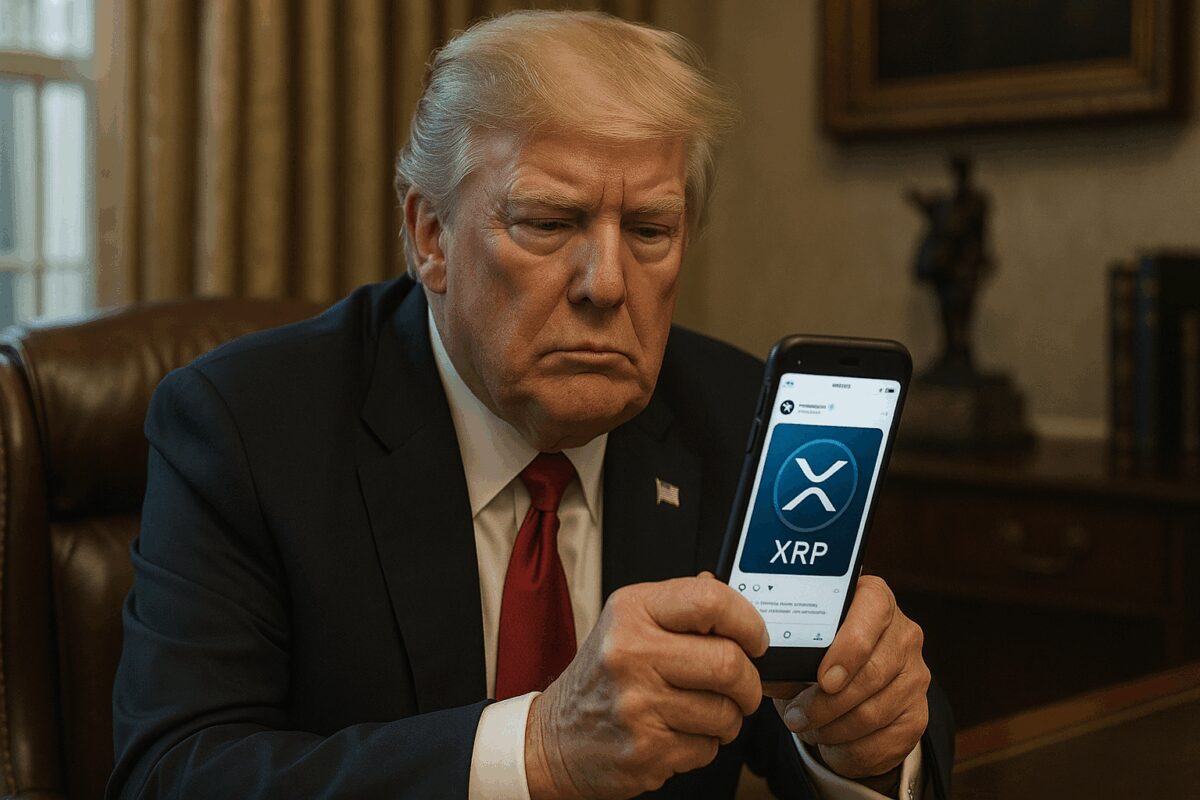
Unraveling Donald Trump’s ties to XRP reveals a complicated picture, colored by his financial records, shifting crypto policies, intense lobbying efforts, and noticeable market shifts. This raises a burning question: is Trump buying XRP, or is the hype just market noise? No one has found hard proof Trump himself bought XRP, yet his government waded deeper into crypto, and certain contentious remarks about XRP certainly grabbed the market’s attention.
Trump’s Changing Crypto Stance and Financial Ties
By August 2024, Trump’s financial filings showed he held somewhere between $1 million and $5 million in cryptocurrencies, mostly Ethereum and similar digital coins. XRP didn’t appear by name in those financial reports. Beyond just holding crypto, Trump also made a splash financially, earning upwards of $7 million through NFT sales like his “Mugshot” images and Donald Trump Trading Cards.
Trump’s views on cryptocurrency have definitely changed over time. He once called crypto a “scam” back in 2021, but by his 2024 campaign and after re-entering the White House, he was sounding much more supportive of it. His team talked about making America the world’s crypto hub and started taking action, like setting up a Strategic Bitcoin Reserve and a U.S. Digital Asset Stockpile with a March 6, 2025 executive order.
The XRP Controversy: Lobbying, Social Posts, and Ripple’s Role
Talk about a direct XRP connection really heated up in March 2025. Trump’s Truth Social account floated the idea that a national crypto reserve ought to hold XRP, Solana, and Cardano. The prices of those digital currencies jumped right after the post went live.
But that particular shout-out to XRP quickly became a contentious issue. Politico, among others, reported in May 2025 that someone working for Ballard Partners—a major lobbying group also working for Ripple Labs, the company behind XRP—had actually provided the wording for that social media update. Word got out that Trump hit the roof when he found out, supposedly feeling played because he thought he was making a general point about American crypto breakthroughs, not shilling for specific coins pushed by lobbyists. Brian Ballard supposedly got the cold shoulder from the White House afterwards, although Ballard Partners says things weren’t quite that bad.
Even with the uproar over the XRP name-drop, the executive order for a “Digital Asset Stockpile” went ahead just days after. Later explanations indicated this stockpile would mostly be filled with assets seized by the government, while a different Strategic Bitcoin Reserve would concentrate solely on Bitcoin. The government also made it clear they weren’t planning to buy up altcoins for this stockpile, unless they were assets they had already seized.
Top people at Ripple, like CEO Brad Garlinghouse and Chief Legal Officer Stuart Alderoty, were talking with Trump’s team; they supposedly met with Trump when he was President-elect in January 2025 and even showed up at inauguration parties. Garlinghouse himself also chatted with Trump about putting XRP into a national digital currency stash.
What’s more, Ripple and its leaders haven’t been shy about opening their wallets for political causes. Ripple apparently gave $5 million worth of XRP to Trump’s inauguration fund and has also given a lot of money to groups like Fairshake that support crypto-friendly politicians. Stuart Alderoty personally chipped in over $300,000 to committees raising money for Trump.
Market Impact, Legal Battles, and What Comes Next
When people thought the Trump administration was friendly to crypto, it usually made investors feel more confident about digital money. XRP especially saw its price jump and more people trading it whenever good news broke, like that disputed Truth Social post or when things looked up in Ripple’s court fight with the SEC. Take the first “Crypto Strategic Reserve” post – XRP’s price is said to have shot up quite a bit right after. By May 2025, XRP had some good runs, and market watchers pointed to things like progress on regulations and talk about ETFs as reasons why.
The lengthy court battle with the U.S. Securities and Exchange Commission has loomed large for XRP. Around May 2025, it looked like things might finally be heading toward a conclusion. The SEC and Ripple actually struck a deal to end the civil case, with Ripple agreeing to pay $50 million, down from the $125 million first asked. But a judge still needed to sign off on that deal, and Judge Analisa Torres recently turned down a joint request about it due to a technicality, so the whole saga isn’t over yet. Many in the crypto world feel that the SEC is changing its tune under new bosses, especially with Paul Atkins up for SEC Chair, which they see as a good sign.
It wasn’t just policy; Trump’s own money moves in crypto, especially with Ethereum-linked holdings and big NFT profits, kept making news. There’s also talk that the Trump family’s wealth grew significantly thanks to crypto, including investments in meme coins and the World Liberty Financial crypto exchange. All these money connections have raised eyebrows and prompted demands for more openness, especially about whether his personal investments could clash with his policy choices.
So, even though nobody can point to a public record showing Donald Trump himself bought XRP, his government’s actions and his own dealings clearly crossed paths with XRP’s story. That disputed social media post, supposedly shaped by lobbyists, along with meetings with Ripple’s top brass and Ripple’s campaign money, all forged a noticeable, if not direct, connection.
Ultimately, this story isn’t so much about whether Trump owns XRP himself, but more about how his administration’s changing tune on crypto, fierce lobbying from the industry, and the push for clear rules are molding what’s next for digital money like XRP in America. And the market? It’s keeping a sharp eye on all of this, jumping on every little twist and turn in this big game involving politicians, rule-makers, and digital cash.