Bolivia includes USDT in payment systems – Tether CEO hails ‘cornerstone’
The shift follows the government's softer stance on crypto since 2025.


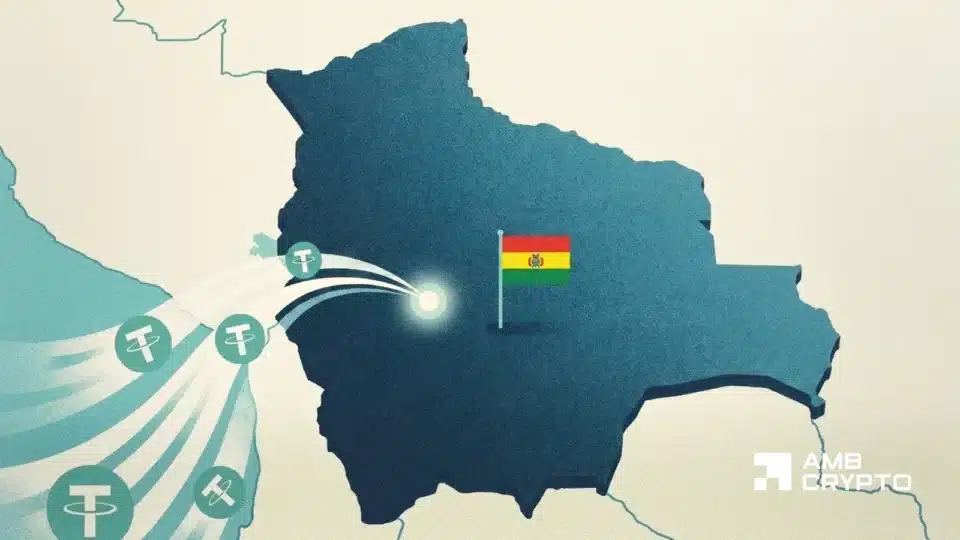
The Bolivian government is mulling formally recognizing Tether’s USDT as part of the currencies in its payment network. If it goes ahead with the plan, that would be a massive U-turn from its strict ban against currencies not issued by the Central Bank of Bolivia, including stablecoins.
In 2020, Bolivia reinforced the ban, only to ease the restriction in mid-2024 to ease remittances and a US dollar shortage.
Now, the country plans to move from easing the restriction to formally integrating USDT into its payment system. Commenting on the same, José Gabriel Espinoza, the Minister of Economy and Public Finance, said,
We are working on and technically evaluating the possibility of including USDT in the Bolivian payment system, so that it circulates as just another currency, like the dollar, like the Bolivian boliviano.
USDT adoption in LATAM
The shift follows President Rodrigo Paz Pereira’s inauguration in 2025. Like the President Donald Trump administration, the Paz government vowed to integrate digital assets into the traditional banking system.
In fact, most businesses around Bolivia already use USDT as a unit of account, and several Bolivian banks are now supporting the stablecoin. Reacting to the update, Tether CEO Paolo Ardoino said,
USDT is more and more used as a cornerstone within several emerging market economies.
Most of the stablecoin adoption in Latin America is driven by remittance, shortage of foreign exchange, or inflation, according to Rain, one of the payment infrastructure players in the region.
For the Bolivian case, stablecoin card spending exploded 6x in 2025 after the ban was lifted in 2024. Most of the transfers are meant for international payments for goods and services due to the shortage of US dollars.
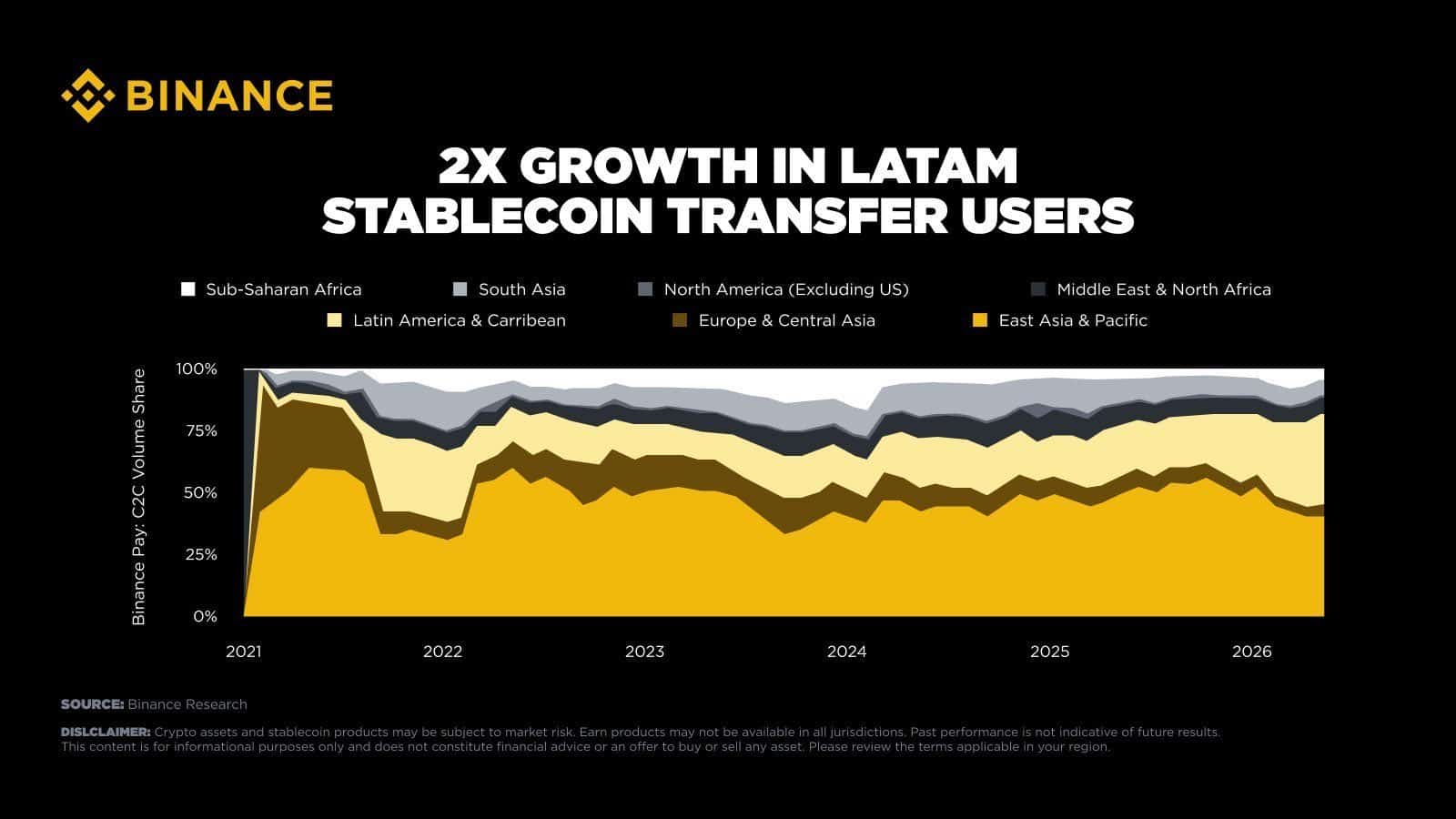
A similar adoption trend was noted by Binance across LATAM. Notably, stablecoin transfer users grew 2x, with Binance co-founder Yi He calling the region the ‘crypto’s strongest utility markets.’
But the adoption is not only happening at the government level; global businesses like Hyundai are increasingly embracing stablecoins as well.
This has seen stablecoin transaction volume hit a record $1.78T in June, but USDT only accounted for 36% market share. Circle’s USDC dominated with +60% market share.
That said, USDT hit a new milestone of $190B in market supply in May. But this has since dropped to $184B, underscoring $6B in capital outflows in the past few weeks. This suggested broader risk-off sentiment in the crypto market, but real-world usage was still strong.
Final Summary
- Bolivia is considering formally recognizing USDT in its national payment system.
- Despite the growing adoption and usage, the USDT supply has dropped by $6B amid a broader crypto downturn.