Can BTC whales save Bitcoin after $4.06B ETF outflows?
Bitcoin faces mixed market signals as institutional demand weakens and on-chain activity evolves.



Institutional demand for Bitcoin is showing fresh signs of weakening, removing one of the market’s strongest sources of structural spot buying.
The U.S. Spot Bitcoin and Ethereum ETFs are experiencing their seventh consecutive day of Net Outflows, with $445 million coming out of Bitcoin and $12.85 million coming out of Ethereum yesterday.
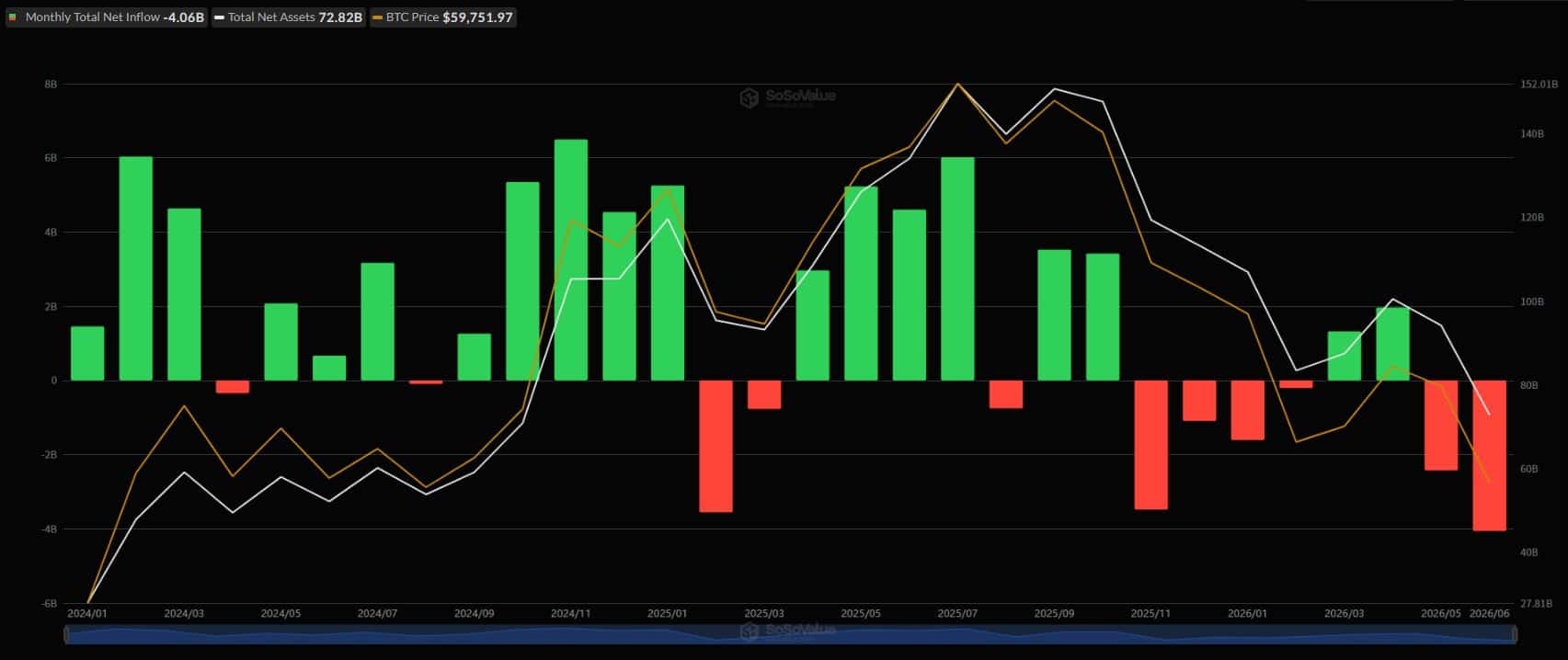
As redemptions persisted, monthly Bitcoin ETF flows turned negative by roughly $4.06 billion, reducing total ETF assets to $72.82 billion. This trend matters because sustained outflows reduce institutional buying that previously absorbed market supply during corrections.
Unless whales or long-term investors replace that demand, Bitcoin could struggle to build a sustained recovery. Otherwise, renewed institutional inflows may restore stronger price support.
Whale activity signals renewed conviction
Despite persistent ETF outflows, large Bitcoin holders responded differently as prices revisited key support levels. After Bitcoin dropped below $60,000 for a short time before returning to that area, whale trading volumes increased rapidly.
The network recorded 6,920 transactions above $100,000 and 1,438 exceeding $1 million, marking its second-largest spike in two months. This response suggests larger investors viewed the correction as an accumulation window rather than a signal to reduce exposure.
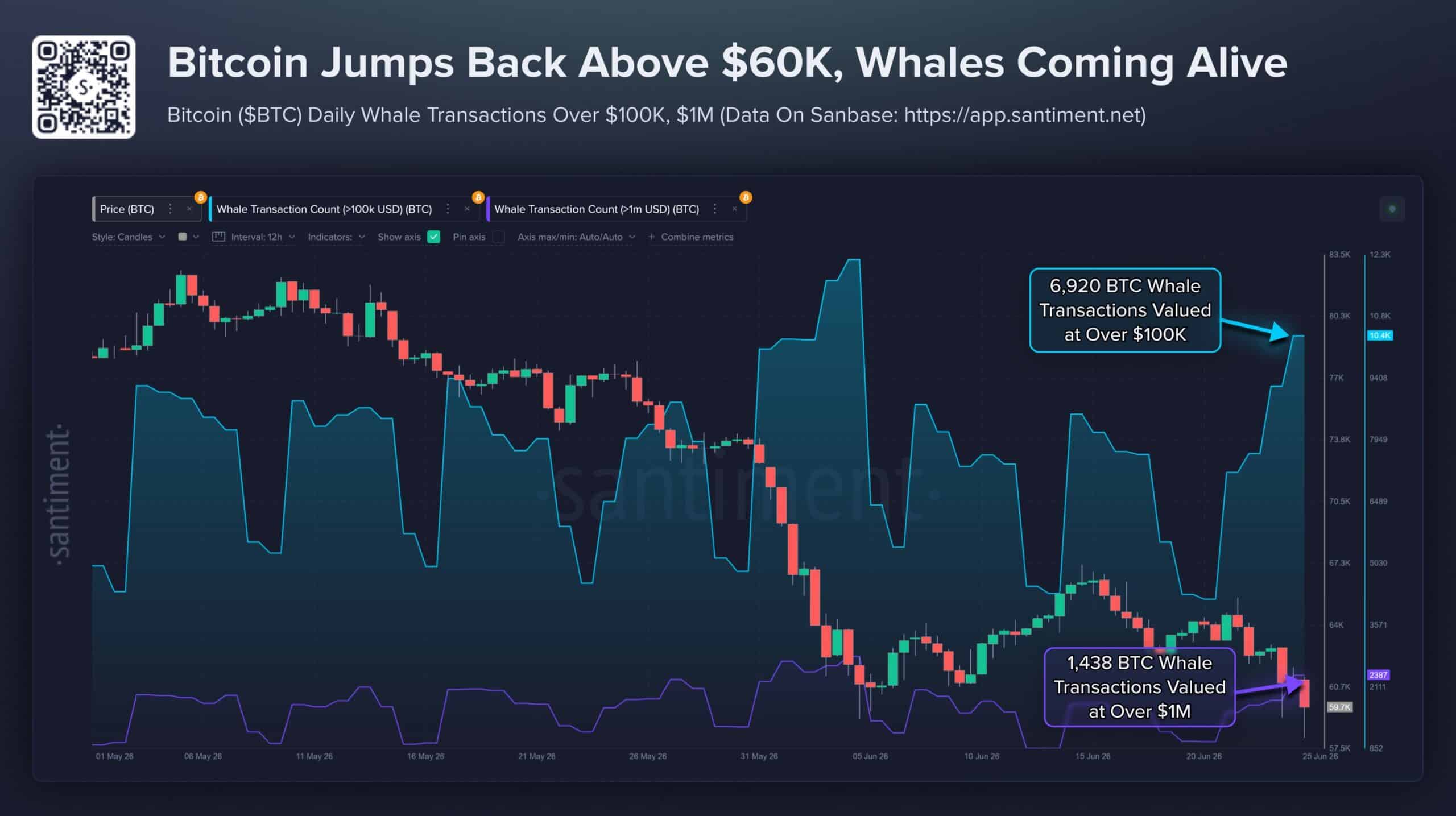
If whales continue absorbing supply while exchange balances remain constrained, downside pressure could gradually ease. Still, broader spot participation must strengthen before Bitcoin can convert accumulation into a sustained recovery.
Bitcoin’s Long-Term Holders enter capitulation
Whale accumulation reflects growing confidence among larger investors. However, Long-Term Holders (LTH) are not responding uniformly to the recent market weakness.
The Long-Term Holder SOPR has moved deeper into negative territory, indicating some seasoned investors are now realizing losses after Bitcoin repeatedly traded below $60,000. The monthly average has fallen from 1.03 to 0.8.
That would indicate about 13% loss for LTH on their investment over the last month.
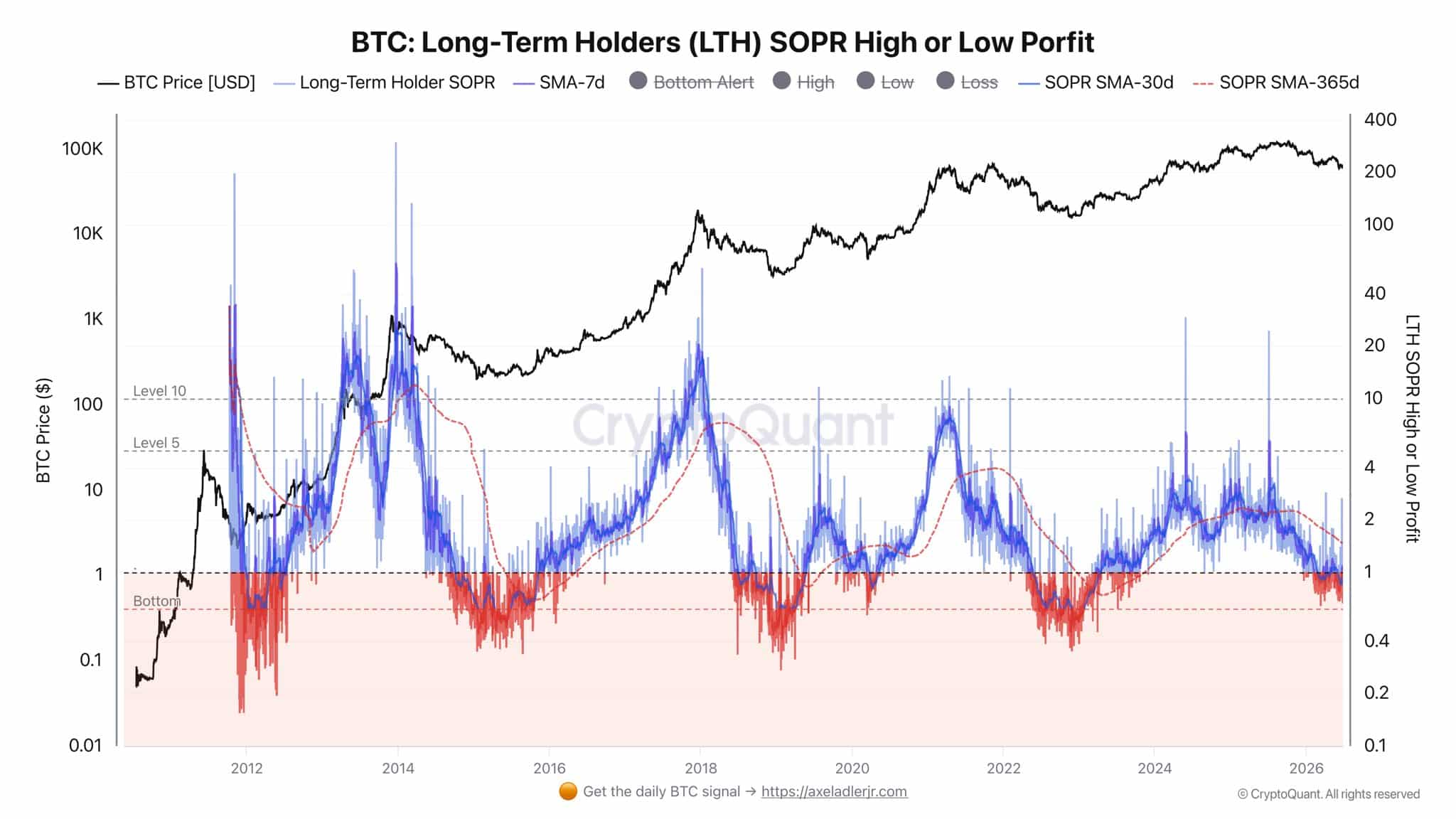
Meanwhile, the yearly average declined from 2.06 to 1.46, confirming that realized profits continue shrinking. At this point, it appears the conviction of older holders is eroding.
However, as profitable supply becomes exhausted, selling pressure often diminishes, laying the groundwork for a gradual recovery rather than an immediate reversal.
Final Summary
- Bitcoin [BTC] ETF outflows continue weakening institutional demand, while whale accumulation helps cushion near-term selling pressure.
- Bitcoin long-term holder capitulation may reduce future selling, but broader spot demand remains key to recovery.