CLARITY Act back in the spotlight after $6.3B Binance hack — Here’s why!
Did regulatory uncertainty cost crypto billions?


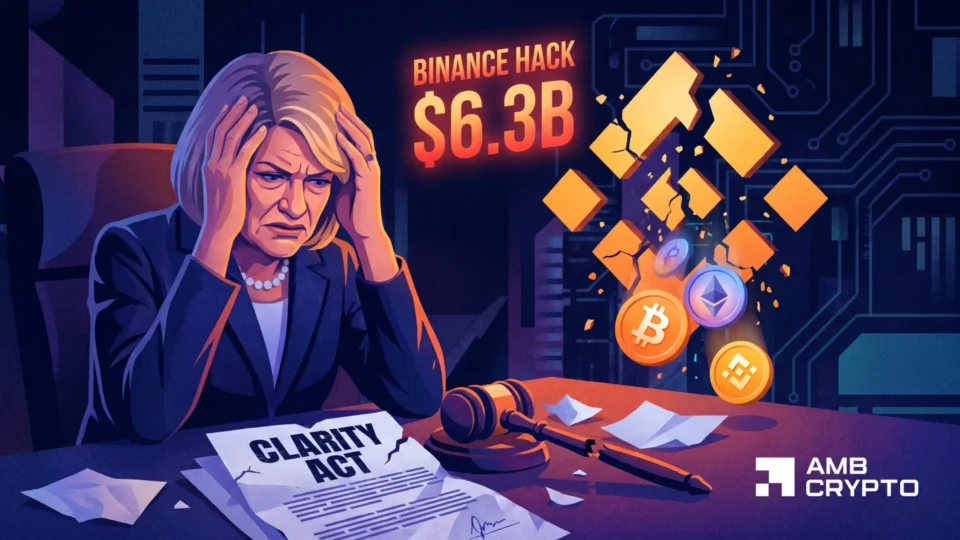
The $6.3 billion Binance hack, the largest crypto security incident on record, has sparked fresh debate over cryptocurrency regulations in the United States, particularly the need for stronger safeguards for crypto exchanges.
According to Senator Cynthia Lummis, the incident highlights why the proposed CLARITY Act is important for the industry’s future.
Lummis blames the CLARITY Act setback
The Senator argued that the legislation would have provided crypto firms with legal clarity to freeze suspicious transactions as soon as law enforcement agencies flagged them. This would have allowed exchanges to respond immediately to potential security threats, rather than lose valuable time navigating regulatory uncertainty.
Lummis added,
Every minute lost is money gone for good.
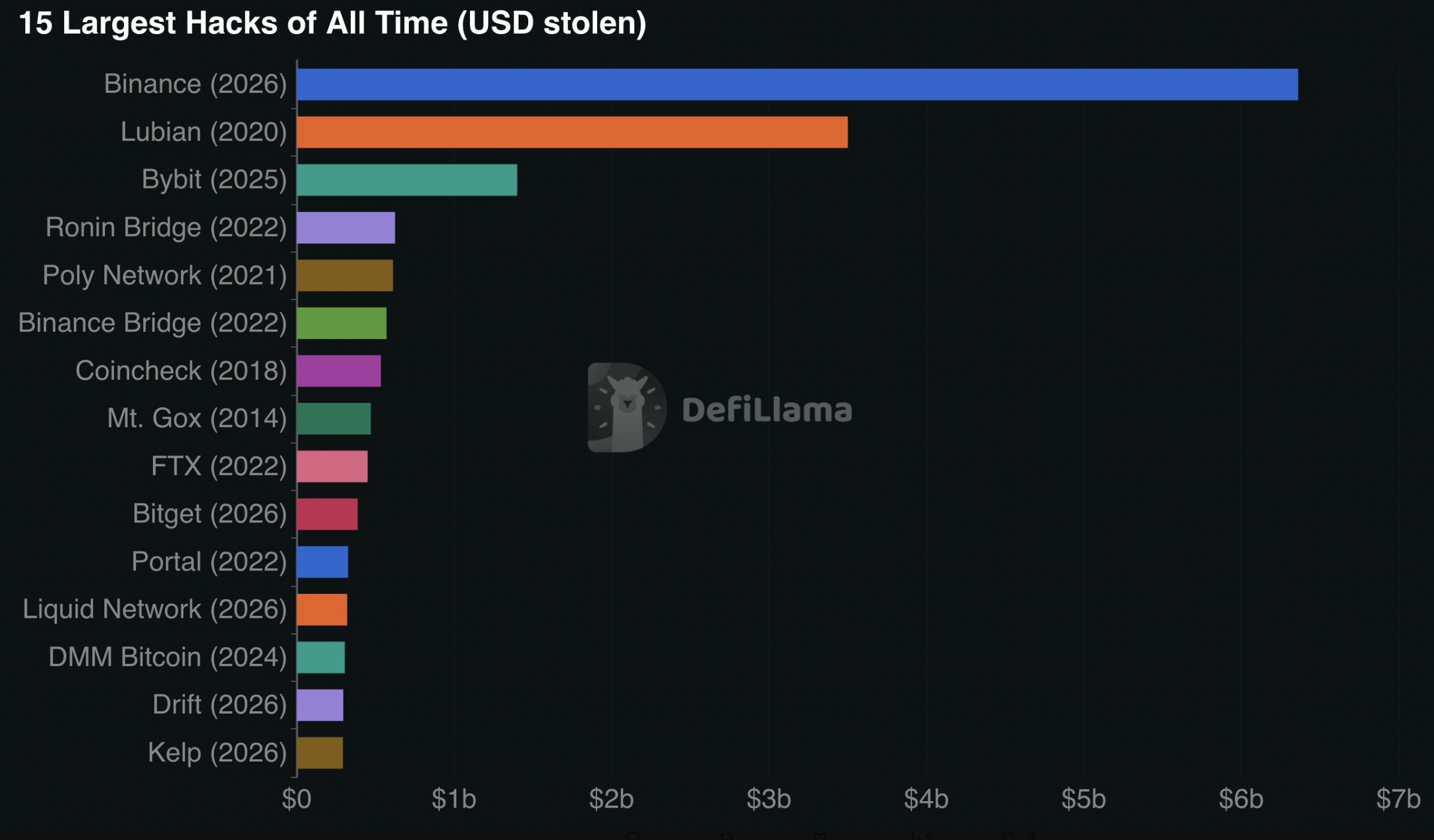
Lummis also warned that hackers stole more than $6 billion in less than four hours, making the incident larger than the previous two biggest crypto thefts combined — the $3.5 billion LuBian hack in December 2020 and the $1.4 billion Bybit exploit in February 2025.
CFTC Chairman stresses on new crypto regulations
At the same time, CFTC Chair Mike Selig also used the incident to reinforce the need for a federal registration framework for crypto exchanges. He argued that offshore exchanges lack the cybersecurity safeguards expected of regulated U.S financial markets.
However, his remarks were focused on vulnerabilities in supporting infrastructure, such as an individual’s laptop, rather than weaknesses in blockchain networks or smart contracts.
Additionally, he also highlighted how blockchain transparency could help regulators trace stolen funds, even when hackers use privacy tools such as Tornado Cash.
Selig went on to say,
I think the fact that we can trace transactions on-chain, even when some of these technologies are used to obfuscate that, gives us a lot of potential as a regulator to be really a cop on the beat.
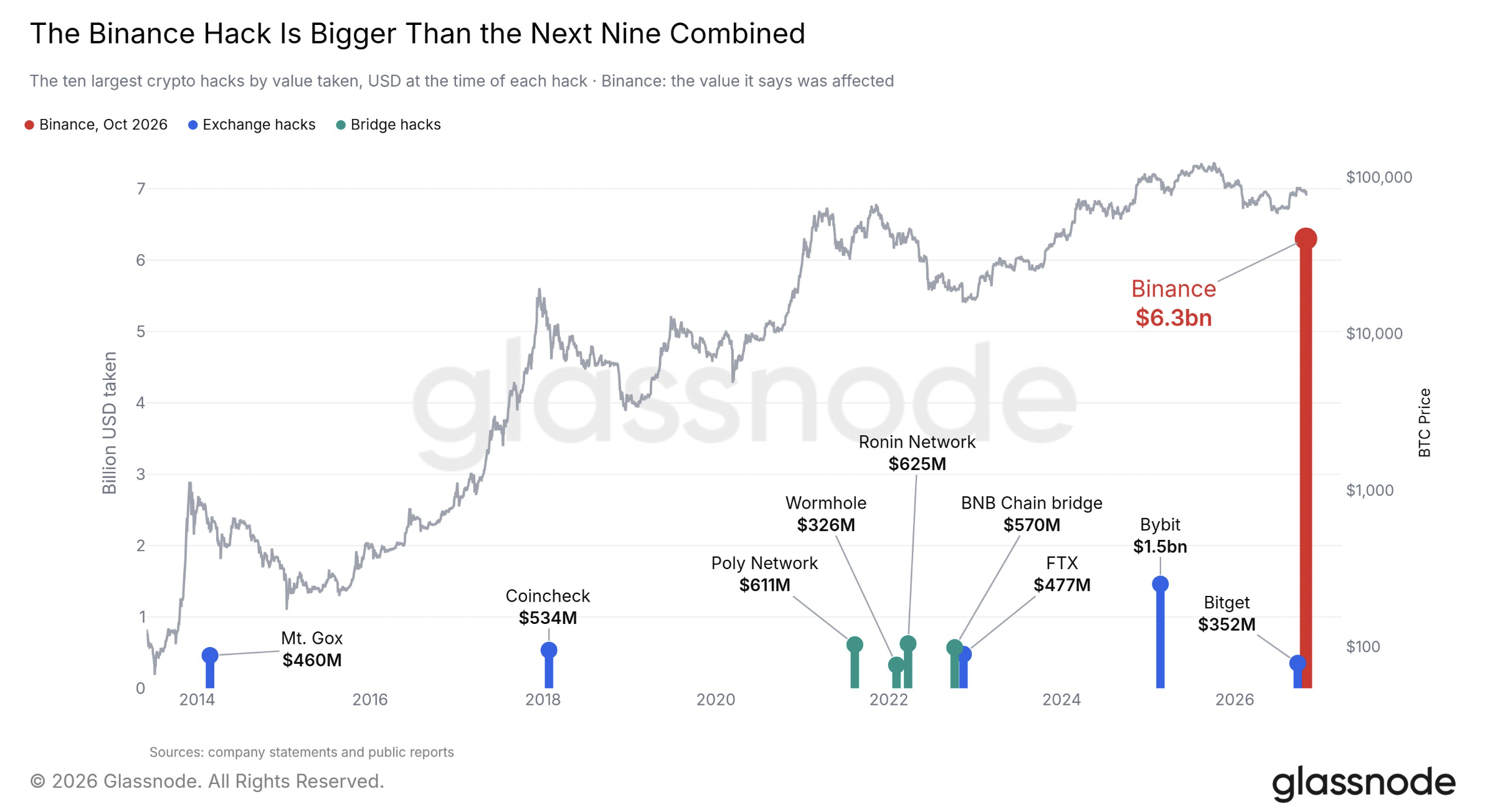
This is evidence that the Binance hack is particularly alarming. Especially since the amount affected already exceeds the combined value of the next nine largest crypto hacks, according to Glassnode.
Crypto market faces the brunt
Here, it’s worth pointing out that the impact has also extended beyond just security concerns, weighing on market sentiment and liquidity.
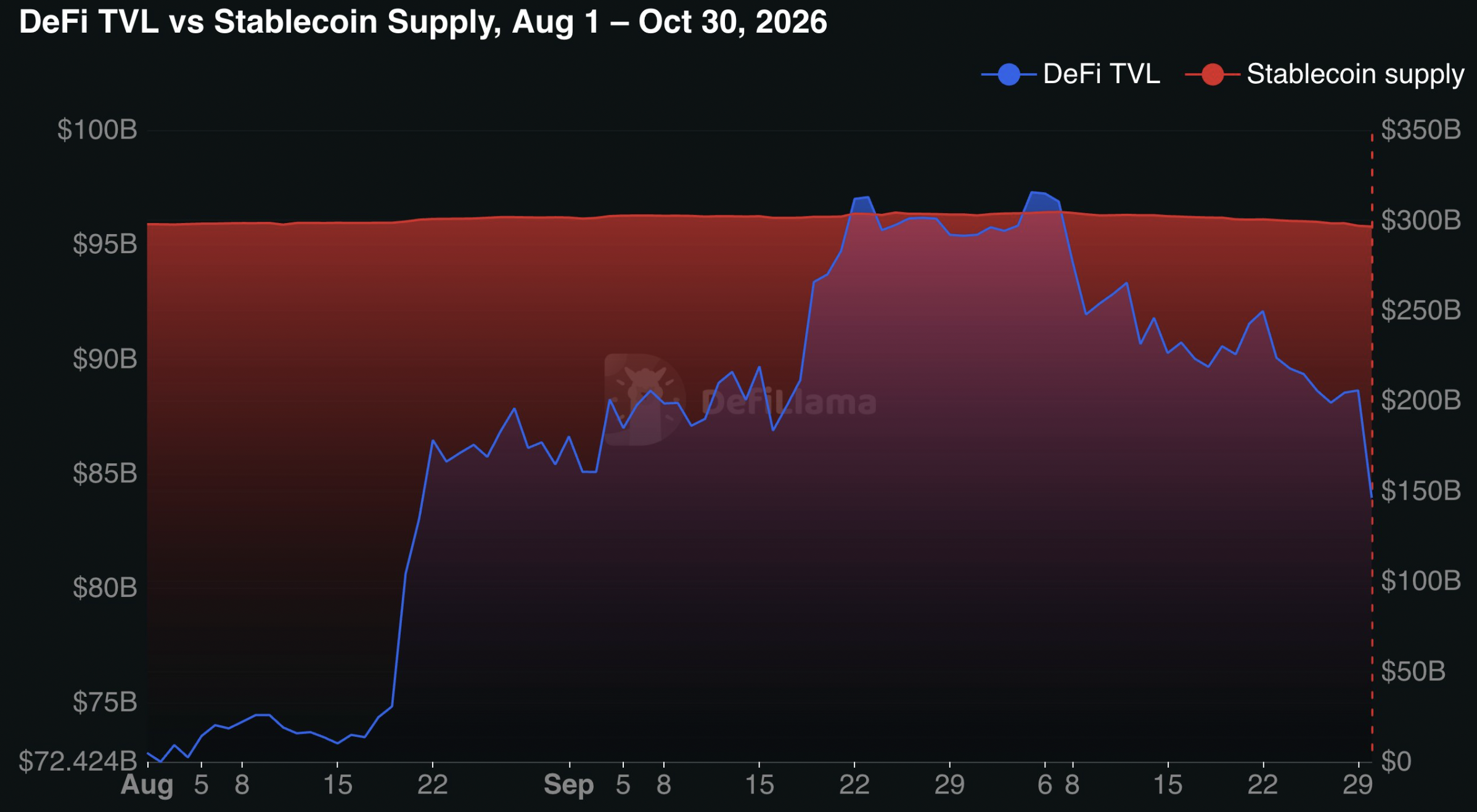
According to DefiLlama, DeFi Total Value Locked (TVL) dropped by 5.3% on 30th October to $83.95 billion, its lowest level since 21st August. Stablecoin supply also declined to $296.6 billion, remaining below the $300 billion-mark since 24th October.
Meanwhile, around $1.5 billion in leveraged positions were liquidated as Bitcoin [BTC] briefly fell to $76,400, triggering widespread selling across major cryptocurrencies.
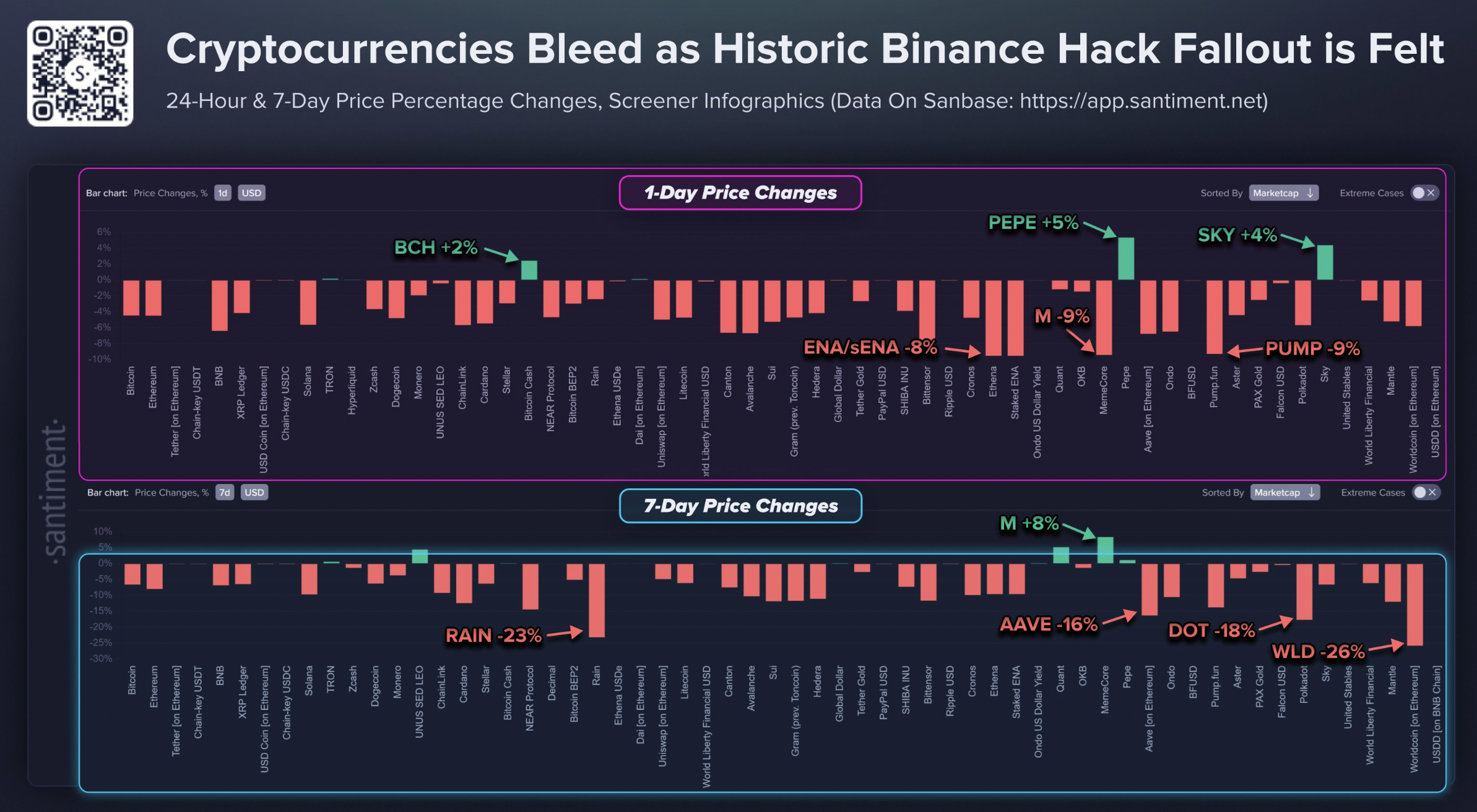
While Pepe [PEPE], Sky [SKY], and Bitcoin Cash [BCH] posted gains, riskier assets such as MemeCore [M], Ethena [ENA], and Pump.fun [PUMP] recorded significant losses.
Therefore, going forward, $76,400 remains a crucial support level for Bitcoin, while reclaiming $80,000 could signal improving market sentiment. On the other hand, a break below $76,000 could extend the broader risk-off trend.
However, with Binance expecting to resume withdrawals within 48 hours (from the day the hack was reported), hope remains.
Final Summary
- Senator Lummis is the latest to comment on the Binance hack and what could have been done to prevent it.
- DeFi TVL dropped by 5.3% to $83.95 billion, while stablecoin supply also fell to $296.6 billion.