CLARITY Act’s new ethics provision: Officials banned from ‘issuing or sponsoring digital assets’
The revised CLARITY Act combines ethics safeguards with crypto market reforms to strengthen regulatory confidence and governance.



Senate Republicans expanded the CLARITY Act by adding ethics provisions alongside digital asset market reforms.
The revised draft would prohibit senior government officials, including the President, Vice President, Members of Congress, federal judges, covered officials, and their spouses, from issuing or sponsoring digital assets for compensation.
In addition to that, it also requires covered officials to divest crypto holdings or place them in blind trusts, with restrictions lasting until the 20th of January, 2029. Violations could trigger penalties of up to $250,000 per day.
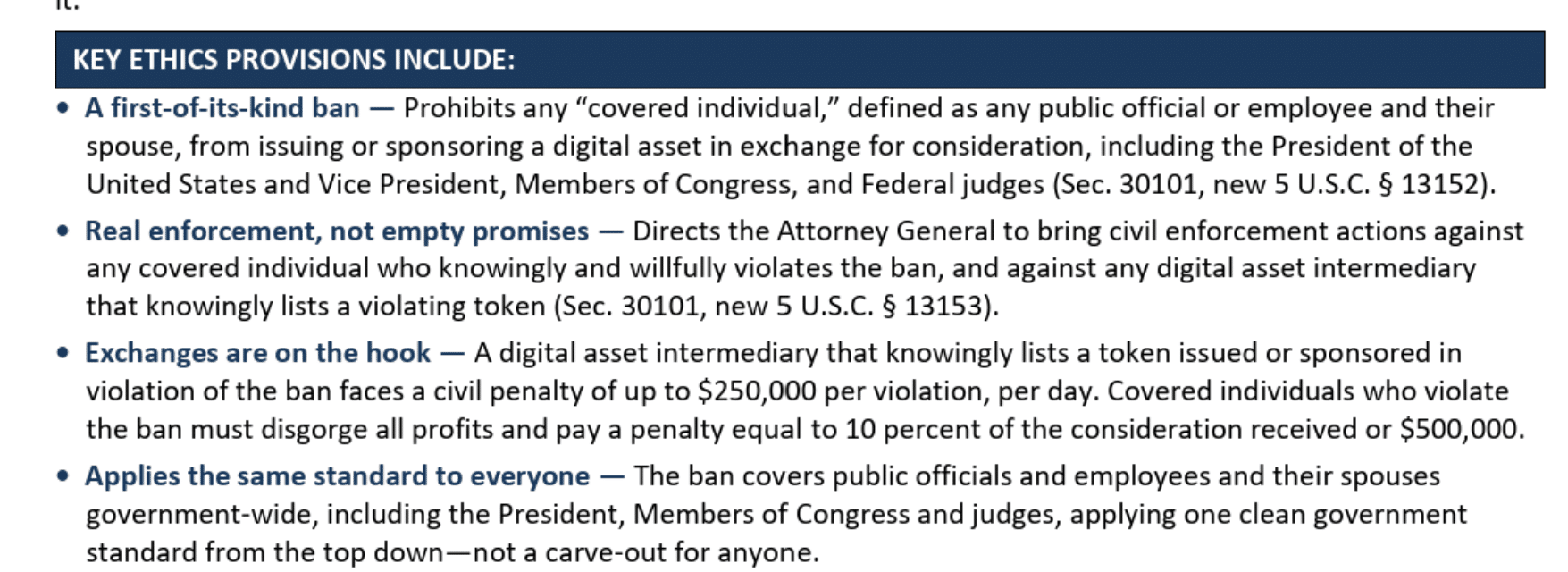
These measures seek to reduce conflicts of interest and strengthen confidence in future crypto regulation. They also signal lawmakers’ broader effort to pair market structure rules with public accountability.
Crypto profits intensify ethics debate
These ethics provisions emerged after political scrutiny over President Trump’s crypto businesses intensified. In 2025, public financial disclosures showed more than $1.4 billion in crypto-related income, prompting broader debate over conflicts of interest.
On X, Congressman James E. Clyburn questioned whether investors in Trump’s crypto ventures could receive favorable treatment from his administration. Similarly, Senator Bernie Sanders argued the CLARITY Act could allow Trump’s crypto profits to continue.

Together, those criticisms increased pressure on lawmakers to separate public office from private digital asset interests.
While Republicans responded with new ethics restrictions, Democrats maintain the draft leaves important loopholes unresolved, ensuring enforcement and accountability remain central issues as Senate debate continues.
Will ethics provisions improve regulatory certainty?
Attention now turns from legislative intent to market perception. Institutional investors often value predictable governance alongside regulatory clarity before committing long-term capital.
The revised CLARITY Act combines market structure reforms with ethics requirements, including divestment rules, qualified blind trusts, and disclosure thresholds above $1,000.
Together, these measures seek to demonstrate that digital asset policy can remain independent of officials’ personal financial interests.
However, if there are many outstanding exemptions that impact long-term investment into U.S. digital asset markets, then those exemptions will ultimately affect long-term institutional participation.