Court rejects SBF defense that FTX customers could have eventually been repaid
The Second Circuit ruled that temporary misuse of customer funds still qualifies as fraud, even if victims might later recover losses.


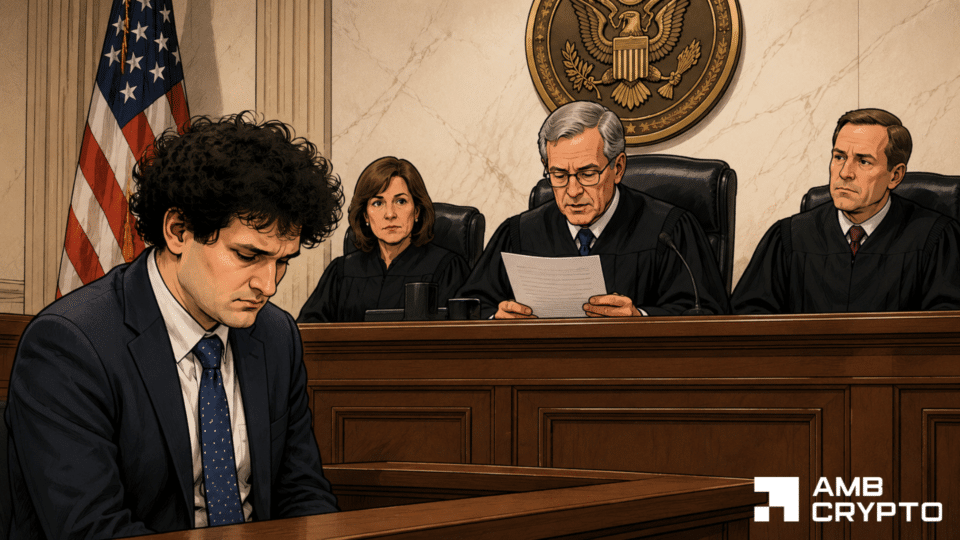
A U.S. appeals court has upheld Sam Bankman-Fried’s fraud conviction. It rejected his argument that FTX customers may ultimately have recovered their funds if Alameda Research’s investments had continued appreciating.
In a ruling issued June 12, the Second Circuit Court of Appeals affirmed Bankman-Fried’s seven-count conviction, 25-year prison sentence, and roughly $11 billion forfeiture order tied to the collapse of FTX.
The decision arrives days after Bankman-Fried appeared in the U.S. Department of Justice clemency database with a pending pardon-related filing. This could raise the political stakes in any future clemency discussions.
Court says repayment potential does not erase fraud
One of Bankman-Fried’s central arguments on appeal was that Alameda’s investments could eventually have generated enough value to repay FTX customers and lenders fully.
The appeals court rejected that argument repeatedly throughout the opinion.
Citing the Supreme Court’s 2025 Kousisis decision, the judges wrote that federal fraud law does not require proof of permanent financial loss.
Instead, the court said fraud occurs once a defendant obtains customer money or property through material misrepresentations, even if victims might later recover funds.
The ruling stated that “temporary misappropriation” of customer assets still constitutes fraud. Also, no belief in eventual repayment excuses knowingly deceptive conduct.
The court also upheld lower court rulings that prevented Bankman-Fried from extensively arguing that many of his investments later became profitable.
Judges back prosecution’s fraud case
The ruling strongly endorsed the prosecution’s theory that Bankman-Fried knowingly diverted customer funds from FTX to Alameda while publicly assuring users that customer assets remained safe.
The judges described the evidence presented at trial as “overwhelming”. They said Bankman-Fried used FTX as a “personal piggy bank.”
The opinion cited testimony from former Alameda CEO Caroline Ellison, FTX co-founder Gary Wang, and former engineering head Nishad Singh, all of whom testified that Bankman-Fried knowingly authorized the misuse of customer funds.
The appeals court also rejected arguments that the involvement of lawyers in some company operations supported an advice-of-counsel defense.
According to the ruling, attorneys involved with FTX were not fully informed about the alleged misuse of customer assets.
Ruling may complicate clemency discussions
The timing of the ruling could complicate any future political effort to seek clemency for Bankman-Fried.
Earlier this week, records reviewed by AMBCrypto showed a pending clemency-related filing connected to the former FTX CEO in the DOJ’s pardon database.
The new appellate ruling now gives critics of any potential pardon effort fresh judicial backing for the government’s fraud case against Bankman-Fried.
The court also upheld the approximately $11 billion forfeiture judgment despite acknowledging that many customers may eventually recover substantial portions of their losses through the bankruptcy process.
Final Summary
- A U.S. appeals court upheld Sam Bankman-Fried’s conviction and rejected arguments that FTX customers could eventually have been repaid.
- The ruling comes days after a pending clemency-related filing tied to Bankman-Fried surfaced in the DOJ pardon database.