Cronos crypto faces KEY test after Tectonic’s $75M exploit – Will CRO hold?
Tectonic exploit drained $75M via TONIC manipulation, exposing liquidity risks despite Cronos halting transfers.



Tectonic, a lending protocol on the Cronos blockchain, suffered an exploit resulting in approximately $75 million in losses.
The issue centered on TONIC, a token with a 20% collateral factor. As trading activity was limited, its borrowing value was artificially inflated.
Exploiters then manipulated the price, driving it up by 100x in just twenty minutes. This caused the deposited collateral to appear as being significantly greater in value than it actually was.
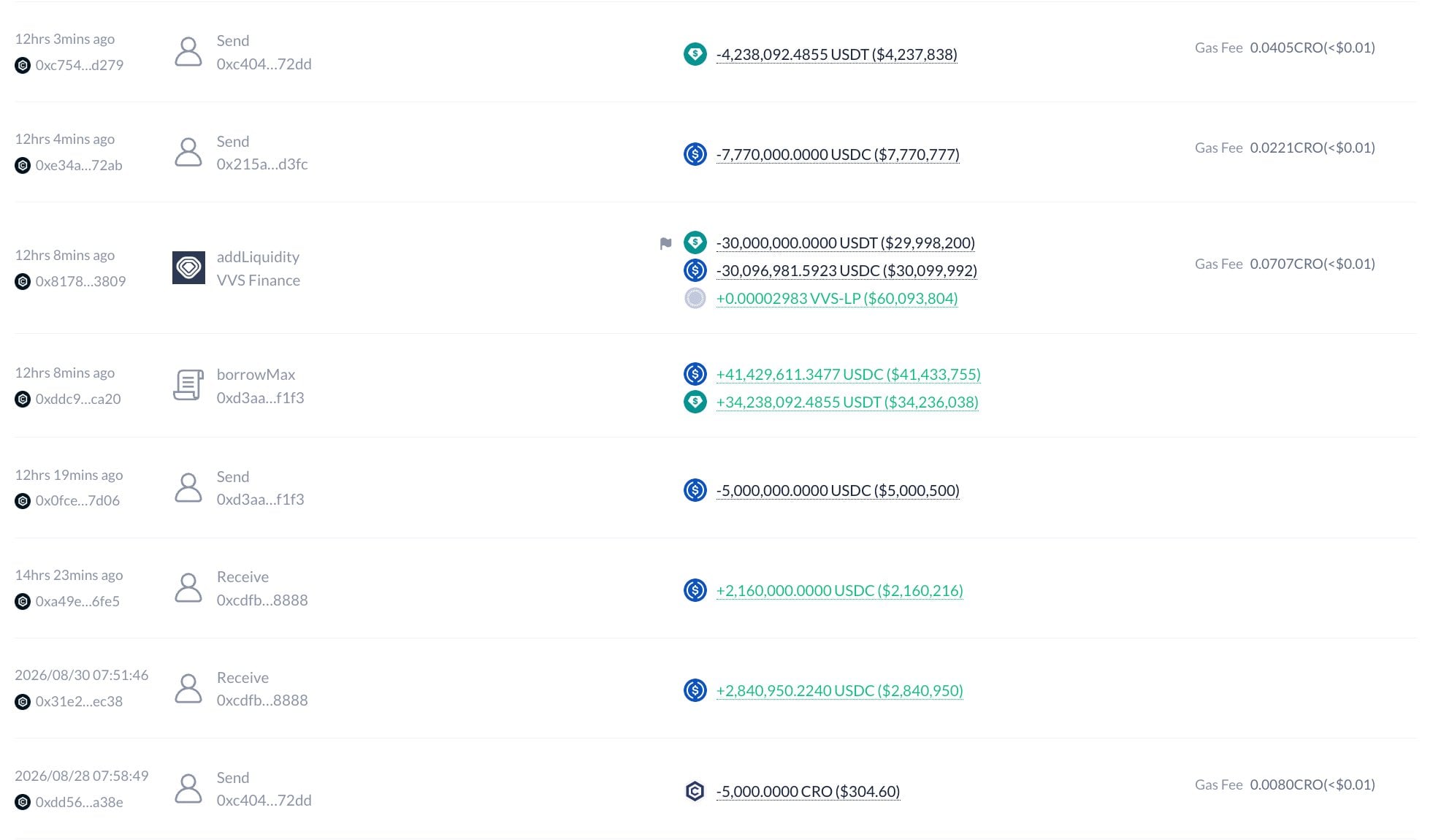
This enabled the liquid assets to be borrowed against an artificial valuation. Thus, this price manipulation was directly draining liquidity from the market.
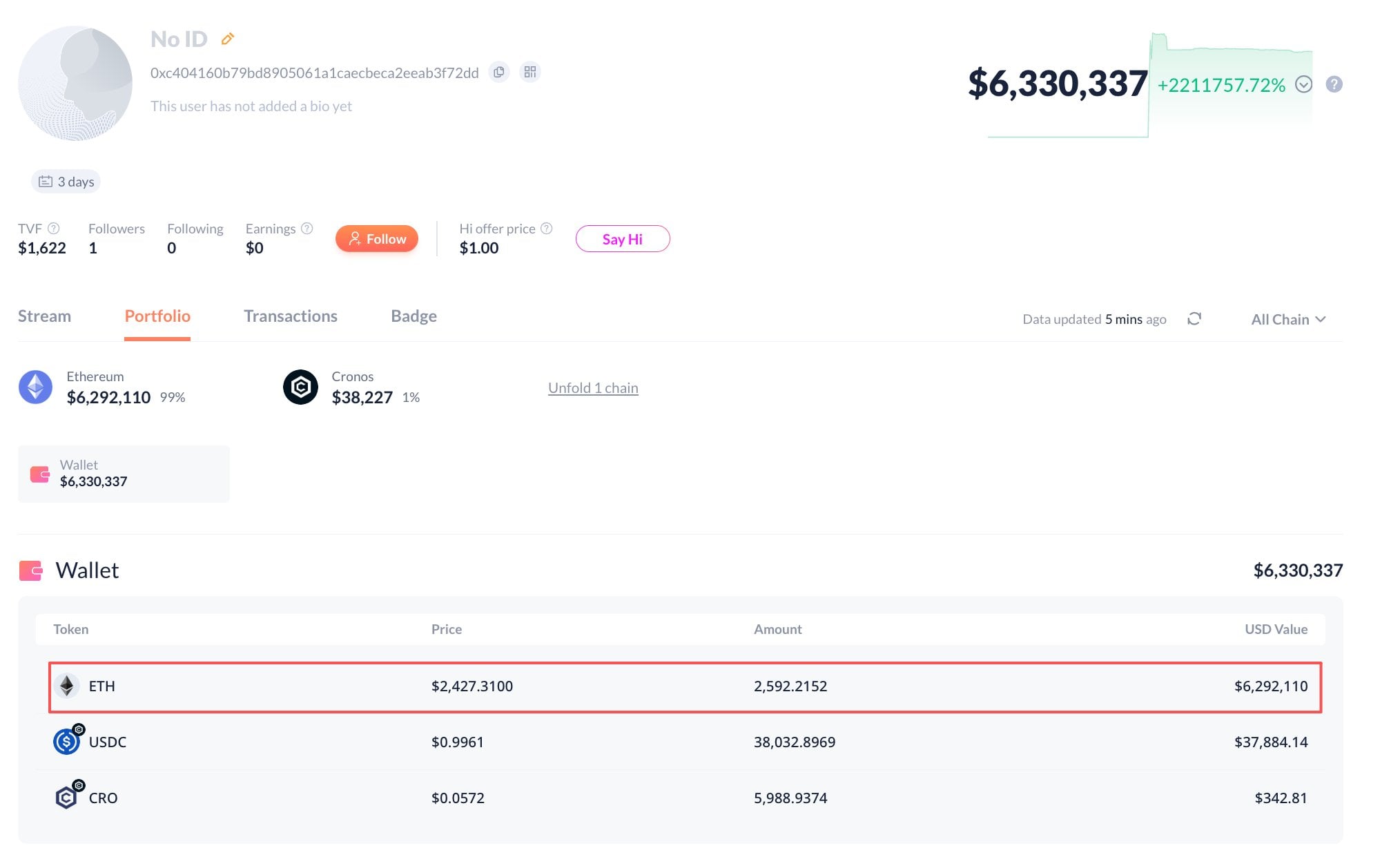
Only about $6 million reached Ethereum [ETH] before Cronos halted the network. That left an estimated $60–68 million in attacker-controlled addresses on Cronos. The pause, therefore, prevented most of the funds from moving further.
Before Cronos resumes, tighter collateral limits and liquidity checks will be critical. Without them, another thinly traded token could expose the protocol to similar manipulation.
Cronos tightens containment measures
After restricting the attacker’s movement of funds, Tectonic turned its focus to protecting user assets. This is because they were exposed through the various smart contracts used by Tectonic.
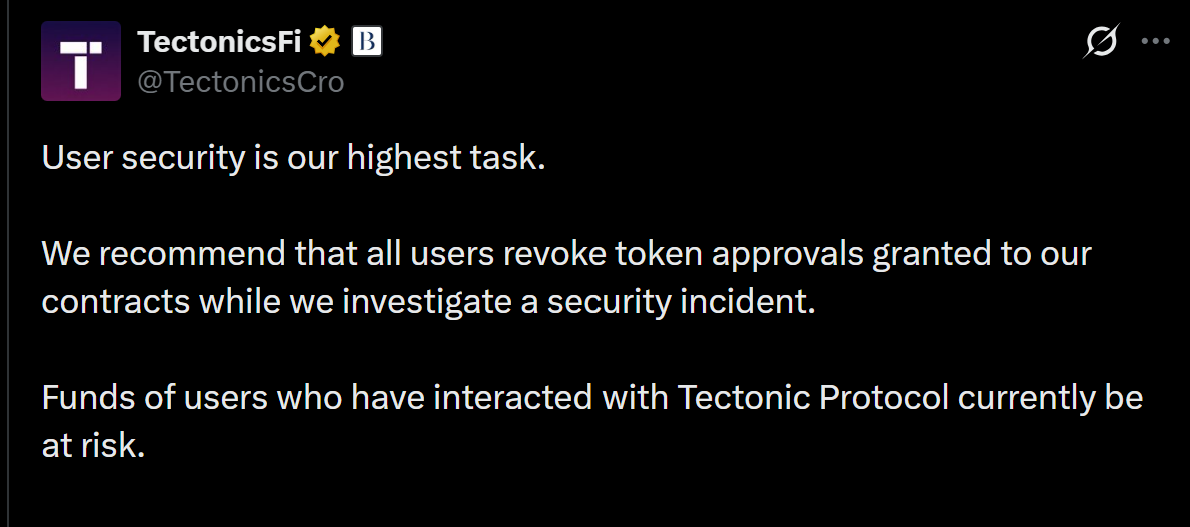
The protocol suggested that users should cancel any token approval that has been made to Tectonic’s smart contracts. This limit ensures that any compromised permissions cannot cause potential future damage.
Containing this type of loss will depend on securing both the smart contracts and approvals prior to restarting the Cronos blockchain.
If the developers restart the Cronos network without first securing these items, it will likely allow for further loss, as it would reopen other paths of potential loss.
CRO tests key support as exploit pressure builds
The measures taken to contain this event have not affected the overall price of Cronos [CRO], which is currently trading close to its key support zone. Notably, when the event occurred, CRO surged to about $0.064.
However, the public’s increased level of uncertainty prevented the buying pressure from being sustained. The price began to fall to $0.05675 and brought the $0.05507 support zone back into play.
This is evidenced by the RSI falling to 44.09 as of writing, indicating that buyers are no longer influencing the short term, and instead it is the sellers who now control what happens to prices moving forward.
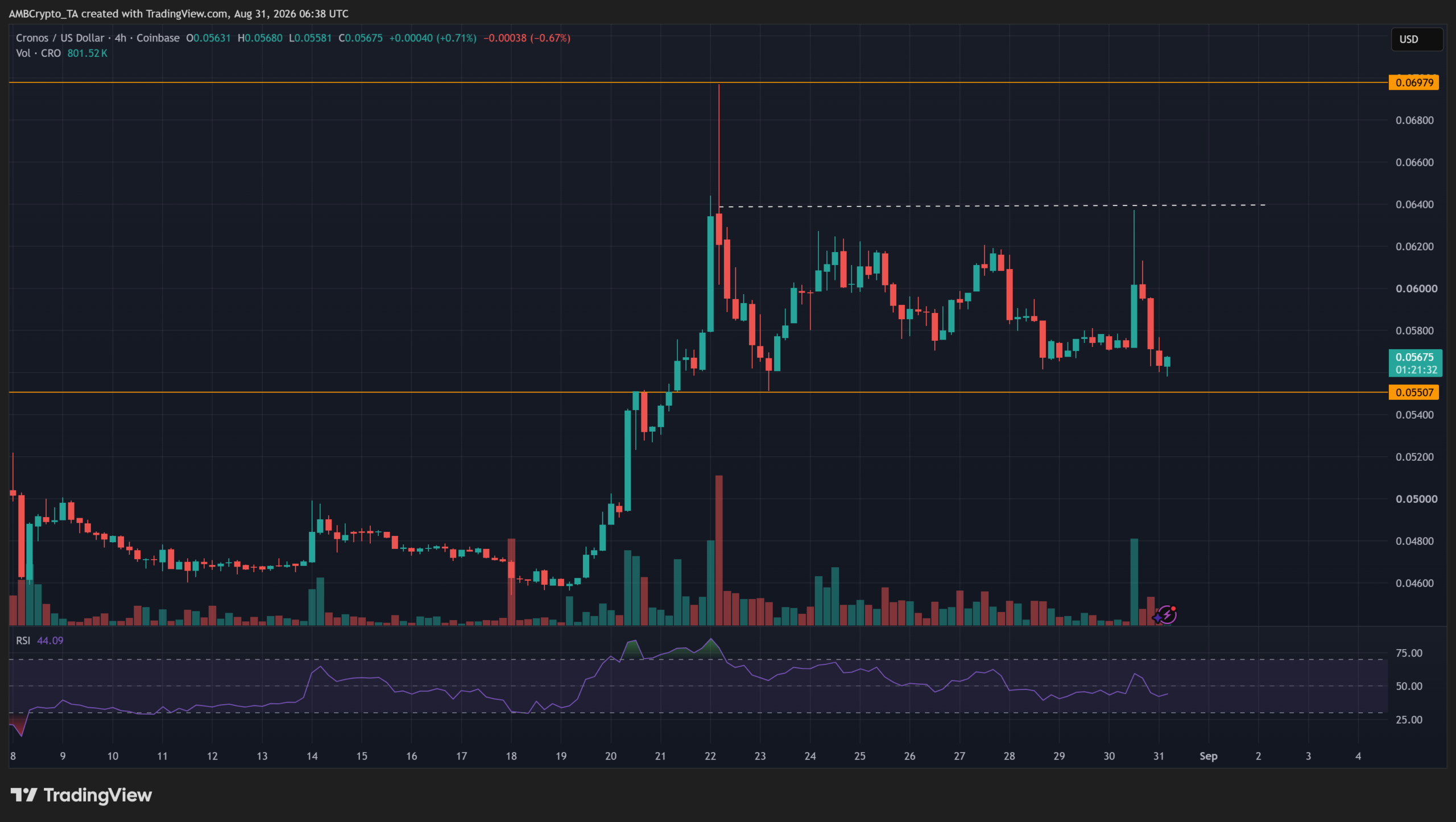
This matters because if CRO falls below $0.05507, it would break one more tier of the bearish trend structure that formed during August’s rally.
This could expose a lower support in the $0.045-$0.048 range. On the other hand, if CRO can hold onto the current floor, it may indicate that some or all of the initial fallout has been absorbed by the market.
Moreover, CRO would then need to reclaim $0.064 before confidence in the previous uptrend improves.
Final Summary
- Cronos faces continued pressure as Tectonic works to contain its $66 million exploit.
- CRO must hold $0.05507 as Tectonic secures the remaining funds before network activity resumes.