


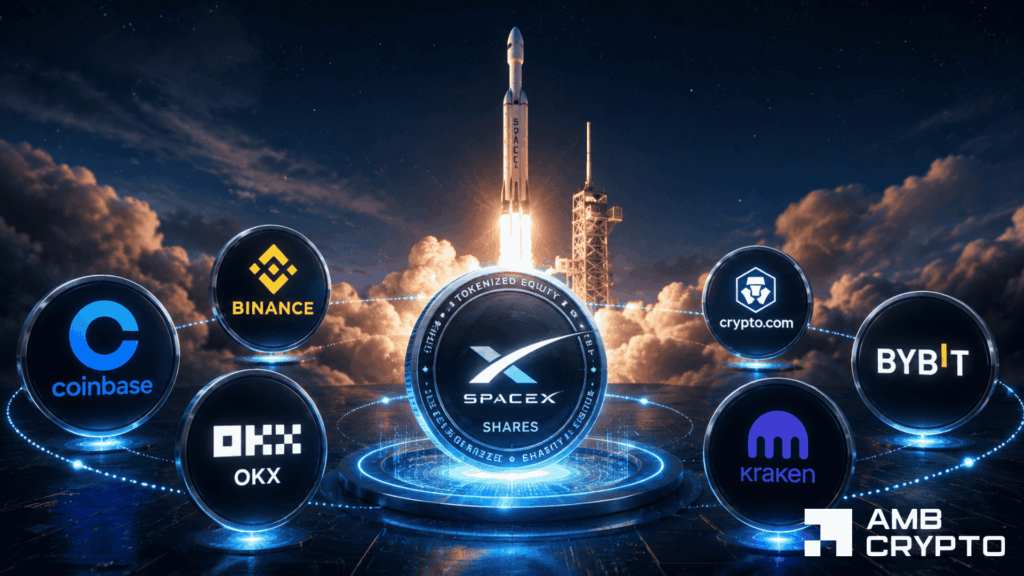
Several crypto trading platforms faced allocation problems during the highly anticipated SpaceX IPO rollout on June 12. It exposes growing pressure on tokenized equity systems as retail demand surged globally.
Binance and Bybit both canceled or refunded portions of their SpaceX IPO-related campaigns. This comes after failing to secure sufficient underlying share allocations. Also, some Robinhood users reported receiving only partial fills on requested shares.
The disruptions come as crypto exchanges increasingly push tokenized stock and IPO products. This is designed to give retail users broader access to traditionally restricted private and public market offerings.
Bybit and Binance halt SpaceX allocation campaigns
Bybit confirmed on June 12 that subscribed users would not receive SpaceX allocations after xStocks reportedly failed to deliver the underlying assets required for distribution.
“Due to xStocks’ inability to deliver the underlying assets, no SpaceX allocations were received,” the exchange said in a statement shared on X.
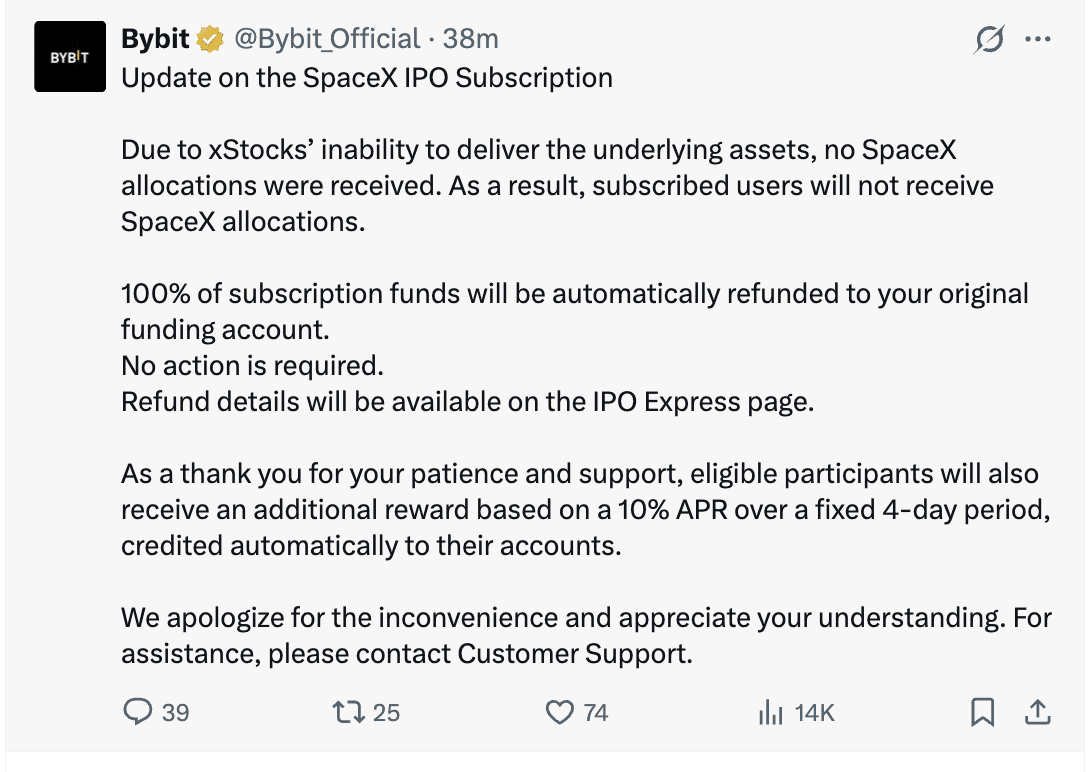
The exchange said all subscription funds would be fully refunded. Also, eligible users would receive an additional reward based on a temporary 10% APR compensation program.
Binance issued a similar announcement hours later. It said it could not proceed with its SPCXx IPO campaign “due to circumstances outside of our control.”
The exchange said participating users would receive full USDC refunds. There will also be a $1 million SPCXB token airdrop distributed equally among campaign participants.
According to Binance, SPCXB is designed to track SpaceX shares and is backed 1:1 by real shares held through regulated custody structures.
Demand appears to have overwhelmed available supply
The allocation issues suggest retail demand for SpaceX exposure significantly exceeded the amount of shares available across tokenized distribution platforms.
Screenshots shared by users on social media showed some Robinhood customers receiving only small portions of their requested SpaceX allocations.
One user reported receiving 19 shares after requesting 100.
Kraken-linked IPO access channels also acknowledged unusually high global demand and said allocations were distributed proportionally among eligible users.
The issues emerged despite growing efforts by crypto platforms to market tokenized IPO access as a way to democratize participation in highly sought-after equity offerings.
Tokenized IPO systems still depend on traditional share access
The disruptions also highlighted a structural limitation facing tokenized stock infrastructure.
While platforms increasingly market tokenized equities as blockchain-native financial products, the systems still rely heavily on real shares sourced through traditional financial channels.
That means tokenized IPO campaigns remain vulnerable to the same supply constraints, institutional allocation systems, and private market bottlenecks that govern conventional IPO distribution.
The SpaceX rollout now represents one of the first major stress tests for tokenized IPO infrastructure during a large-scale global demand event.
Final Summary
- Binance and Bybit canceled or refunded parts of their SpaceX IPO campaigns after failing to secure enough underlying shares.
- The disruptions highlighted growing pressure on tokenized equity systems as retail demand overwhelmed available SpaceX allocations.