Crypto hacks hit record high in H1 2026 – What’s fueling the surge?
North Korean entities still remain crypto market biggest threat.



TRM Labs, a blockchain security firm, reported 207 crypto hacks in the first half of 2026, the most in any six-month period. The bulk of the crypto hack cases happened in Q2 (126 incidents), led by KelpDAO, Humanity, and Rhea Lend exploits.
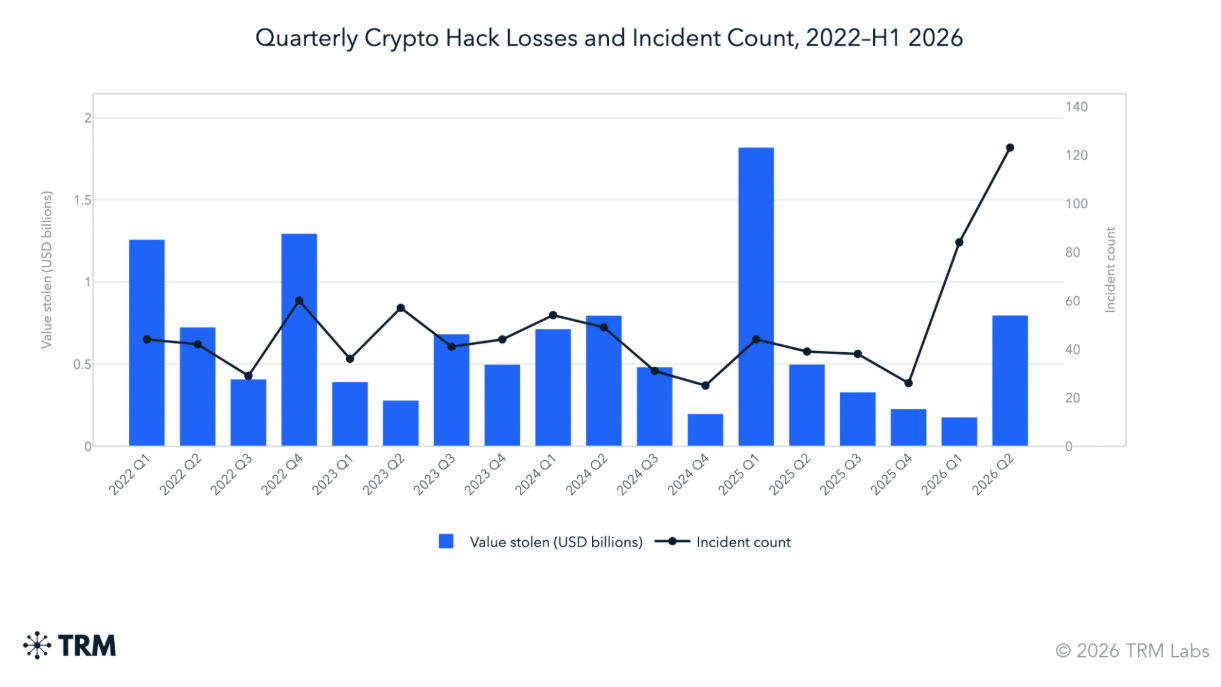
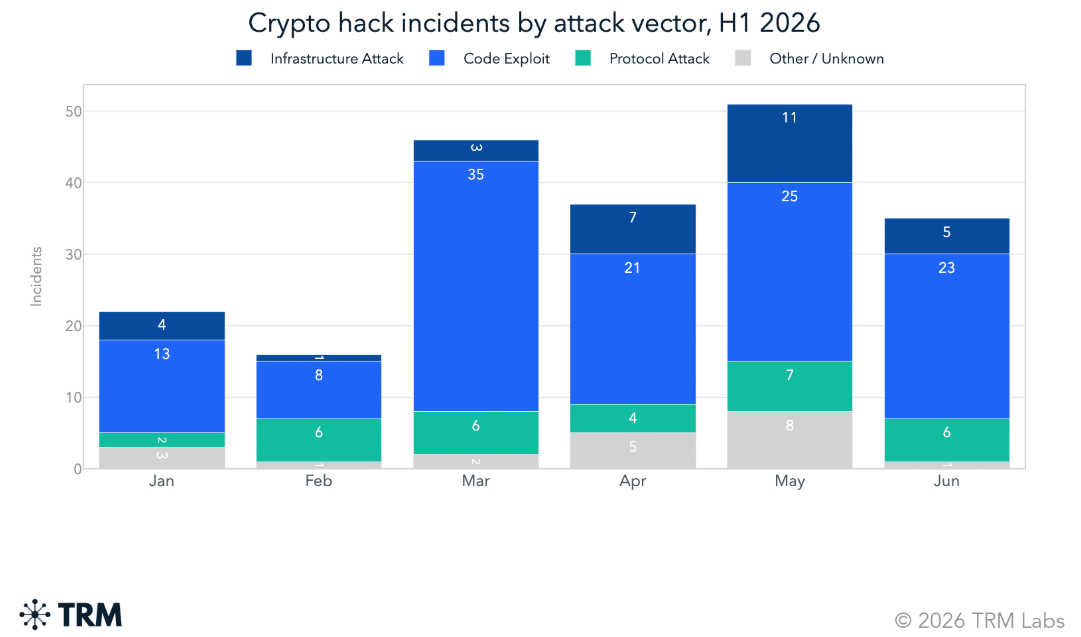
In the first half of 2025, 85 crypto hacks were reported. In other words, H1 2026 saw more than double the number of crypto hack cases over the same period. According to the report, most of the attacks were smart contract exploits, which accounted for 125 of the 207 incidents: a 60% dominance share in breaches.
Commenting on the same, Ari Redbord, global head of policy at TRM Labs, told AMBCrypto,
What I find most concerning is how concentrated these losses are in infrastructure failures. Three-quarters of all stolen value came from compromises of keys, custody systems, and signing infrastructure, not from smart contract bugs.
He concluded that,
The industry has improved at auditing code, but our operational security has not kept pace with our on-chain complexity.
North Korea-linked actors drive 66% of crypto hacks
Despite the record number of breaches, the overall value stolen in 2026 was relatively small compared to 2025.
The report noted that $972 million was lost as of June, which was below half of about $2.3 billion lost over the same period in 2025. Still, 66% of the stolen funds were driven by North Korean-linked entities.
By the end of Q2 2026, North Korea-linked attackers’ share of stolen crypto funds was over 75%. However, intensified activity from other entities during the quarter reduced their dominance to 66% at press time. The impact of the hacks has been more devastating for the DeFi sector. Amid the broader bearish sentiment, the intensified crypto hacks further drove investors from the DeFi sector.
In fact, in the KelpDAO’s $293 million hack, the attacker used fake tokens and deposited them in the Aave lending protocol and borrowed $190M in legitimate assets (wETH). There was a sudden liquidity crunch and subsequent bank run in Aave as investors feared the worthless collateral deposited by the attacker. As a result, Aave pools reached full utilization, preventing some late depositors from withdrawing their funds.
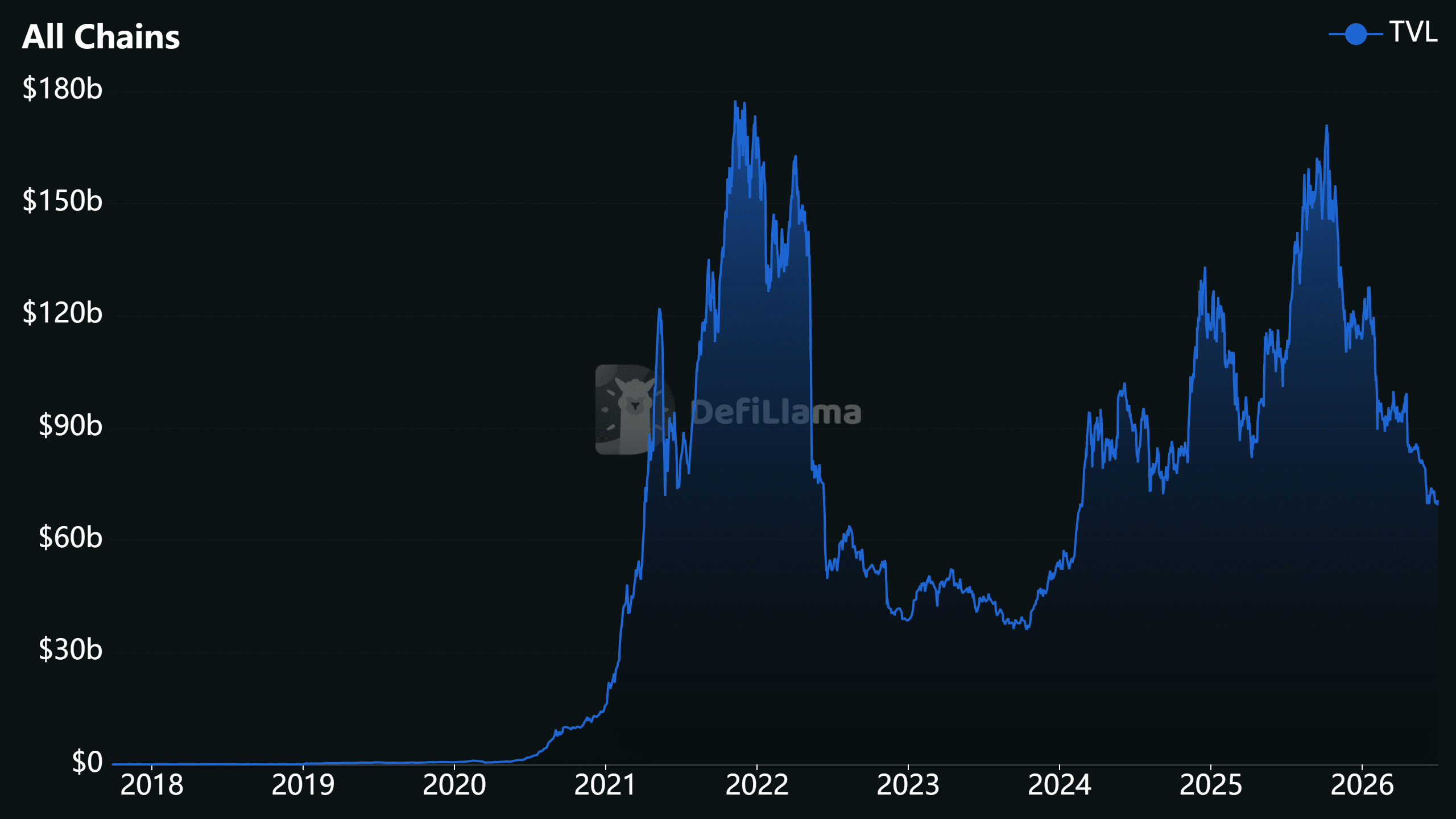
This added to broader DeFi security risk, which has triggered $55 billion in capital outflows in H1 2026. At the time of writing, the total DeFi TVL (total locked value) has hit a two-year low of $70 billion, up from $120B seen earlier in 2026.
Final Summary
- Crypto hack cases hit a record high of 207 in H1 2026, but the stolen value was below $1B
- North Korea-based threat actors accounted for $643M, or 66% of stolen funds over the same period.