


Spot activity has been fading for months, and April’s numbers show that trend is becoming harder to ignore. After peaking near $2 trillion in October 2025, monthly spot volume steadily declined until reaching roughly $679 billion, the weakest reading since October 2023.
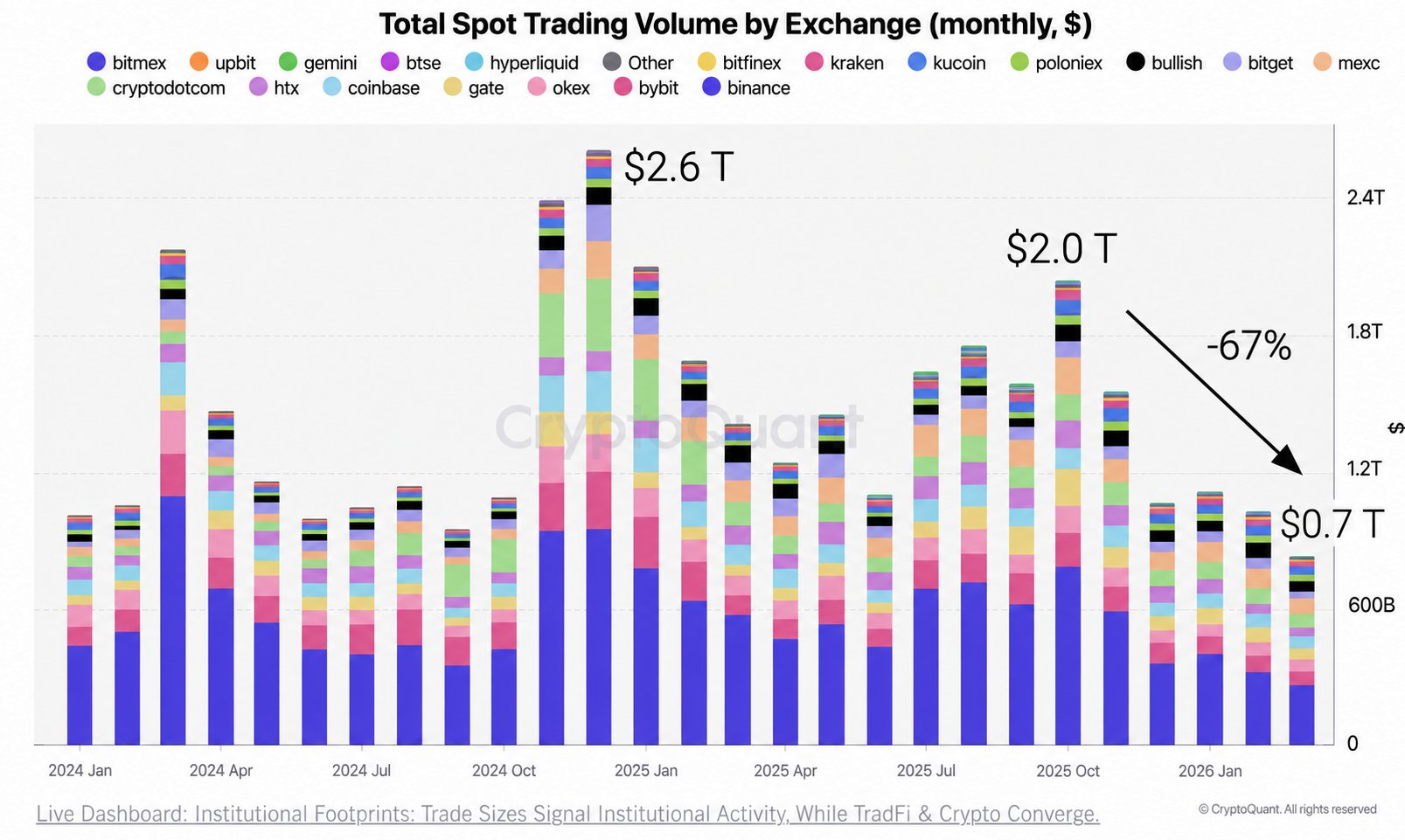
The decline suggests traders are becoming less interested in outright asset ownership. Instead, a larger share of activity is moving toward futures and perpetual markets, where capital can remain active without committing fully to spot positions.
That shift explains why spot liquidity continues thinning despite ongoing market participation. Traders have not disappeared from the market. Rather, they appear increasingly focused on leveraged exposure while waiting for stronger directional conviction to return.
Demand shifts toward traditional markets
As crypto spot trading continued slowing across major exchanges, equity activity on Gate moved in the opposite direction. Daily equity volume reached roughly $30 million on the 1st and 2nd of June, marking its second-highest level in three months.
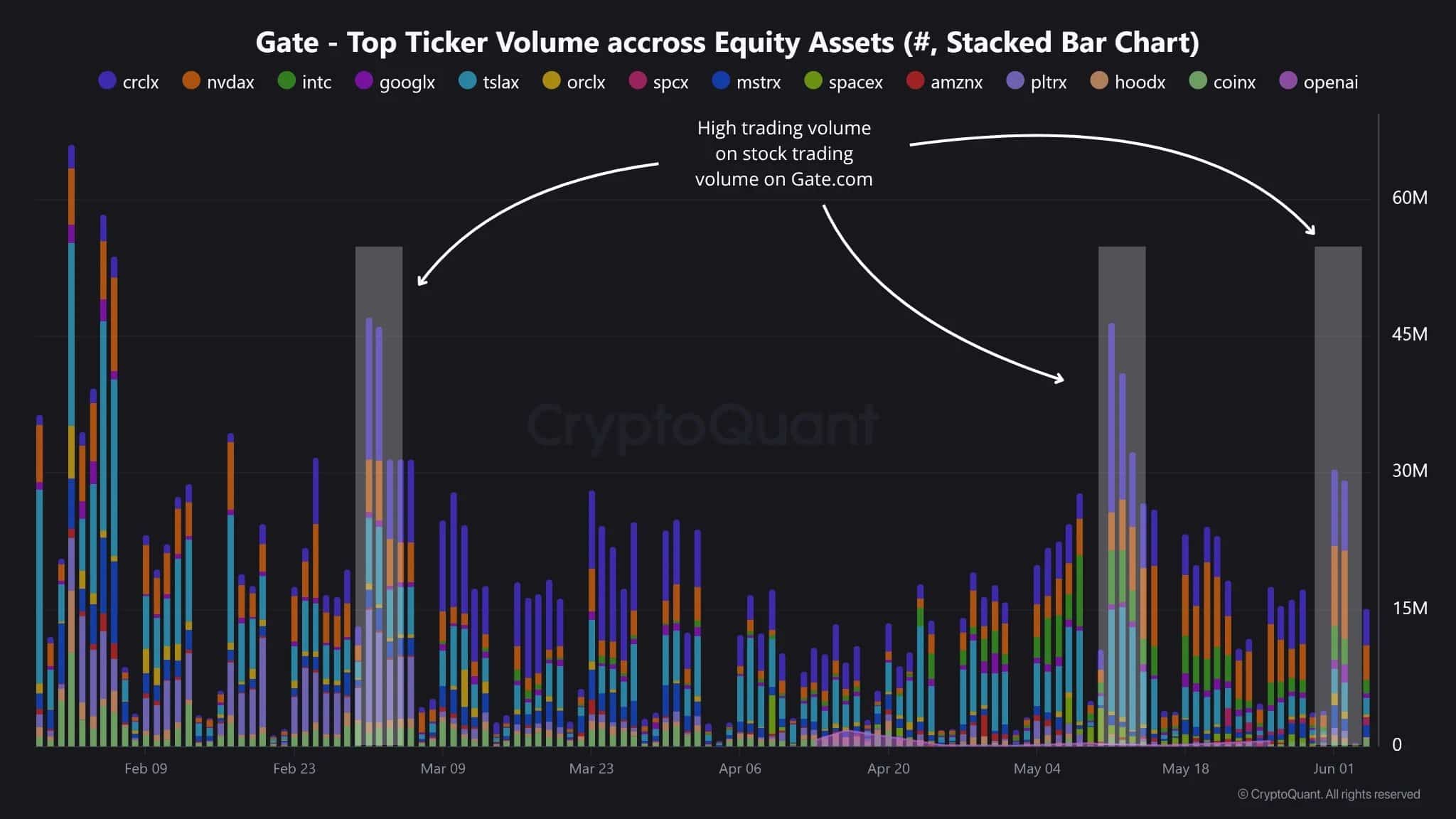
The increase suggests trading appetite has not disappeared despite weaker participation in digital asset markets. Instead, some capital appears to be shifting toward traditional assets available on crypto-native platforms.
Circle and NVIDIA attracted most of the activity, supported by their strong relevance to crypto and technology investors. The trend bears watching because sustained growth in equity volumes could reshape how users interact with crypto exchanges.
As tokenized asset markets continue expanding, their role within exchange ecosystems is becoming harder to ignore. Recent growth pushed tokenized equity volumes toward $3.57 billion, while the broader Real World Assets (RWA) market expanded to roughly $30 billion.
That shift is becoming increasingly visible as tokenized equity volumes approach $3.57 billion and the broader RWA market expands toward $30 billion. Unlike traditional crypto trading, RWA activity can draw demand from equities, fixed income, and other financial markets.
If adoption continues accelerating, tokenized assets could evolve from a complementary offering into a larger part of exchange activity, liquidity formation, and long-term growth.