DeFi leverage at 38% – Borrowers hold on despite $13B outflows: Binance report
Could there be another liquidation cascade caused by DeFi's increased leverage?


In a recent report, Binance announced that the on-chain leverage ratio had reached approximately 38%—a level last observed during the highly speculative market conditions of 2021.
This indicates that the amount of leverage within DeFi appears very high relative to the size of the remaining DeFi ecosystem.
The rise in this ratio, however, does not always mean that users are aggressively taking on additional debt.
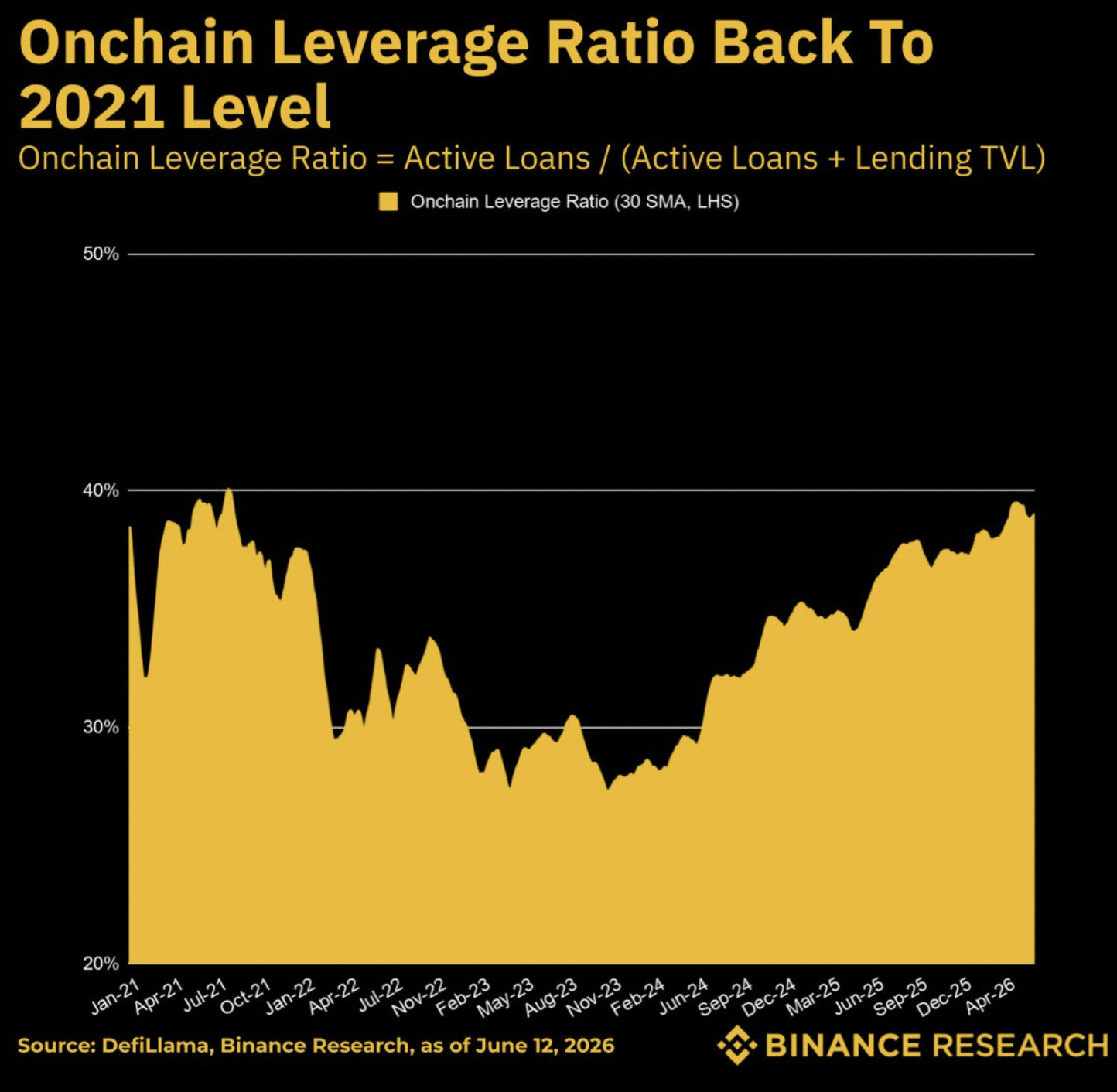
Instead, the denominator of the ratio has shrunk as a result of TVL (Total Value Locked) compression. This, in turn, caused the total value of assets deposited in DeFi protocols to drop dramatically. All this happened as a result of declining asset prices and capital withdrawals.
What triggered the 2021 market condition?
Major DeFi exploits and hacks in April made matters worse, causing investors to withdraw $13 billion from protocols, which further decreased TVL.
Typically, deleveraging occurs when borrowers pay back loans, close leveraged positions, and lower their risk exposure following a market downturn and significant outflows.
However, current market conditions suggest that “deleveraging has yet to materialize.” This implies that leverage is still high because borrowing levels have not decreased in line with the TVL decline.
Given that many participants are still holding borrowed positions despite the weaker market conditions, the DeFi ecosystem may be more susceptible to forced selling. Additionally, there is also room for liquidation cascades, and increased volatility should asset prices continue to fall.
Why did the market pullback not help?
Since capital outflows and declining asset prices drove the decline more so than debt repayment, the market pullback was unable to significantly reduce DeFi’s leverage.
In fact, many borrowers were able to avoid liquidation even when prices decreased thanks to DeFi loans being usually overcollateralized.
While others held onto positions anticipating a market rebound or because their arbitrage and yield-generating tactics continued to be successful.
This indicated that there is still a great deal of risk in the system because a further decline might lead to liquidations and increase market volatility.
All this happened at a time when Bitcoin [BTC] experienced an eight-month period of deleveraging as previously reported by AMBCrypto.
Final Summary
- Major DeFi exploits and hacks in April caused investors to withdraw $13 billion from protocols.
- Currently, deleveraging is yet to materialize because borrowing levels have not decreased in line with the TVL decline.