



edgeX said exchange and market maker investigations found no evidence of coordinated manipulation behind the recent collapse of the EDGE token, which plunged as much as 71% within hours on June 2.
In a detailed incident report, edgeX blamed the crash on thin on-chain liquidity, crowded long positions, and cascading liquidations across perpetual futures markets.
The company also published screenshots of alleged communications from exchanges and market surveillance teams. It states that no insider trading or abnormal position concentration had been identified during preliminary investigations.
EDGE collapse triggered liquidation cascade
According to edgeX, the incident began during a low-liquidity trading window on PancakeSwap. The main EDGE liquidity pool held roughly $1.25m in active liquidity there.
The report said 174 addresses submitted EDGE sell orders within a single minute at around 05:12 UTC+8 on June 2. During that period, sell volume reportedly surged nearly tenfold compared with preceding minutes.
edgeX said the rapid decline on PancakeSwap quickly spread into perpetual futures markets. This was because Binance index pricing partly referenced Binance Alpha pricing data tied to on-chain markets.
The company estimated that combined sell volume across Binance, OKX, Bybit, and edgeX perpetual markets reached more than $140m within one hour.
At the time, long positions were heavily crowded. edgeX said the long-short ratio among large traders stood at 68.2% shortly before the collapse.
The company argued that forced liquidations and panic selling then created a chain reaction across spot and derivatives markets.
Price chart showed sharp collapse and partial rebound
TradingView data showed EDGE falling from around $1.30 to below $0.40 during the sell-off before partially recovering toward the $0.60 range.
Volume also spiked sharply during the collapse, reflecting the surge in liquidations and panic-driven trading activity described in edgeX’s report.
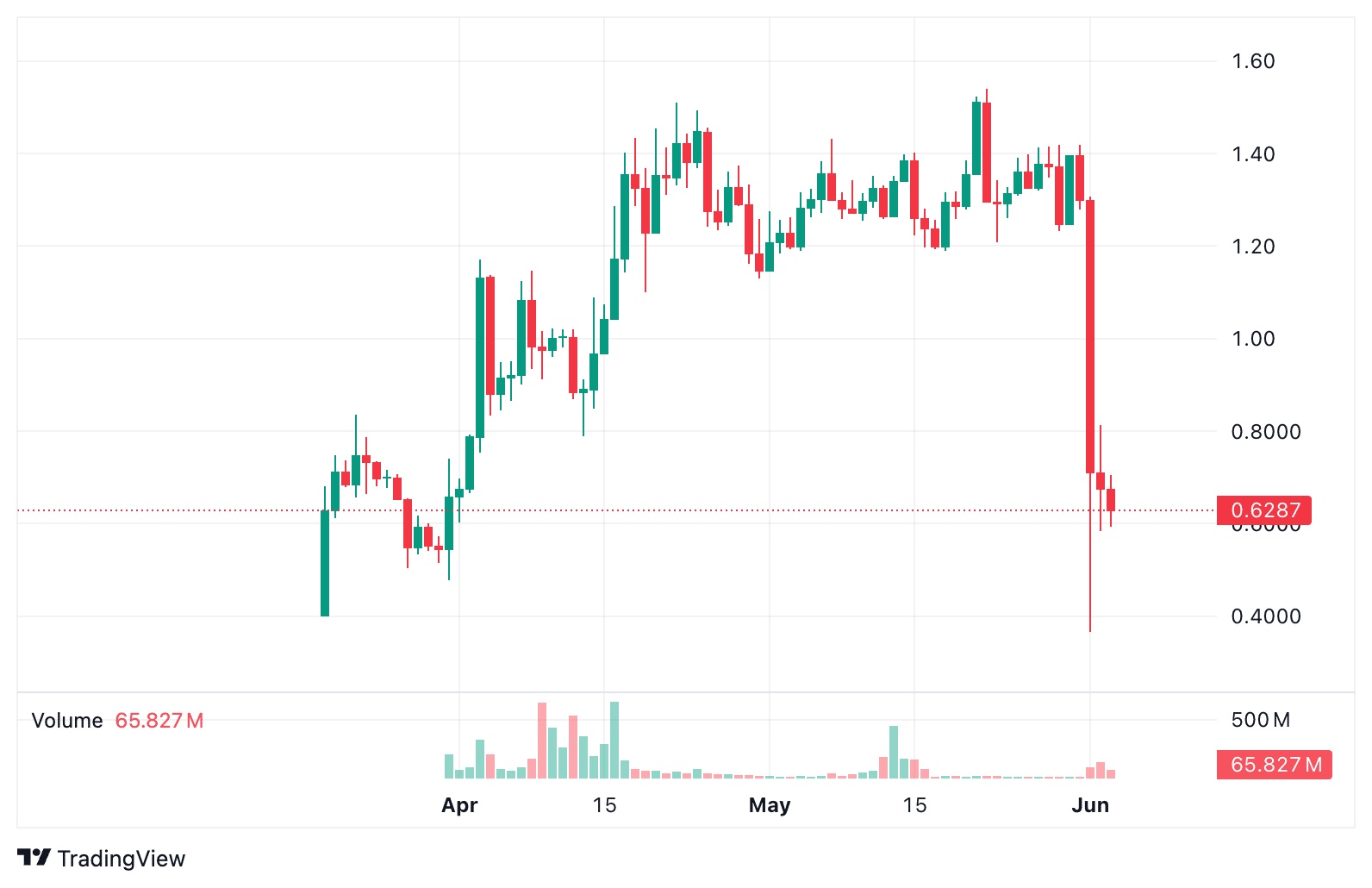
At the time of writing, EDGE was trading near $0.63 after stabilizing following the crash.
Exchange screenshots form key part of defense
A central part of edgeX’s statement focused on responses allegedly received from exchanges and market makers following the incident.
Screenshots shared by the company showed that one message stated that investigators found “no insider trading” or any abnormal profit-making behavior linked to the crash.
Another message claimed market makers and profitable traders showed “no suspicion of market manipulation for the time being.”
The messages also suggested that much of the selling activity came from institutional hedging flows, stop-loss triggers, and liquidations rather than deliberate coordinated dumping.
The exchange messages were partially redacted, and their contents could not be independently verified.
edgeX maintained that the team’s token allocations remained unchanged throughout the event and pointed users to publicly available tokenomics dashboards for verification.
edgeX launches bounty and goodwill payments
The company also announced a 200,000 USDC bounty for information leading to the identification of wallets allegedly connected to the attack.
In addition, edgeX said affected users would receive voluntary “goodwill care payments” tied to realized liquidation or stop-loss losses during the crash window.
The compensation plan includes:
- 50% paid in USDC within seven days after verification,
- and 50% paid in EDGE tokens during April 2027 based on a seven-day TWAP pricing model.
edgeX said the protocol itself remained fully operational throughout the incident and that user assets were not compromised.
Final Summary
- edgeX said exchange and market maker investigations found no evidence of coordinated manipulation behind the 71% EDGE token collapse.
- The company blamed thin liquidity, crowded long positions, and cascading liquidations for the flash crash. It announced a 200,000 USDC bounty tied to the investigation.