Ethereum and Bitcoin face historic supply squeeze – THESE 2 metrics reveal what’s next
Bitcoin and Ethereum exchange reserves continue falling as long-term holders tighten available market supply.



Despite months of market volatility, Ethereum and Bitcoin holders continue showing little interest in returning coins to exchanges. This does represent much more than decreased investor trading enthusiasm.
Persistent withdrawals continued reducing the amount of liquid supply available on the market.
As of press time, the total number of Bitcoins stored on exchanges was at an all-time low for any time period since 2017. At the same time, the total number of Ethereum [ETH] stored on exchanges was also at an all-time low for any time period since 2015.
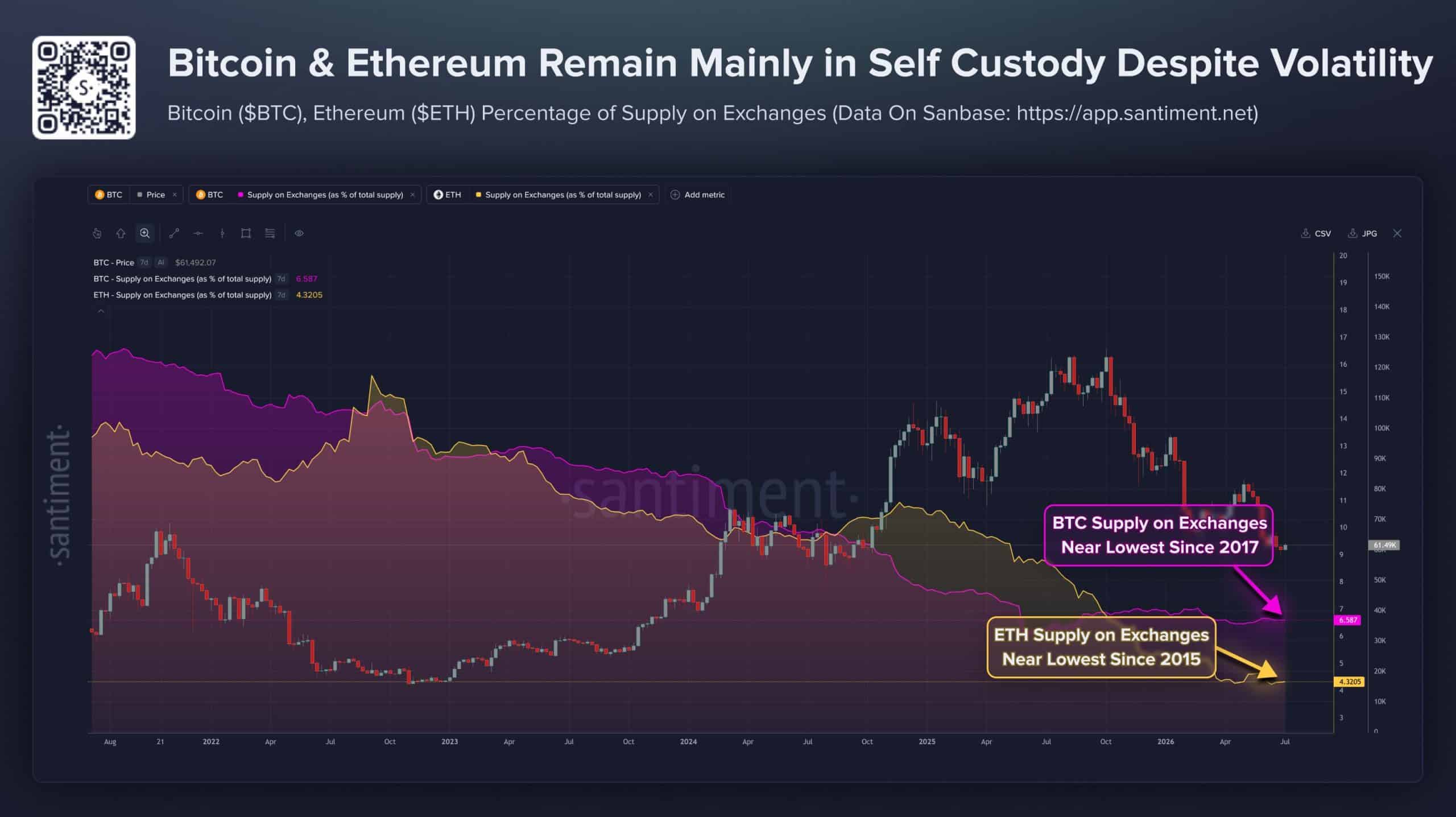
Simultaneously, ongoing negative Netflows indicate that institutional and longer-term holders prefer to store their coins using self-custody models such as ETFs or corporate treasuries rather than storing them on exchanges.
Therefore, this migration will remove additional coins from potential sales. Yet in turn, it will provide even less selling pressure in the short term to further increase the conviction behind buying. While lower exchange balances may result in lower prices for investors, they do create scarcity.
If demand continues recovering, limited liquid supply could amplify price discovery and support a more structurally driven market cycle.
Long-term holders reinforce Bitcoin’s supply floor
Behind the continued decline in exchange balances, Bitcoin [BTC] Long-Term Holders are steadily absorbing the circulating supply. That behavior reflects growing conviction rather than defensive positioning, as experienced investors continue accumulating during market weakness.
Long-Term Holder Net Position Change has returned to positive territory, confirming a shift from distribution toward renewed accumulation.
Meanwhile, HODL Waves and rising illiquid supply show older coins remaining dormant despite recent volatility.
That behavior further reduced Bitcoin’s availability for active trading. On top of that, the Accumulation Trend Score indicated continued buying across smaller and medium-sized wallets.
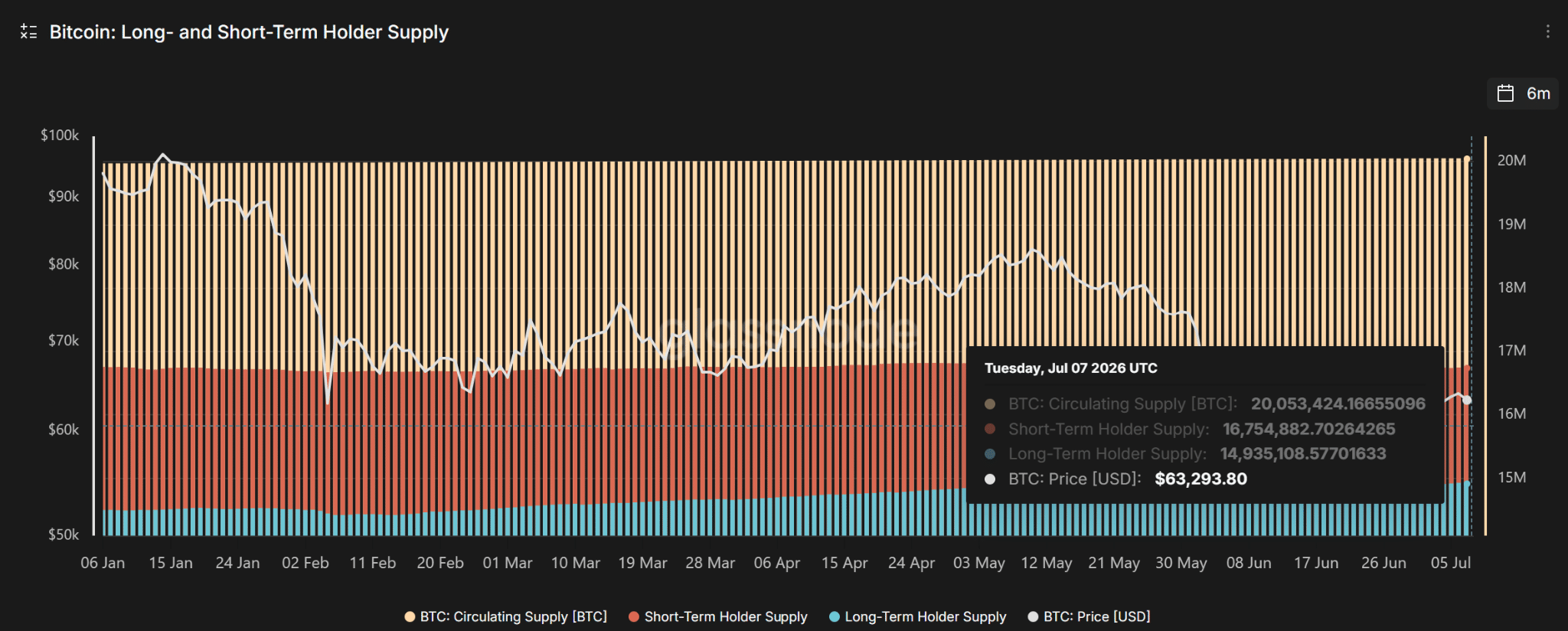
Supply held by Long-Term Holders approached 15 million BTC.
By contrast, Short-Term Holder supply declined to roughly 16.75 million BTC. The shift suggested Bitcoin continued moving from shorter-term participants into stronger conviction holders.
Even so, tightening supply alone may not sustain Bitcoin’s recovery.
A lasting uptrend would still require stronger buying demand to absorb available liquidity. Without that support, Bitcoin could struggle to maintain momentum despite increasingly scarce exchange balances.
Final Summary
- Bitcoin [BTC] and Ethereum [ETH] exchange supply continues tightening, reinforcing long-term accumulation.
- Bitcoin needs stronger demand to sustain its recovery amid shrinking supply.