Ethereum controls 43% of tokenized treasuries – Can rivals catch up?
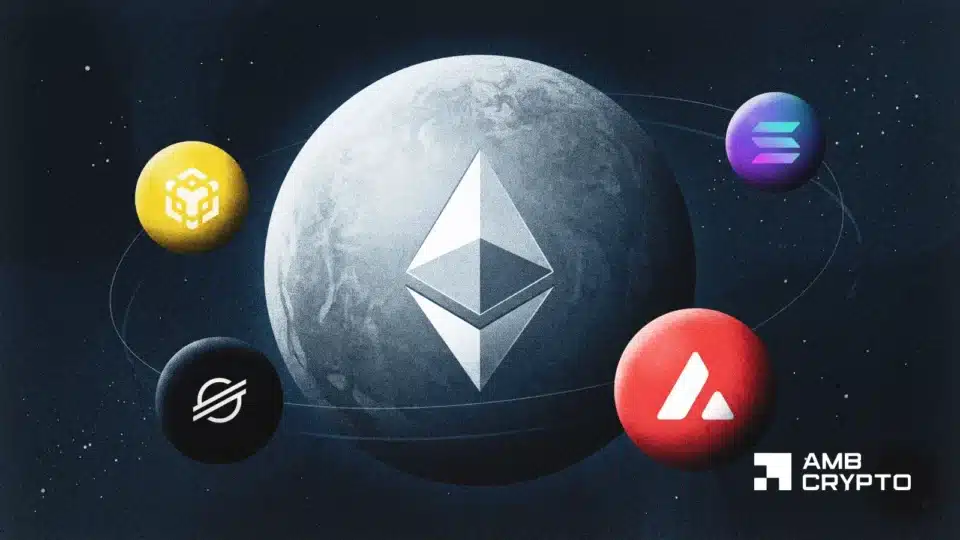
Tokenized liquidity is spreading across blockchains, but Ethereum continues to dominate markets across several financial segments.


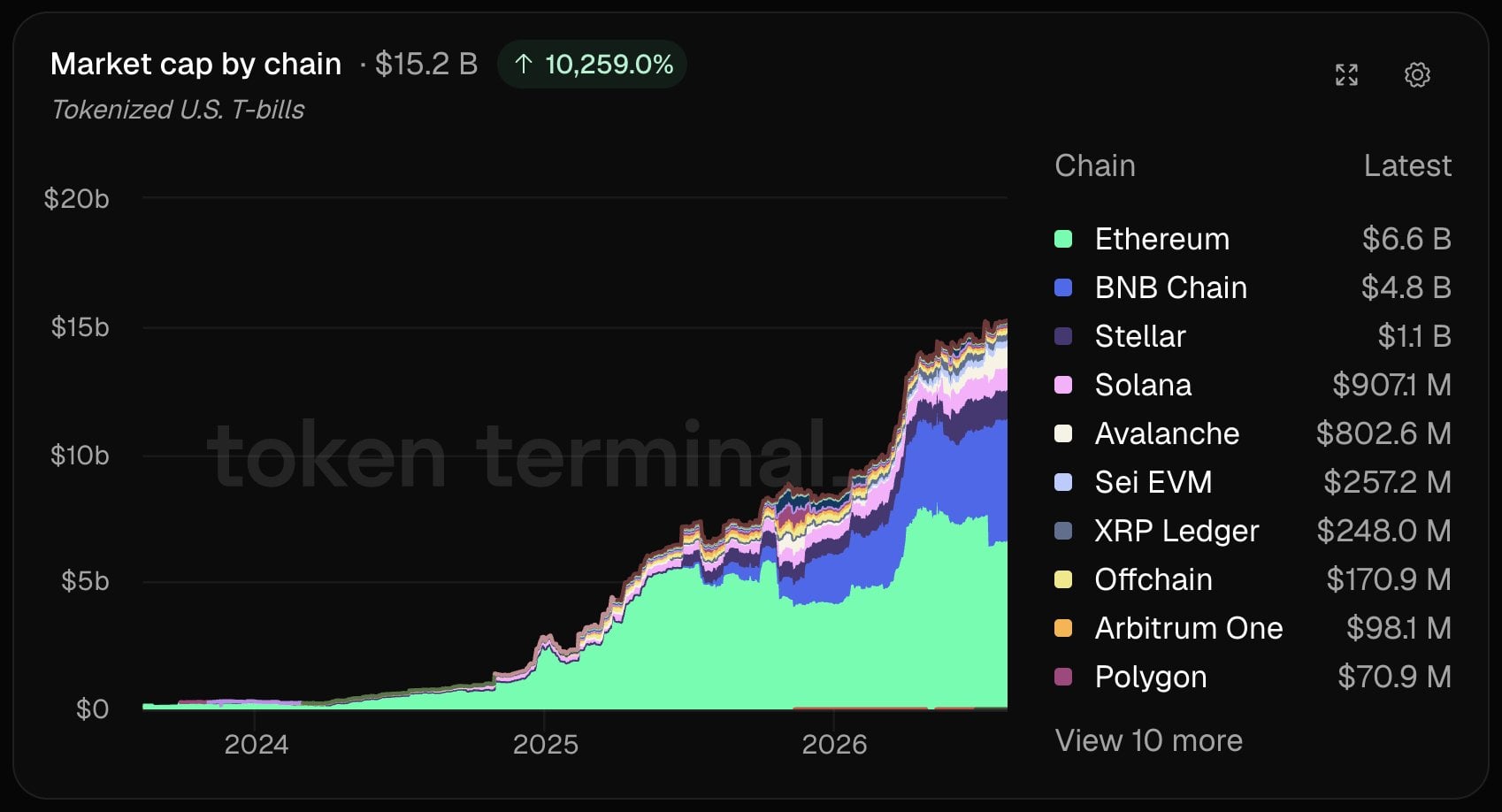
Tokenized U.S. Treasuries are expanding rapidly across blockchains, but capital continues to concentrate heavily on Ethereum [ETH]. The sector now holds $15.2 billion, after accelerating sharply through 2025 and 2026.
According to Tokenterminal data, Ethereum accounts for $6.6 billion, translating to roughly 43% of the market despite growing competition. Trailing closely is BNB Chain with $4.8 billion, while Stellar [XLM], Solana [SOL], and Avalanche [AVAX] collectively add nearly $2.8 billion.
This distribution shows institutions are adopting multiple settlement networks rather than relying on one chain. Nevertheless, Ethereum still maintains an important advantage. This is because Treasury liquidity sits alongside $162.4 billion in stablecoins and $578.8 million in euro stablecoins.
Together, that combination creates deeper liquidity for moving between tokenized cash and yield-bearing assets. As a result, Ethereum can support settlement across several financial products within one ecosystem.
Its upper hand, therefore, depends increasingly on liquidity depth, even as competing chains capture meaningful Treasury flows.
Ethereum leads as rivals gain liquidity
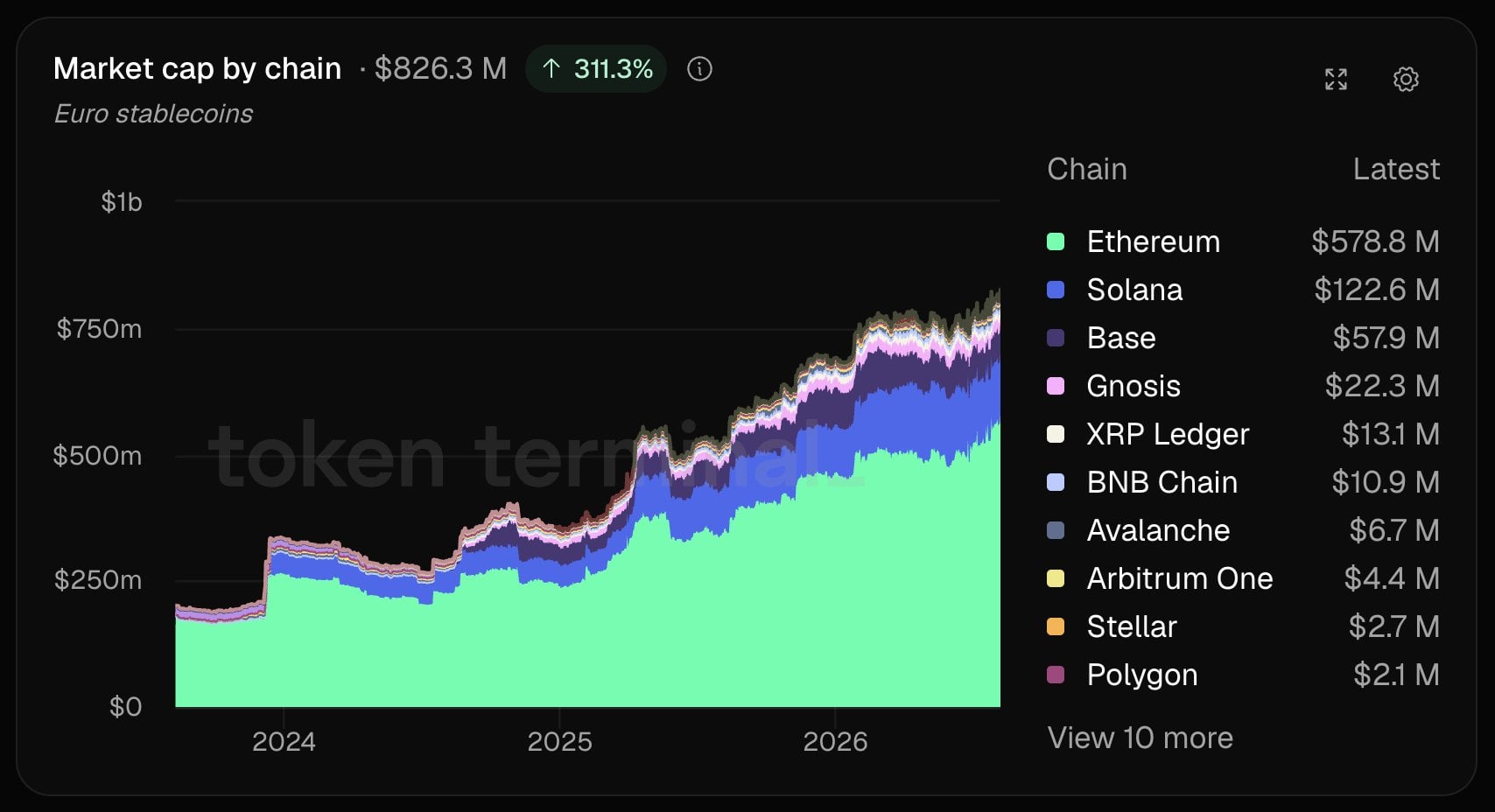
Ethereum’s lead in tokenized Treasuries forms only part of its wider position across on-chain finance. Euro stablecoins reinforce that advantage, with Ethereum holding $578.8 million from an $826.3 million market.
Yet the distribution also shows where competition is beginning to emerge. Solana has grown to $122.6 million, placing it clearly ahead of Base at $57.9 million. This matters because competing chains are gaining scale in different liquidity segments.
TRON, for instance, already holds $91.3 billion in stablecoins, while BNB Chain controls $4.8 billion in tokenized Treasuries. Rather than one network directly replacing Ethereum, liquidity is becoming more specialized across chains.
Ethereum therefore retains the broadest reach, while rivals increasingly establish meaningful positions within individual markets.
That wider spread of liquidity does not necessarily mean the dominant altcoin is losing capital to rival networks. Instead, tokenized finance is expanding across more chains. Ethereum still holds $162.4 billion in stablecoins, compared with $91.3 billion on Tron and $14.8 billion on Solana.
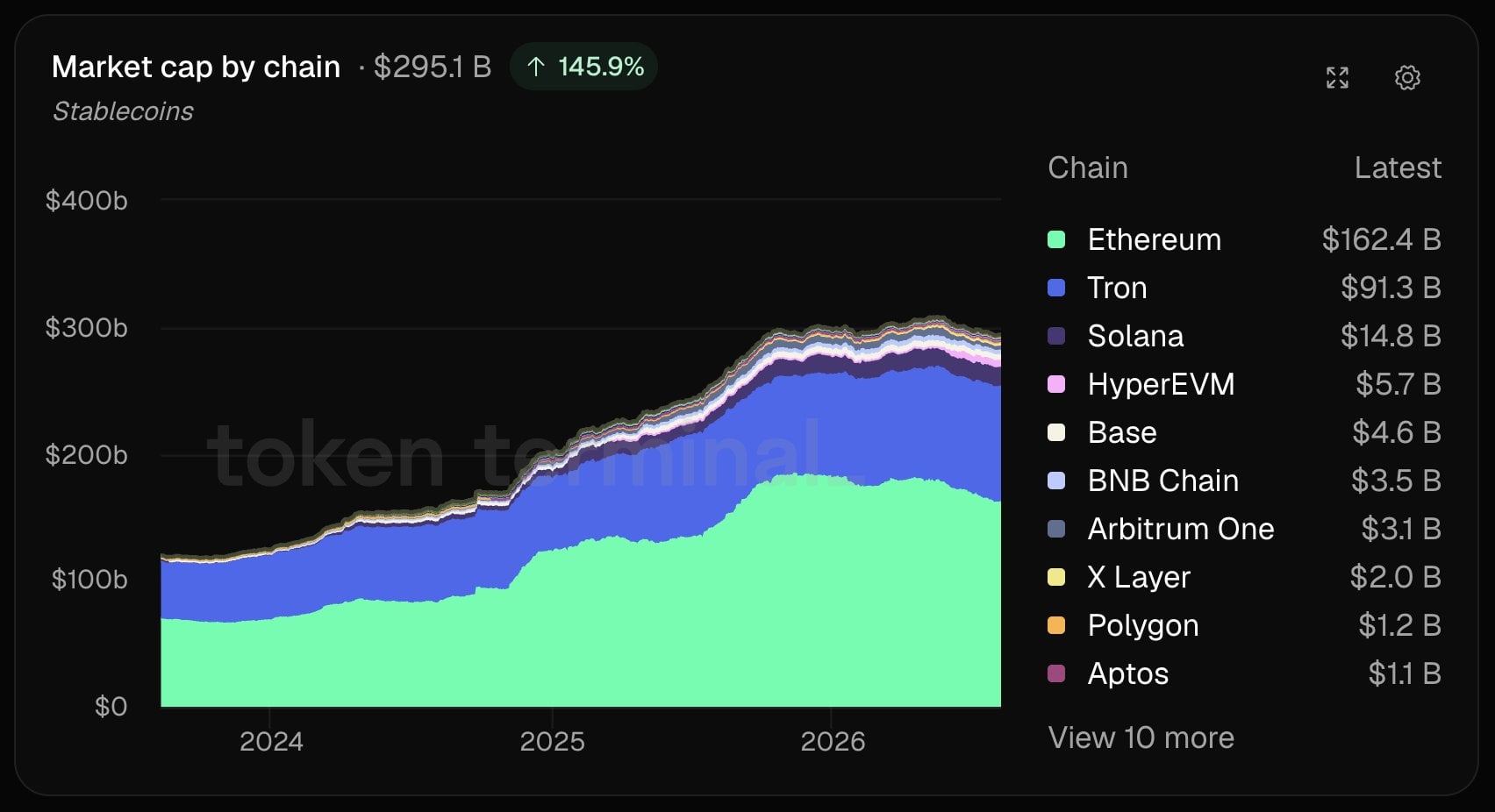
HyperEVM has also crossed $5 billion, showing newer networks are attracting meaningful capital. Yet Ethereum’s balances continue rising as competitors expand, pointing toward new issuance rather than direct migration. Its percentage share can therefore fall even while its liquidity base grows.
For now, that keeps Ethereum’s moat intact despite stronger competition. A genuine shift would require rivals to grow while Ethereum’s absolute balances decline, confirming that liquidity is leaving rather than simply expanding elsewhere.