Ethereum targets quantum-resistant L1 by 2029 – Finality, zkEVM support roadmap
Ethereum’s quantum push gains momentum as faster finality and zkEVM advances bring key upgrades closer to deployment.



The countdown has begun for Ethereum’s battle against the threat of quantum computers. Developers are racing to complete the Layer 1 network transition by the end of 2029.
In tandem with that transition, Hegota plans to initiate an intermediate step towards transitioning account signatures to stronger ones beginning at the end of 2026.
More importantly, all parties involved will be able to do so without needing to have the entire network switched over.
Later upgrades will extend protection to validators, network data, and rollups. However, completing the transition requires five upgrades after Glamsterdam. In turn, this leaves the developers with roughly seven months in between the upgrades.
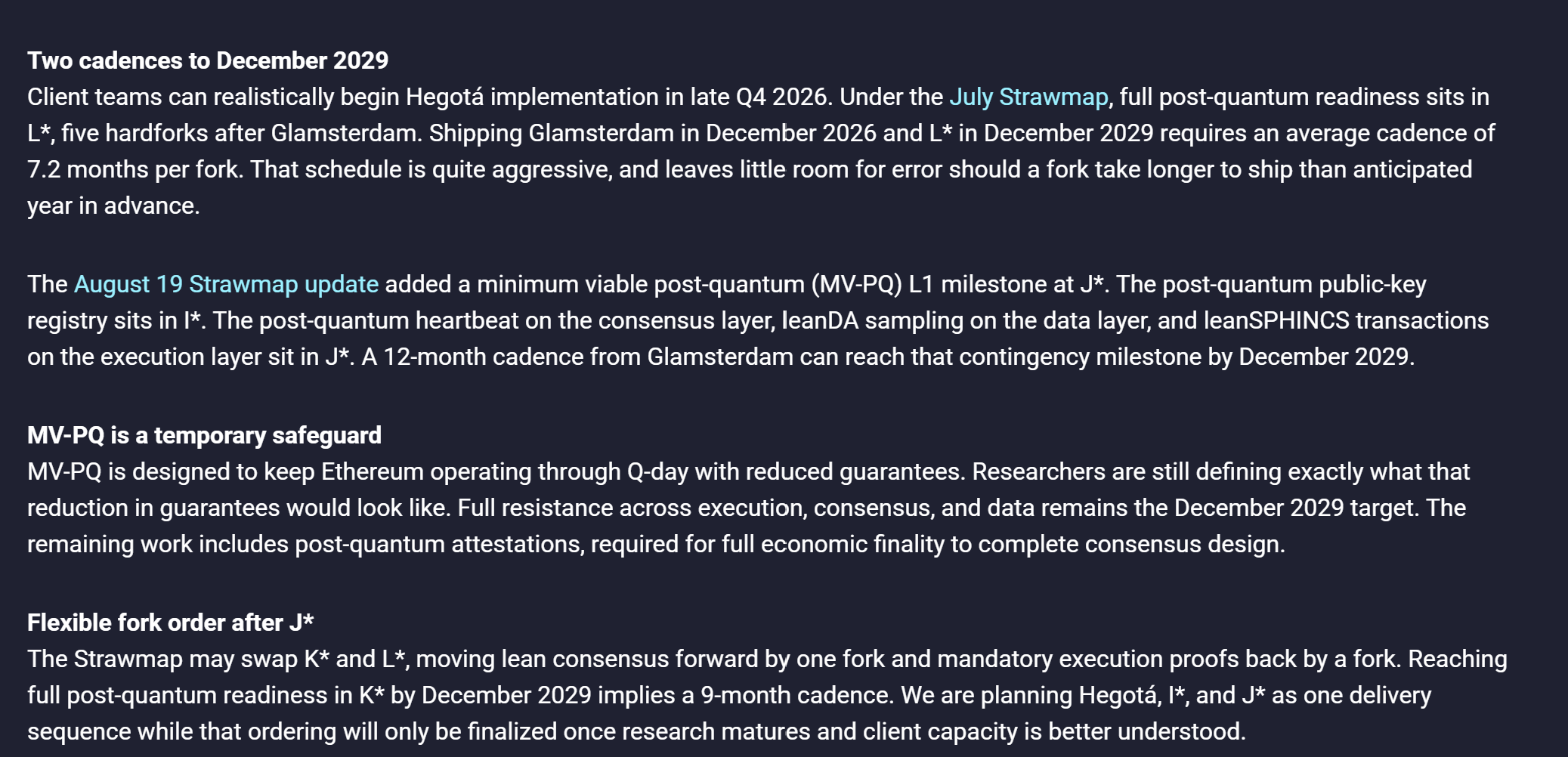
That pace makes testing crucial, as more than ten client teams already run weekly trials. Still, the protocol has a backup plan where J* (placeholder for the milestone) comes into play if quantum advances arrive earlier than intended.
January 2027 should then reveal whether Ethereum [ETH] can maintain this schedule and remain on course for its 2029 target.
Ethereum’s quantum upgrade faces a scaling test
As Ethereum’s transition deadline for quantum safety becomes less of an issue, the focus shifts to maintaining operational functionality of the network.
Currently, validators are utilizing compact 96-byte BLS signatures, where thousands of signatures are combined into one compact aggregate signature.
However, the leanXMSS signatures, which provide similar security but with respect to quantum computing attacks, will grow to approximately 3100 bytes in size.
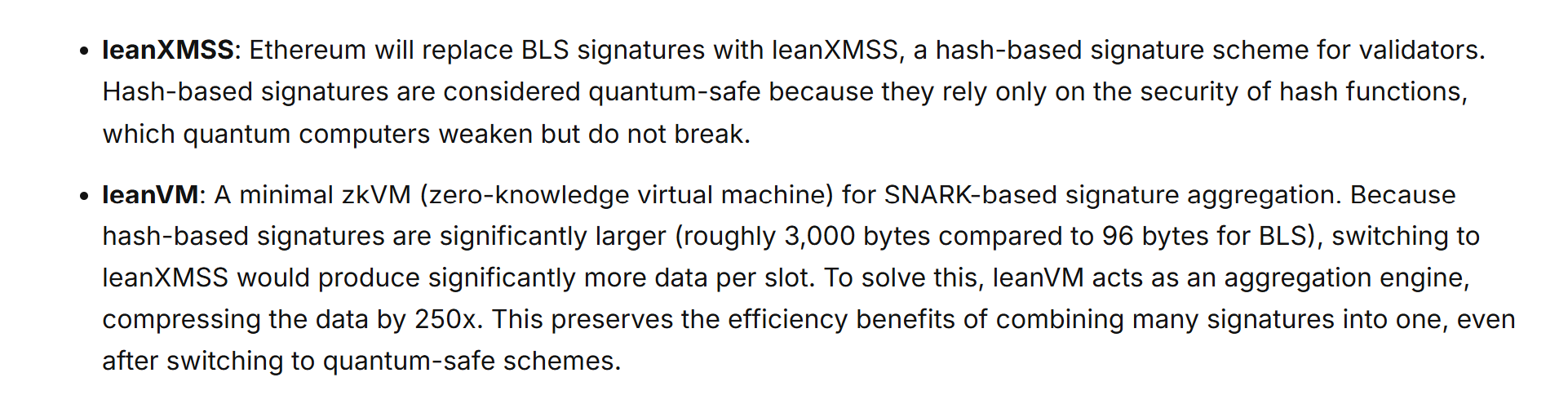
This potential growth increase could burden the network. Thus, leanVM is being developed to reduce those signatures by approximately 250 times.
On the user side of things, rather than forcing a single disruptive change across the entire Ethereum network, EIP-8141 offers another approach. Instead, it allows individual accounts to make their own choice regarding usage of safer signature options.
Together, these changes must strengthen security without increasing costs or slowing Ethereum. The next test is proving that balance works during testing.
Ethereum puts its roadmap to the test
Those security changes will only matter if Ethereum can deliver the wider upgrades needed to support them. Finality currently takes roughly 13–16 minutes, leaving transactions waiting much longer than Ethereum ultimately wants.
New designs could gradually cut that delay toward seconds, making settlement faster without forcing one disruptive change. Meanwhile, zkEVM progress offers stronger evidence that execution is already improving.
That progress turns research into working infrastructure. Maintaining similar delivery through upcoming upgrades will show whether Ethereum can realistically reach its broader 2029 target.