



Ethereum has undergone significant change over time, particularly since The Merge.The upgrade replaced the energy-intensive Proof-of-Work (PoW) system with Proof-of-Stake (PoS).
With this change, Ethereum currently uses about 8,522 physical nodes, many of which house multiple validators, and nearly 894,000 validators.
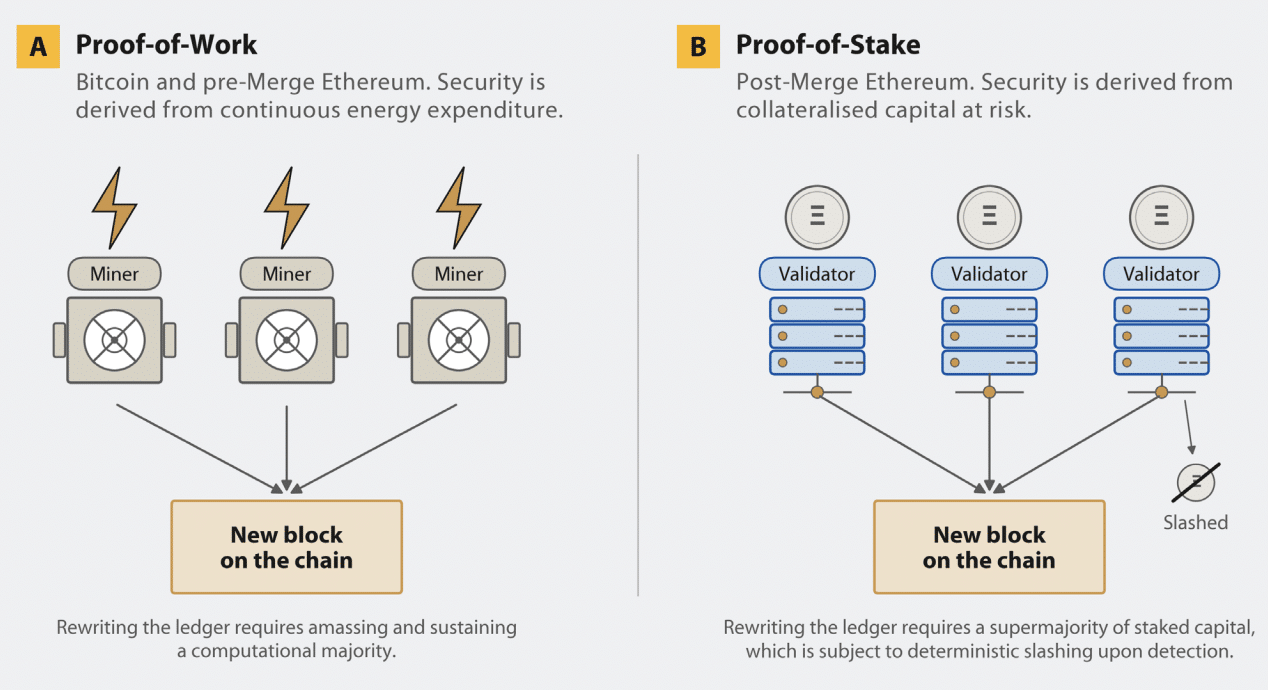
As a result, Ethereum now consumes only 7.87 GWh of electricity annually, or about 0.90 MW of continuous power. That is less than half the British Museum’s annual electricity consumption.
Before The Merge, the network required roughly 2.4 GW of continuous power.
Since then, Ethereum’s electricity consumption has fallen by more than 99.9%, marking one of the largest energy reductions by a major blockchain.
Is Ethereum truly decentralized?
Additionally, the Cambridge Centre for Alternative Finance (CCAF) report highlighted that Ethereum’s infrastructure is decentralized despite being geographically concentrated. Of all nodes, roughly 62% are hosted by the United States (31%), Germany (16%), Finland (8%), and France (6%).

Another significant discovery is that 56.4% of the electricity used to power Ethereum originates from sustainable sources, such as 17% nuclear energy and 39.4% renewable energy.
Given the electricity mix of the main host nations, natural gas continues to be the largest fossil fuel source at 27.7%. The fact that Ethereum’s sustainable energy share is higher overall than the global average of about 43% shows how much the network depends on cleaner electrical grids.
What does Ethereum’s carbon footprint mean for the network?
At the same time, Ethereum’s carbon footprint has dramatically decreased in tandem with its dramatic decrease in electricity consumption. As per the report, the network has reduced its emissions by 99.98% from its final Proof-of-Work era to an estimated 2.37 kilotonnes of CO₂ equivalent (ktCO₂e) per year.
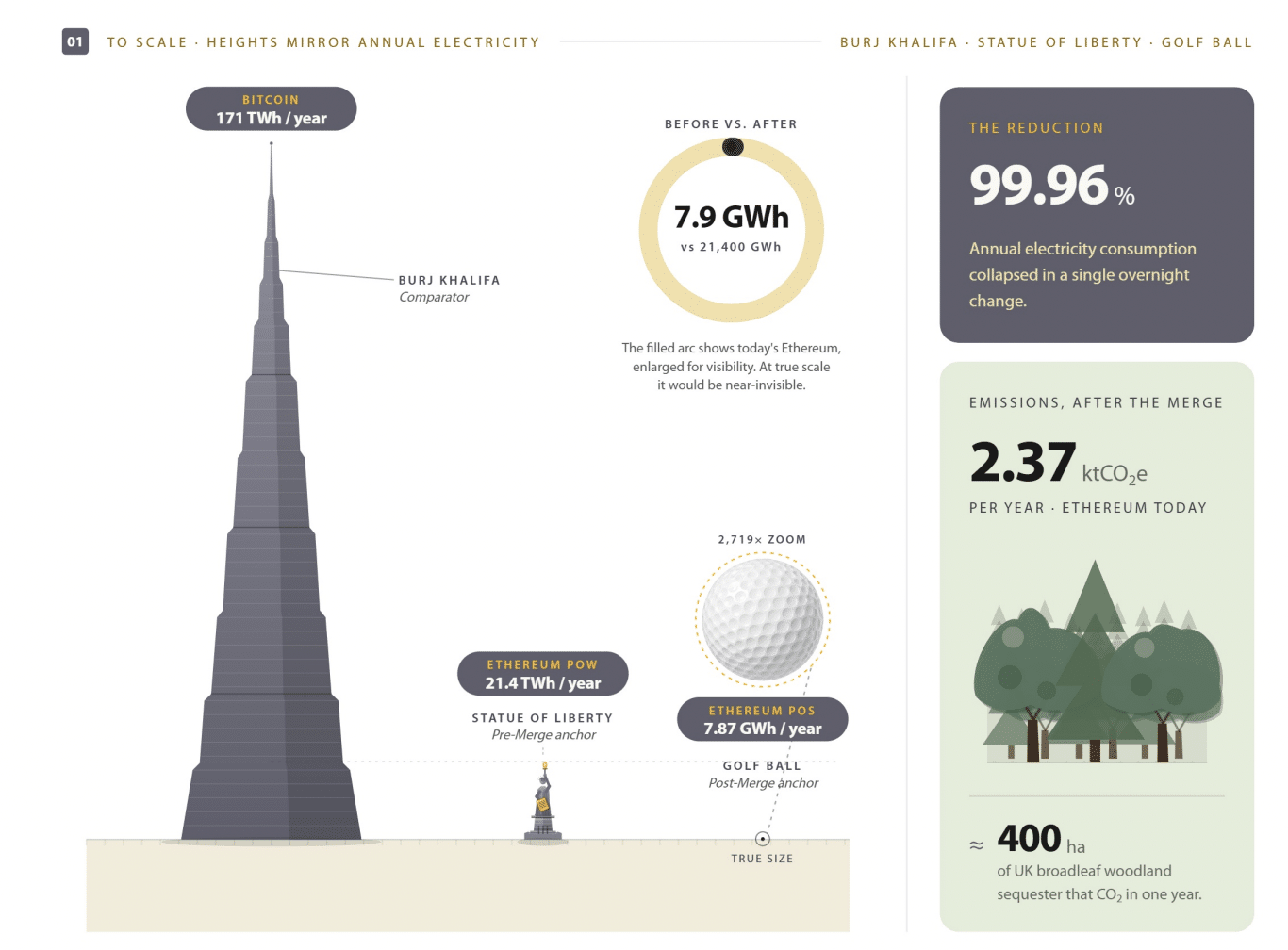
To put this into perspective, Ethereum’s yearly emissions are equivalent to the carbon footprint of roughly 900 households in the UK.
Interestingly, future developments, like stateless verification, may further minimize the need for energy and hardware, reducing Ethereum’s carbon footprint while maintaining its decentralization and security.
What’s ahead?
This further coincided with Ethereum’s development that has entered a new phase as researchers unveiled “Lean Ethereum,” a multi-year overhaul aimed at the network’s long-term evolution. The plan intends to replace the Ethereum protocol’s cores over a period of roughly three to four years, as opposed to a single upgrade.
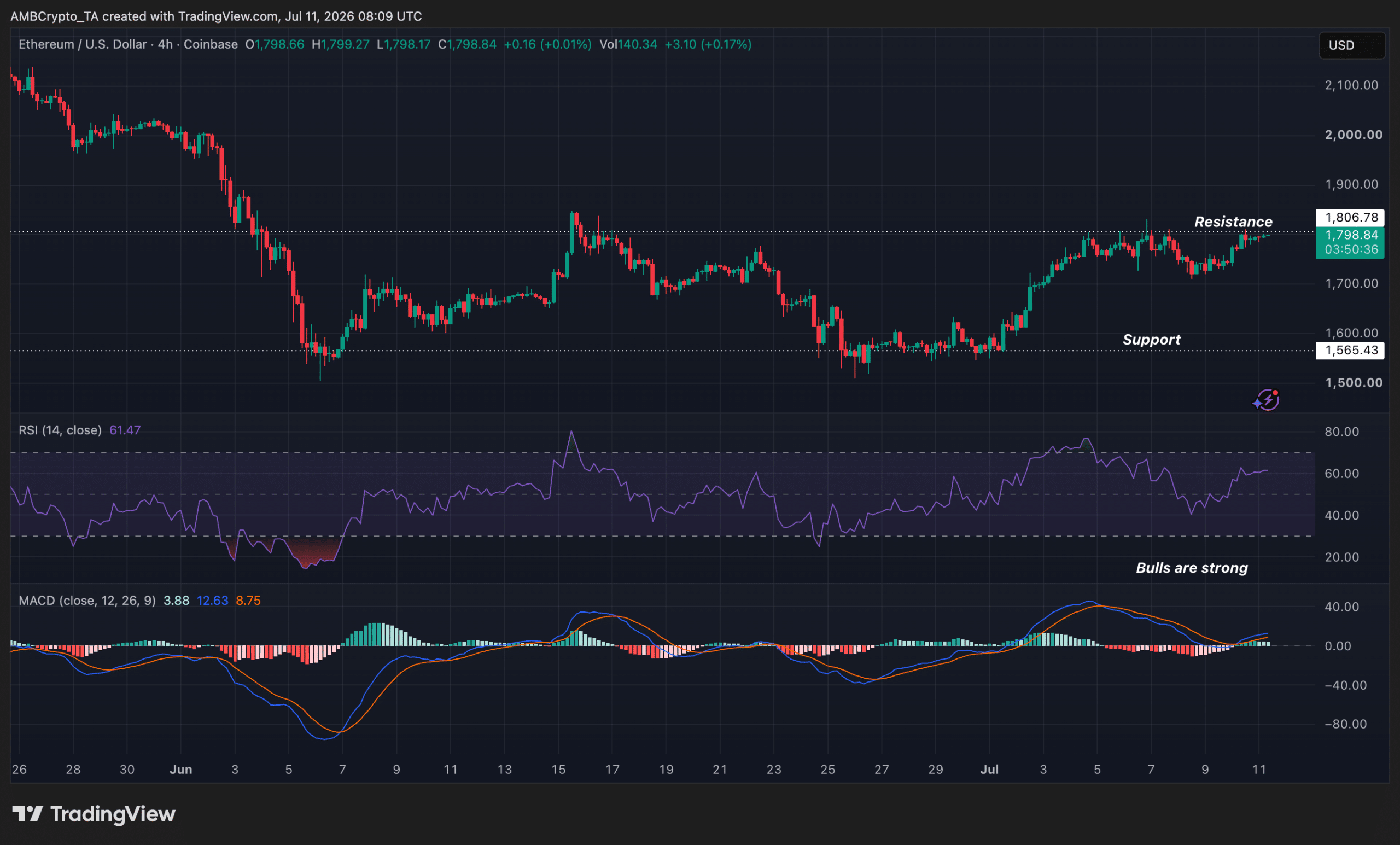
While these developments were happening, Ethereum’s price surged by 1.42% in the previous day and was now trading at $1,798.71 at press time. The MACD and RSI indicators also showed that bulls are more aggressive than they were previously. However, ETH needs to surpass the $1.8k mark in order for the bulls to continue.
Final Summary
- Ethereum roughly has 62% of all nodes hosted by the United States, followed by Germany, Finland, and France.
- The network has reduced its emissions to an estimated 2.37 kilotonnes of CO₂ equivalent (ktCO₂e) per year.