FBI blames North Korea for the $6.3B Binance hack – Kim Yo Jong slams back
North Korea’s denial raises fresh questions about the evidence behind the FBI’s attribution and the recovery of billions in stolen crypto.


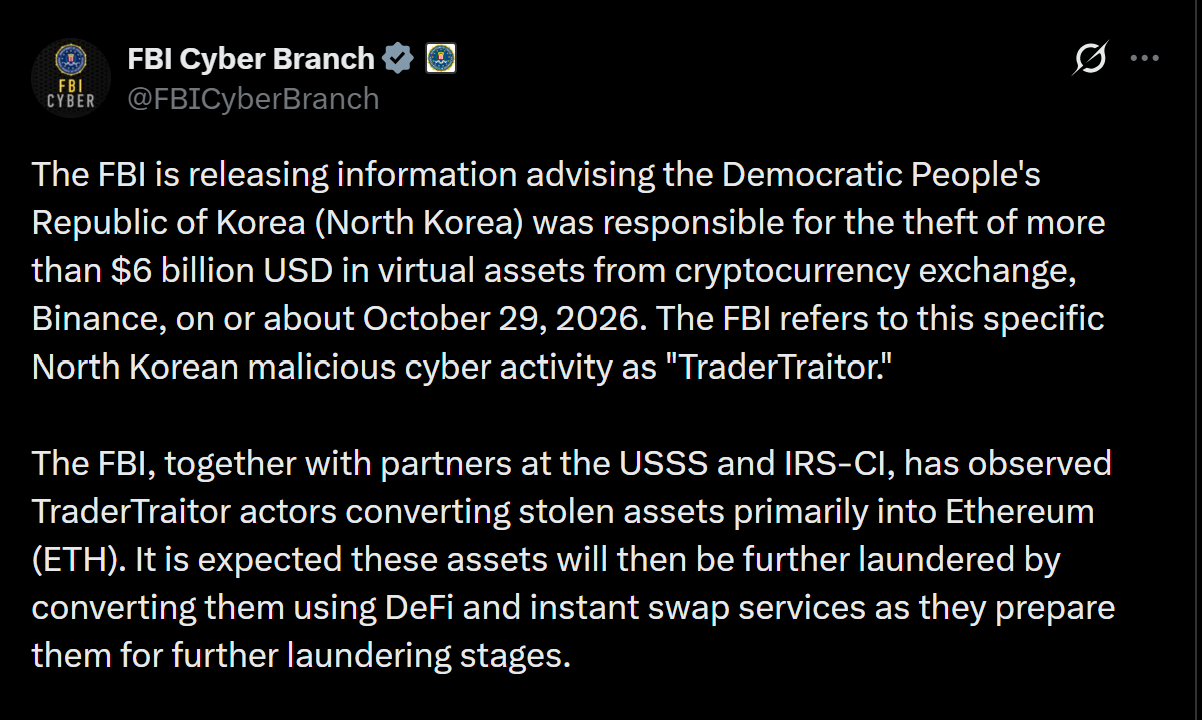
The $6.3 billion Binance hack has drawn international attention after the FBI blames North Korea as responsible for the 29th October theft.
The agency attributed the attack to TraderTraitor, a state-sponsored hacking group. Kim Yo Jong, Kim Jong-un’s sister, accused the United States of using fabrications to create the U.S. accusations against North Korea for its alleged theft.
This latest development has taken the focus off the hack itself, putting the spotlight back onto the issue of who was responsible for it.
The FBI is also examining blockchain links to previous hacks, including the $1.5 billion Bybit attack, to verify its suspicions.
As a result of this possible rift in the investigation process, recovery of stolen assets, along with establishing accountability, will likely be even more complicated.
Stolen funds reveal links to previous attacks
Beyond the diplomatic dispute, the movement of the stolen funds provides another way to assess the FBI’s attribution. Blockchain analytics firms have traced the assets across 12,000 wallets and more than 40,000 transactions on 11 blockchains.

Furthermore, according to blockchain analytics firms, many of the Binance proceeds have been laundered through TRON [TRX]. This is by rapidly transferring funds between various addresses, repeatedly cycling the funds through various addresses.
Other methods used in the laundering process include cross-chain bridges, DeFi swaps, and very little usage of mixers. These connections can provide insight to investigators as to what might constitute a common network among hackers conducting similar hacks.
However, tracking movement of funds does allow investigators to see how funds were laundered. Instead, investigators would need additional evidence to show who specifically controlled which addresses.
The missing piece in the Binance hack
Currently, investigators face a harder task of transitioning from tracing stolen funds to identifying those responsible.
While blockchain records indicate how Binance hacked funds moved about in terms of laundering and money laundering, they do not indicate who was ultimately directing the hack.
Therefore, investigators will need to determine if any of the wallets are connected to the previous work of North Korea-related groups. Possible sources of data that can aid investigators in determining this include malware samples, server logs, and IP addresses.
Meanwhile, exchange records may reveal where the attackers attempted to convert or withdraw the stolen assets. These findings could turn the FBI’s attribution into a stronger case for accountability.
Without independent forensic evidence and international cooperation, however, proving direct state involvement remains difficult.
Final Summary
-
The FBI blamed North Korea for the $6.3 billion Binance hack, but Pyongyang denies it.
-
Blockchain trails reveal widespread laundering, but North Korea’s role remains unproven.