‘Follow the money’ – U.S Treasury expands crypto sanctions against Iran’s Nobitex
Crypto has become a geopolitical issue but its touted hedge remains to be seen


The U.S Treasury’s Office of Foreign Assets Control (OFAC) has expanded its so-called ‘Economic Fury’ to include Iran’s local crypto exchange Nobitex.
Additionally, the U.S will target other smaller Iranian digital asset platforms, including Wallex, Bitpin, and Ramzinex.
According to the U.S Treasury, Nobitex facilitated 50% of all Iranian crypto inflows in 2025. Some of the funds were reportedly tied to the Iranian military and the Islamic Revolutionary Guard Corps (IRGC). These platforms helped Iran evade previous sanctions too.
The U.S also alleged that the Central Bank of Iran used Nobitex to prop up the falling Iranian rial, the local currency.
As a result, Chairman Amir Hossein Rad, Founder Seyed Mohammad, and CEO Sayed Ali Khoee have all been sanctioned.
For his part, U.S. Treasury Secretary Scott Bessent said that they’ll follow the money, whether through banks or crypto, to “prevent the regime from developing a nuclear weapon.” He added,
The regime has chosen to co-opt digital asset technologies for its own corrupt agenda, including evading sanctions and transferring wealth out of the country. Iran’s current economic chaos is proof that President Trump’s maximum pressure campaign has been a success.
U.S seized $1B of Iran’s crypto assets
The update followed last week’s revelation that the U.S has seized $1 billion worth of crypto assets reportedly tied to the Iranian government. Unsurprisingly, the extended sanctions came after Iran floated Bitcoin tolls earlier in the year.
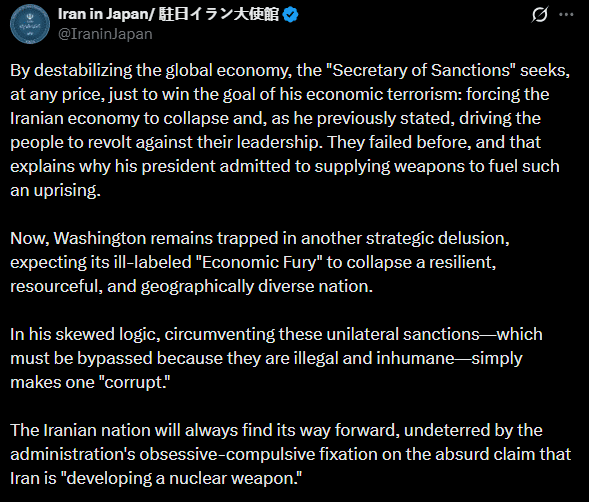
It is not clear how the move would impact the elusive peace deal between the two countries or with Israel. However, according to Iran’s embassy in Japan, the update is aimed at “forcing the Iranian economy to collapse” and drive people to revolt against its leadership.
The embassy in Japan called Bessent’s framing “skewed” and added,
In his skewed logic, circumventing these unilateral sanctions—which must be bypassed because they are illegal and inhumane—simply makes one ‘corrupt.’
Crypto and Bitcoin have become a geopolitical issue during the West Asia crisis, further underscoring how far the asset class has matured over the years.
Still, thanks to these U.S seizures, crypto’s touted non-sovereign status and its position as a hedge against geopolitical risks remains highly debated.
Final Summary
- U.S Treasury has expanded crypto sanctions to Nobitex, Bitpin, Wallex, and Ramzinex.
- These platforms helped the regime evade sanctions, a position that Iran’s embassy in Japan refuted.