Iran’s crypto adoption reaches $10B as U.S. sanctions cut off traditional banking routes
Iran’s growing crypto trade shows how sanctions are reshaping cross-border payments as enforcement targets alternative settlement channels.


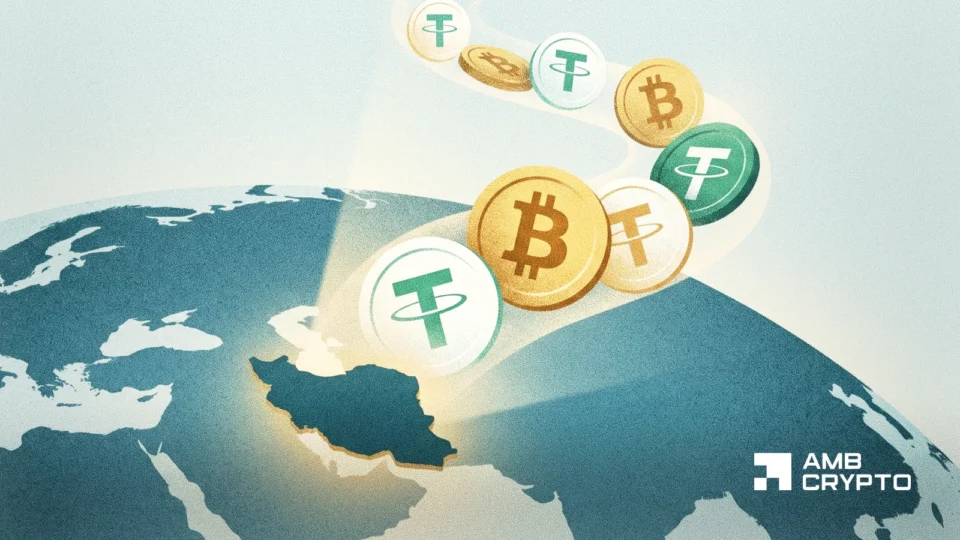
Iran’s shift toward crypto payments is gaining traction. This comes after U.S. pressure increases, making it harder for Iran to do cross-border transactions using a traditional means.
Supporting this move, the Iranian central bank has relaxed currency controls. In turn, this allowed exporters to receive Tether and Bitcoin through Iranian exchanges.
Previously, exporters were required to repatriate all of their foreign earnings via official channels. As a result, the amount that they could get for their foreign currencies was generally less than what they could obtain if they sold those currencies on a free market.
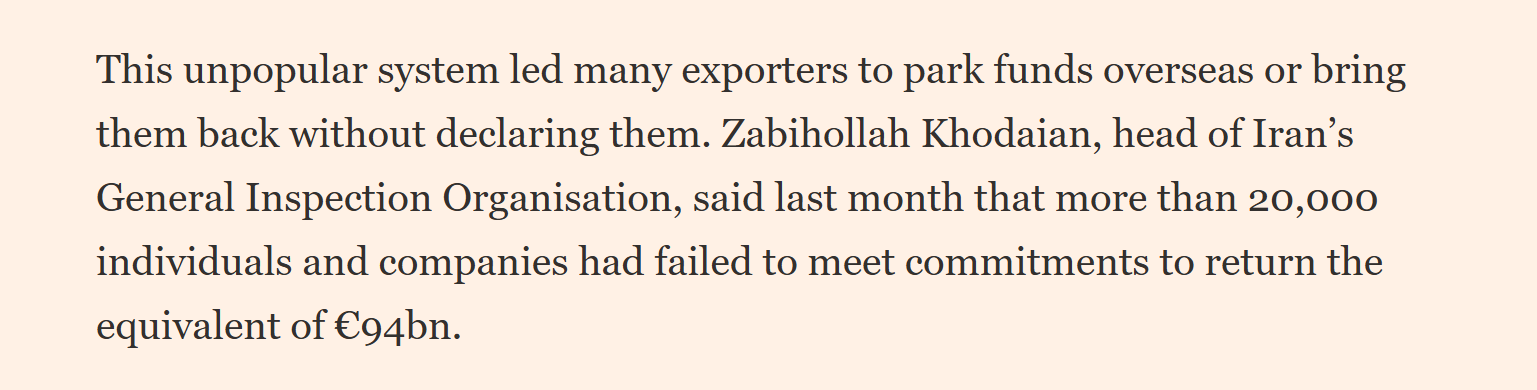
That system left over 20,000 entities owing roughly €94 billion in unrepatriated funds, pushing some businesses toward alternative routes.
This situation pushed many of these entities to seek alternative ways to utilize some portion of their export revenue. Foreign exchange houses still represent the most popular method for settling foreign exchange-related obligations.
However, the ability of exporters to also settle a portion of their obligations using cryptocurrency represents an additional option for them.
These options will help the government of Iran continue to have its economy trade internationally and reduce reliance on limited banking systems.
USDT dominates Iran’s $10B crypto market
The emergence of that shift is occurring at an inflection point in which the crypto infrastructure already in place in Iran will be used to convert to fiat.
Although Iranian-linked activity decreased from $11.4 billion in 2024 to approximately $9.9 billion in 2025, according to a report by TRM Labs.
This decrease was due to four major exchanges being responsible for approximately $7.7 billion, or 78% of all observed activity. These exchanges are therefore well-established avenues for domestic conversions as crypto continues to expand in trade.
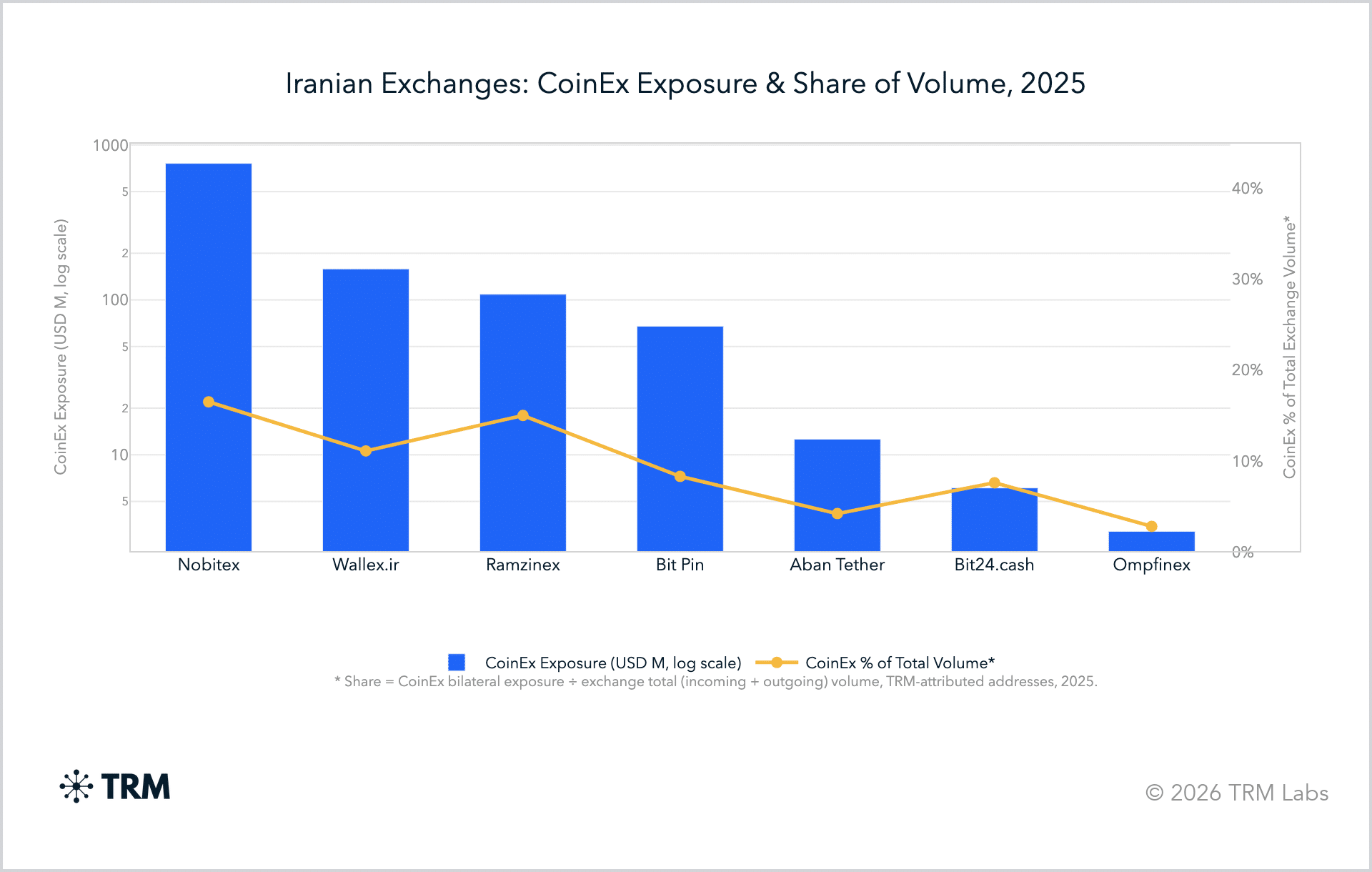
Within those flows, Tether [USDT] has become the preferred payment asset, particularly through TRON [TRX], where low fees support frequent transfers.
Although there is still significant Bitcoin [BTC] usage, the primary use of Bitcoin seems to be for purposes of storing value and mining rather than making daily transactions.
Therefore, as the use of crypto expands into trade, exports can rely on existing infrastructure for their ability to utilize crypto.
Sanctions test Iran’s reliance on crypto
With crypto already handling billions in Iranian flows, the pressure sustaining that activity is now intensifying.
Monthly inflows into crypto exchanges dropped from a high of $2.1 billion at the end of 2024 to just over $510 million during Q1 2026. This trend has intensified since authorities began to target cryptocurrency infrastructure.
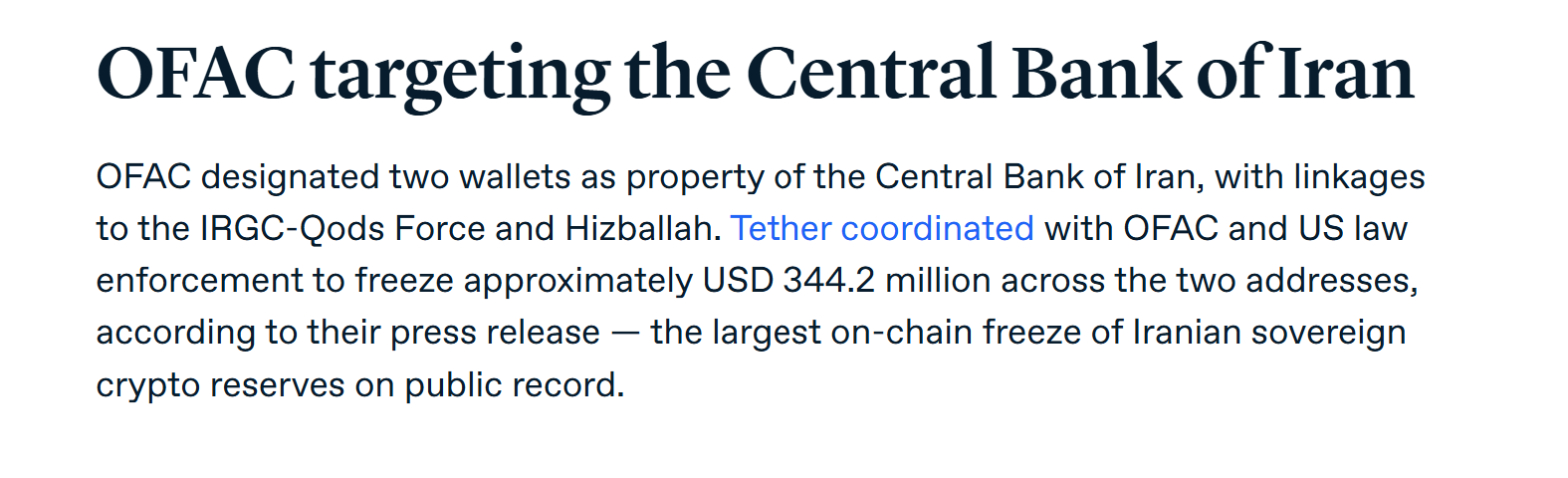
The Central Bank was able to freeze approximately $344 million worth of USDT that was linked to it. Additionally, the Central Bank imposed sanctions on four prominent Iranian cryptocurrency exchanges.
Connectivity disruptions added further pressure, briefly cutting platform volumes by roughly 80%. Yet USDT remained central to surviving cross-border flows, especially through low-cost TRON transfers.
This suggests that although enforcement may be limiting access to certain settlement alternatives, there remains significant demand for such alternatives.
Further volume declines would signal sanctions are constraining these rails, while recovery would expose their resilience.
Final Summary
- Iran is expanding crypto settlement as sanctions restrict conventional banking channels.
- Nearly $10 billion in crypto activity shows strong adoption, despite growing enforcement pressure.