Is TradeXYZ’s HIP-3 dominance becoming Hyperliquid’s ‘structural’ risk?
Felix may be the first Hyperliquid HIP-3 deployer to fall, but more could follow.



There is a simmering crisis beneath Hyperliquid’s successful commodities perpetual (perps) markets, commonly known as a HIP-3.
The sector exploded earlier in 2026 as the West Asia crisis forced tradFi and crypto natives to camp at Hyperliquid to trade oil, gold, and silver during weekends.
In fact, HIP-3 drove over 40% of Hyperliquid’s total volume at one point, making the platform a darling to many, including Wall Street.
However, the mechanics behind the HIP-3, especially for deployers, are flashing pressure signs now. These could expose the platform to risk, according to Blockworks Research.
The problem with Hyperliquid HIP-3 markets
For clarification, HIP-3 markets are created and deployed by third parties, not Hyperliquid. Afterwards, there is a revenue-sharing model between Hyperliquid and the deployer.
However, before the revenue sharing, every deployer must lock up 500K HYPE or about $30M. This arrangement comes with only three free slots for tickers or HIP-3 markets that can be deployed.
Beyond three markets, the deployer must bid for the tickers in an auction sale and spend an extra 500 HYPE or $30K for every extra ticker.
However, since TradeXYZ controls over 90% of the HIP-3 market, other competitors have struggled to keep afloat.
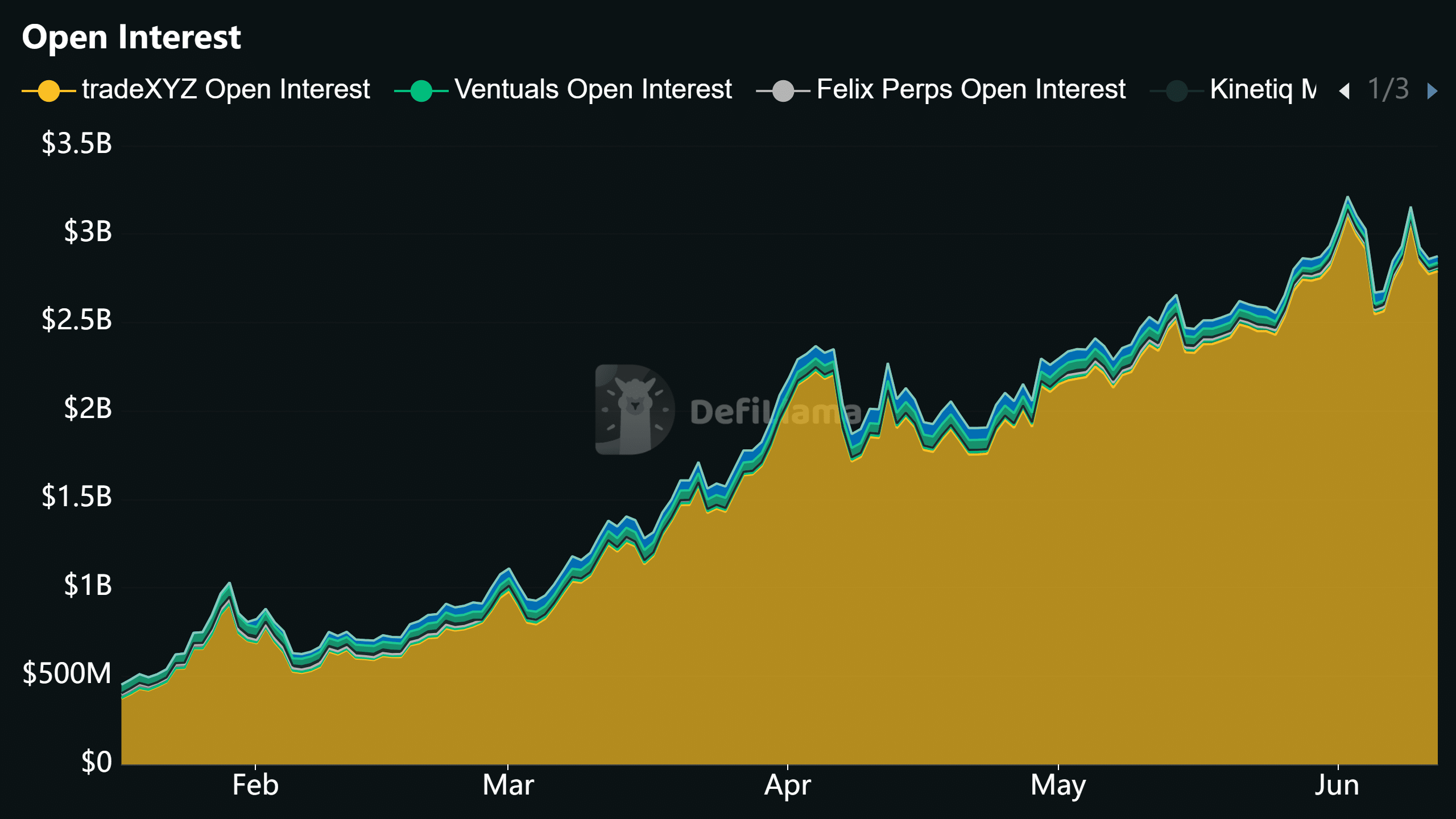
In fact, Felix, one of the HIP-3 deployers, has announced that it will shut down on 20 June. Felix cited competition from TraderXYZ, despite being the first to create the silver, gold, and oil markets.
These markets drove us solid fees during December and January and about 3bn in volume, but were eventually surpassed by TradeXYZ once they launched the same markets denominated in USDC.
The impact of the competition is way worse than most people thought though. According to Blockworks, it can now take smaller HIP-3 deployers an average of 4 years to recover the auction spend (the $30K per ticker).
Blockworks analyst Shauda Devens added,
In our sample of 136 paid HIP-3 listings, only 44 have recovered their auction cost, with non-TradeXYZ markets having a median projected payback period of 4 years.
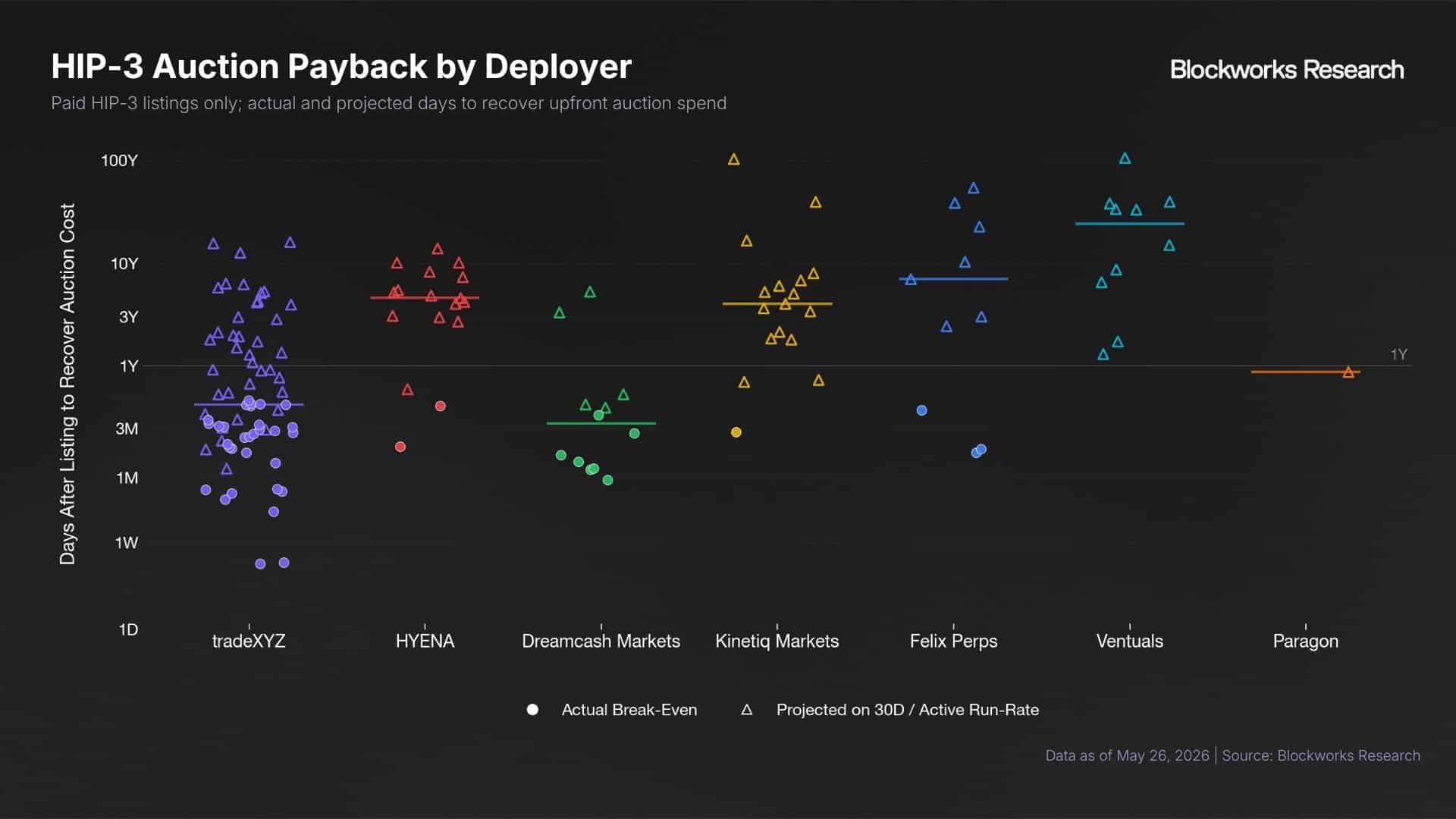
Additionally, due to TradeXYZ’s dominance, there is a higher regulatory attack risk,.
Deployer concentration introduces regulatory and structural risk. Under current incentives, HIP-3 is unlikely to sustain a competitive, decentralized listing market.
To mitigate this, Blockworks has proposed lowering the required locked HYPE for small builders. At the same time, the research firm wants small deployers to capture 100% of the revenue and only share with Hyperliquid when they’ve fully recovered their auction expenses.
Final Summary
- Hyperliquid HIP-3 deployers are facing a crisis amid stiff competition that could stretch the break-even period to 4 years.
- Blockworks has called for lower launch costs and a shorter break-even period to make the markets more decentralized.