Kraken’s 21-token delisting could raise liquidity concerns – Here’s why
Kraken’s delisting puts 21 tokens on a withdrawal deadline as liquidity shifts toward remaining markets.



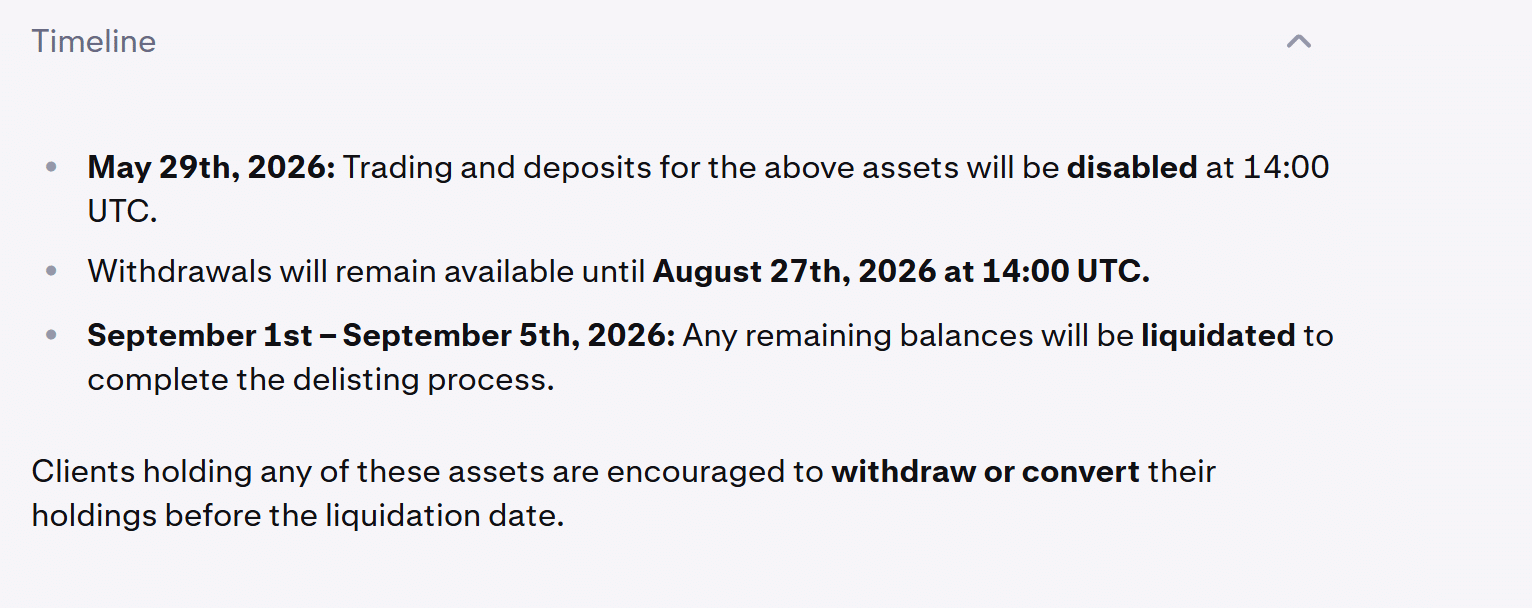
Kraken is delisting 21 tokens, narrowing options for holders, but still allowing withdrawals until the 27th of August at 14:00 UTC, following the earlier halt of trading and deposits.
The decision now shifts attention toward the broader market quality of the affected assets. Several already operate across thin or inactive markets, where trading volume and available liquidity remain limited.
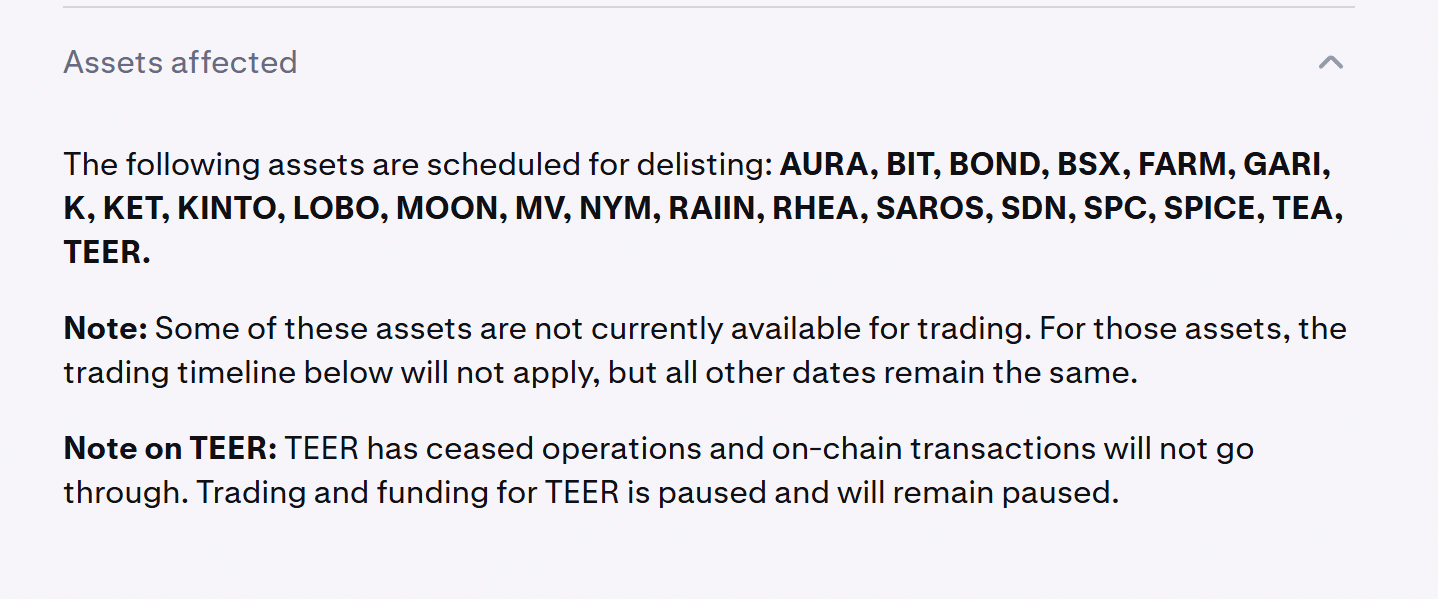
Kraken’s exit also removes a major venue for these tokens, potentially concentrating activity across fewer exchanges. Yet holders withdrawing before the deadline could move liquidity toward surviving markets, helping preserve trading activity elsewhere.
The TEER token presents a different challenge because its network has ceased operations, restricting normal transfers. Therefore, the broader impact depends on whether trading activity successfully relocates or declines as Kraken withdraws support.
Liquidation window raises execution concerns
The liquidation phase goes beyond Kraken simply converting balances after withdrawals close. Trading and deposits have already been paused since the 29th of May, leaving withdrawals as the remaining exit route.
That option disappears after the 27th of August, when unresolved balances move into automatic liquidation. From the 1st to the 5th of September, Kraken will convert those holdings according to prevailing market conditions rather than a fixed valuation.
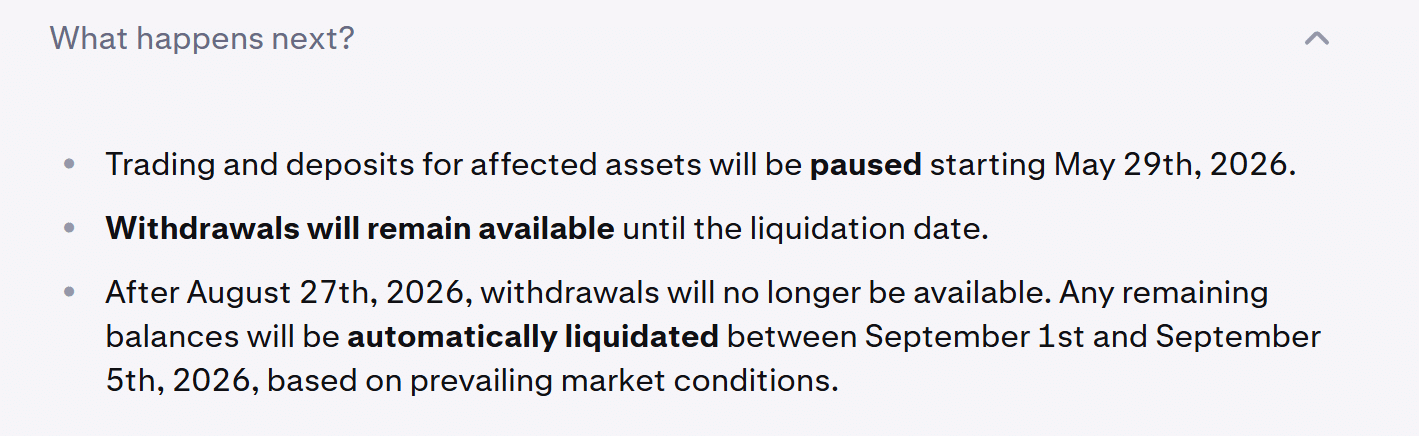
This means the final amount received will depend on available prices during execution. The five-day window also allows liquidation to occur across changing market conditions rather than at a single fixed point.
Once this process starts, holders no longer control when their balances are converted. Therefore, the key transition after the 27th of August is from voluntary withdrawals to exchange-managed execution, making prevailing market conditions central to the final settlement value.
Will liquidity migrate after Kraken’s exit?
That execution risk also depends on how much supply remains on Kraken after withdrawals close. Exact balances are unavailable, making the potential sell overhang difficult to quantify. Still, some markets have relatively low daily volume and limited bid depth.
Larger residual balances could therefore strain available liquidity during liquidation. Yet continued withdrawals may reduce that burden before the 27th of August deadline. Liquidity could also migrate to other exchanges.
If that happens, disruption may remain temporary; otherwise, wider spreads and weaker market depth could persist.
Final Summary
- Kraken’s 21-token delisting gives holders until August 27 to withdraw before automatic liquidation.
- Affected tokens face a liquidity test as remaining balances shift toward thinner markets.