Loopring shuts down DEX – What went wrong for Ethereum’s L2 pioneer?
Loopring faces a turning point as zkEVM adoption reshapes Layer-2 competition.


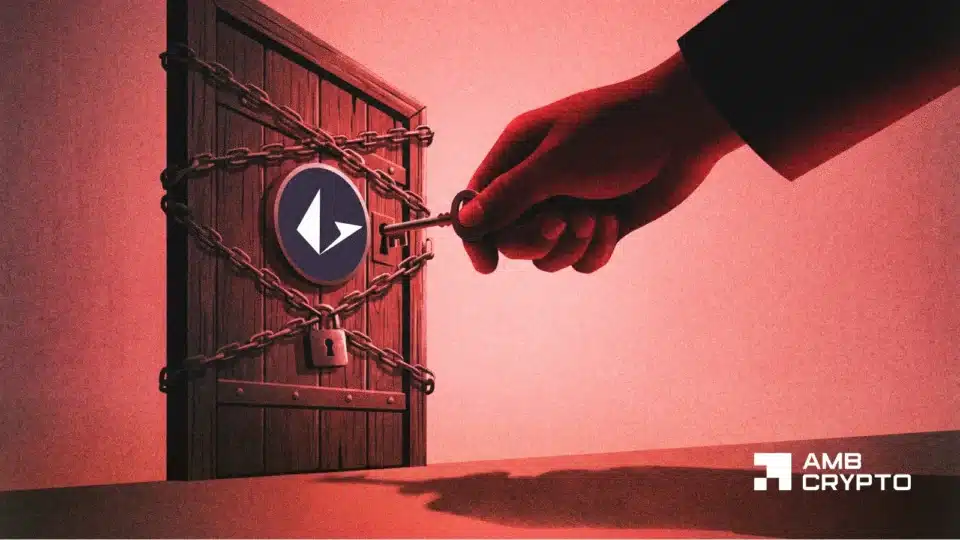
Loopring, an Ethereum [ETH] layer-2 scaling protocol, has announced it will shut down its decentralized exchange, marking the end of one of Ethereum’s earliest layer-2 pioneers.
Declining user engagement over several years was a major factor in Loopring’s decline. However, it seems that this decline in engagement was largely due to the growing popularity of zkEVM technologies, which provide full support of the EVM.
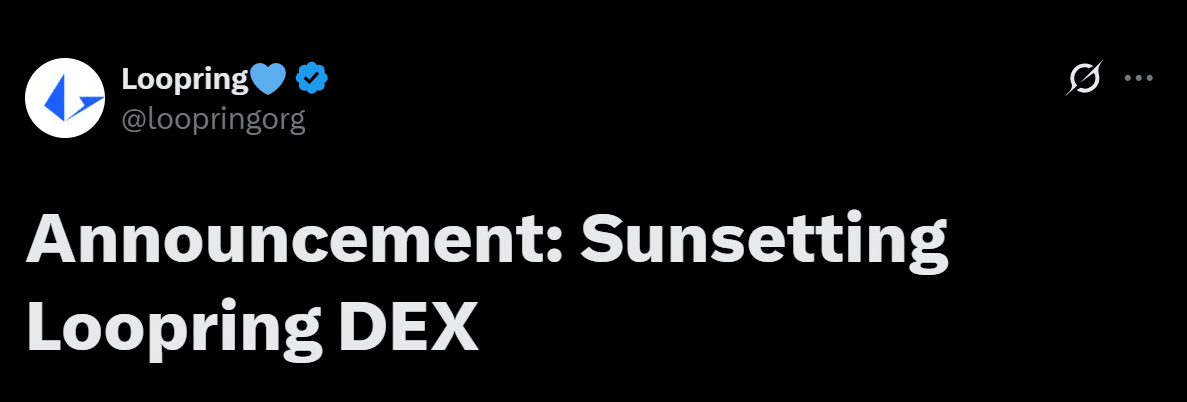
Unlike Loopring’s (LRC) specialized zkRollup design, zkEVMs allow existing Solidity applications to deploy without extensive redevelopment, accelerating ecosystem growth. That transition steadily reduced daily active addresses, transaction volumes, DEX activity, and protocol fees before the shutdown on the 28th of June.
Therefore, it appears that innovative technology can establish a platform as a leader in terms of scalability. If such a platform does not also offer widespread composability, then ultimately it cannot maintain that position.
Yet, unless Loopring develops its zk-Rollup technology into either Layer-3 or modular solutions, the discontinuation of Loopring represents the beginning of Ethereum’s next step in scalability.
Can Loopring’s technology survive beyond its DEX?
Loopring’s shutdown raises questions on how much Ethereum has lost one of its first layer-2 pioneers, with the innovation in layer-2. A decline in all key metrics such as TVL, transaction volume, daily users, and liquidity has made the Loopring independent DEX less relevant.
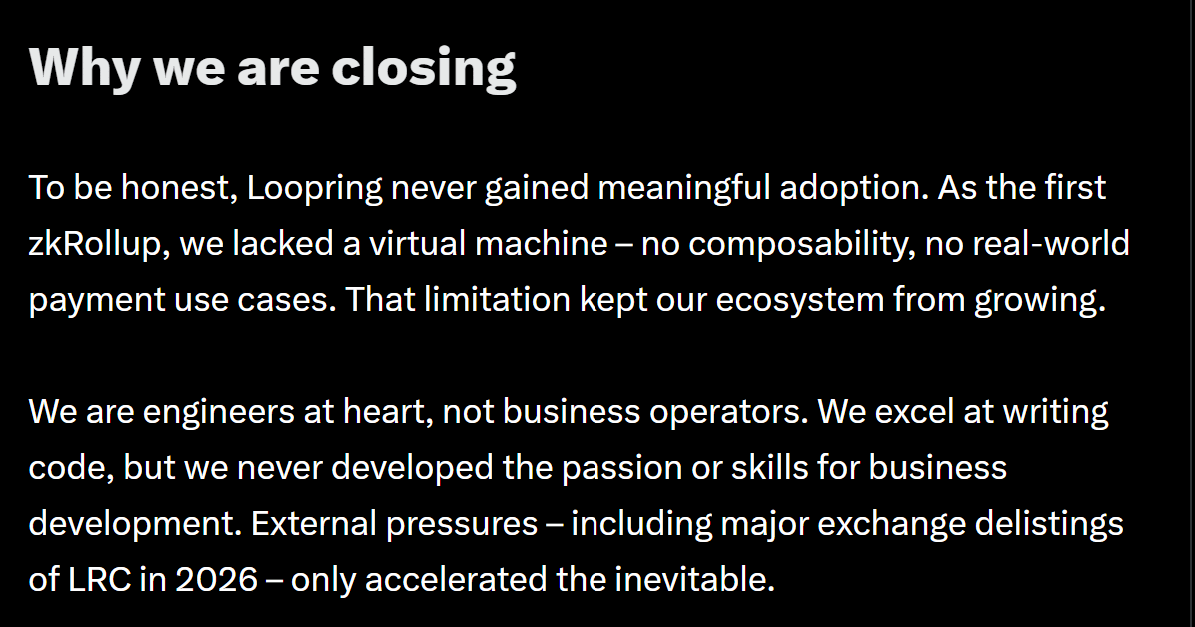
The Layer-2 protocol directly pointed out that the reason for this downward trend was low adoption, low composability, bad business practices, and 2026 delisting from exchanges using LRC. These trends point toward the possibility that the original protocol will be unable to reverse.
However, the network’s technology tells a different story. Loopring’s current zkrollup architecture continues to provide a known secure and high-throughput design.
As long as these features can be used by other protocols in Layer-3 or modular infrastructure, then Loopring’s contributions to Ethereum history may continue. Alternatively, if they cannot, then this may signal the death of one of Ethereum’s first Layer-2 specific innovations.
Final Summary
- Loopring’s shutdown reflects years of weak adoption, falling activity, and pressure from zkEVM competitors.
- Loopring now depends on whether its zkRollup technology can survive through Layer-3 or modular infrastructure.