MetaMask exits Lido staking to contain undisclosed ‘security incident’
Aave and Ethena assured users of no risk exposure to the MetaMask compromise.



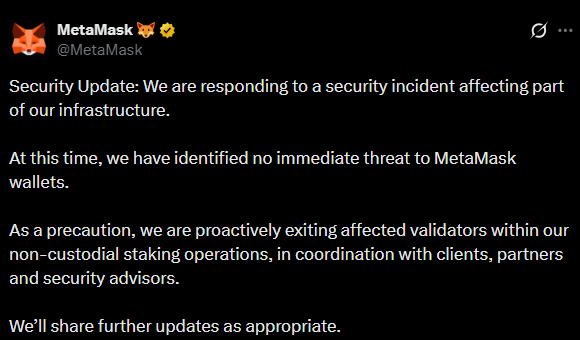
Ethereum-based wallet provider MetaMask has proactively exited non-custodial staking operations.
In a statement on the 1st of October, the firm said it was responding to a “security incident” that impacted part of its infrastructure. But it did not share more details on the nature or scope of the impact.
However, the firm assured that it has “identified no immediate threat to MetaMask wallets.”
Separately, Lido, one of the MetaMask partners, confirmed the validator exit and projected that the exercise could end by the 7th of October. The Lido staking provider assured that the incident does not affect users or their operations.
Lido Protocol’s diverse Node Operator set and other security systems, including the ad hoc reserve fund (of over 6,750 stETH), are designed to contain and mitigate disruptions.
Normal resumption of operations by MetaMask staking is expected in the next 45 days due to a long validator entry queue. It’s worth noting that Lido controls 29% of staked ETH, but the amount staked by MetaMask alone isn’t publicly disclosed.
Will MetaMask contain the DeFi contagion risk?
Following the update, on-chain data showed that Joseph Lubin, founder of ConsenSys, the firm behind MetaMask, moved 133K ETH. It’s unclear whether it was tied to the incident.
Speaking on the MetaMask incident, Stani Kulechov, Aave CEO, clarified that the lending protocol was not facing any contagion risk.
We’re keeping an eye on this situation alongside Lido. No impact to Aave markets, and everything is operating normally.
For his part, Guy Young, founder of Ethena, assured USDe investors that there was no risk exposure to Lido assets.
We are aware of the situation. USDe backing assets do not currently include any direct exposure to stETH or any other liquid staking tokens. No expected impact on Ethena.
In other words, the incident may not affect MetaMask wallets, but it could be far-reaching. In fact, security analysts compared the compromise to last year’s Kiln incident that affected back-end node infrastructure.
Kiln was forced to take its validators offline to contain the risk but suffered a $41M loss.
Crypto hacks have surged in 2026. It remains to be seen whether MetaMask’s precaution of taking its validators offline will help minimize a potential full-blown contagion risk.
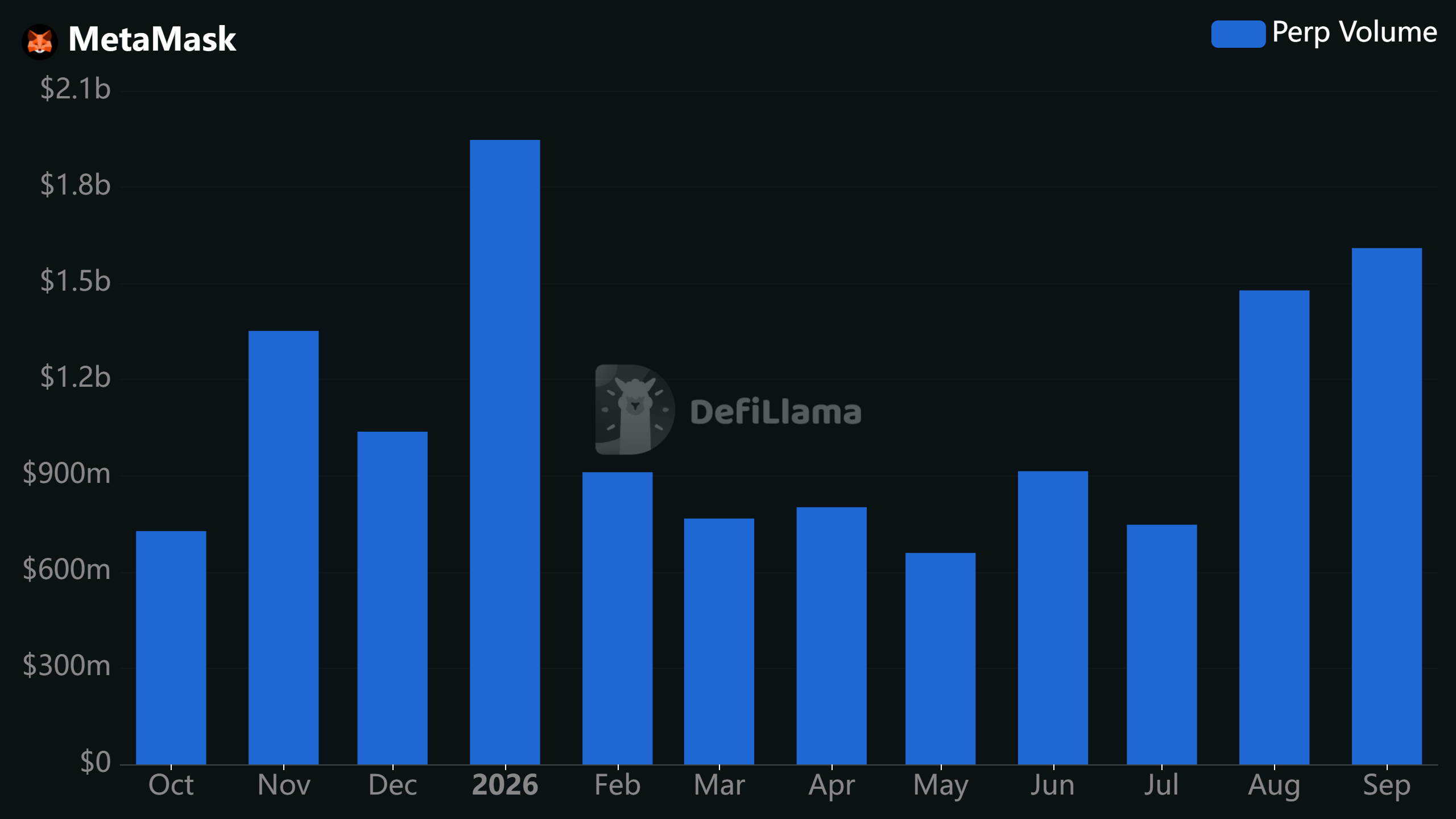
That said, MetaMask has evolved into an integrated wallet offering staking, perps trading, prediction markets, tokenized securities trading, and more. Its perps volume has increased by 2x to $1.6B in Q3.
Final Summary
- MetaMask has taken some of its validators offline to contain an infrastructure security risk.
- Aave, Ethena, and Lido have assured that user funds are safe and that private keys weren’t compromised.