



In yet another step in its expansion, Ripple [XRP] announced a strategic partnership with Flutterwave, one of the biggest payment companies located in Nigeria. With the help of Ripple, Flutterwave is advancing its push into blockchain-based payments with this new partnership.
That said, the investment, which was a component of Flutterwave’s Series E round, valued the company at $3.2 billion.
With this partnership, Ripple would also integrate its global payment network, the XRP Ledger (XRPL), and stablecoin RLUSD into Flutterwave’s infrastructure. All in all, this agreement marks a significant change in the way that funds could enter and exit Nigeria.
Why is this partnership crucial for Flutterwave?
Although Flutterwave currently handles payments for millions of consumers and businesses throughout the continent, the majority of international transactions still go through conventional banking channels.
This includes multiple intermediaries, correspondent banks, currency conversions, and settlement times that take several days.
By strategically investing in and integrating technology, Ripple aims to replace a large portion of that complexity with stablecoin-based blockchain infrastructure.
Needless to say, the implications are wider for Africa, and especially for Nigeria. For context, the continent has long struggled with issues like high remittance costs. Along with restricted access to international banking systems and a lack of foreign exchange.
Remarking on the same, Olugbenga “GB” Agboola, Founder and CEO of Flutterwave, added,
This partnership is a catalyst for Nigerian and African sovereignty in the digital financial age, ensuring our markets are primary participants in the global digital asset revolution.
Are RLUSD’s on-chain metrics in favor?
This occurs as the RLUSD Cost Basis Distribution Heatmap indicates that the month of June 2026 seems to have been the start of a higher-activity phase for RLUSD.
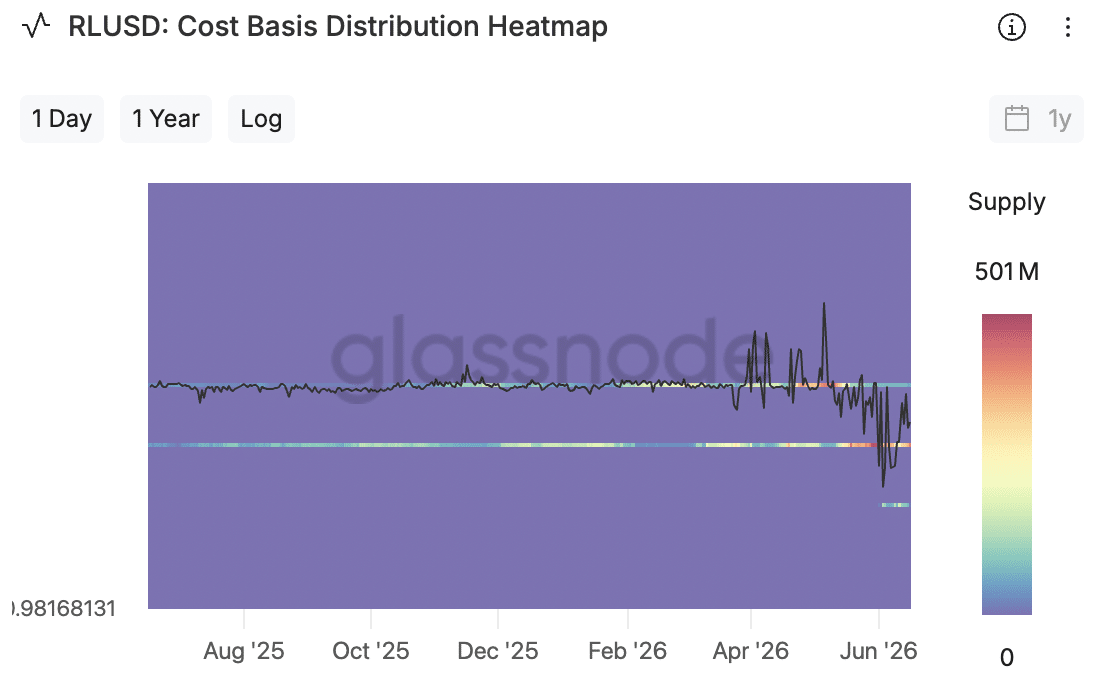
The rise in volatility and the formation of new cost-basis clusters below $1 suggest that more people were interacting with the stablecoin. Though this may have caused brief disruptions, it overall prevented the peg from collapsing.
June: RLUSD’s test month
In addition, the RLUSD’s Net Unrealized Profit/Loss (NUPL) fell to the chart’s deepest red zone, i.e., the capitulation zone in June 2026, which was almost -0.0055.
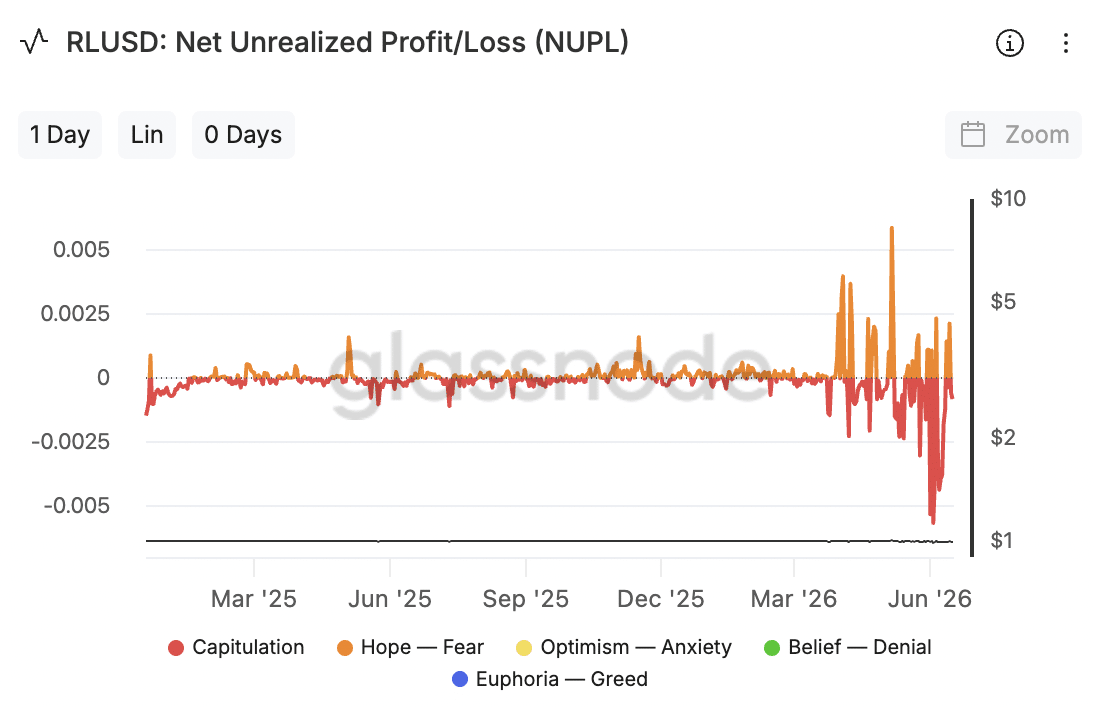
This suggests that a sizable portion of RLUSD was traded below the average cost basis, meaning that holders were sitting on unrealized losses overall.
However, it’s important to note that the size of those losses was small, suggesting that the stablecoin was facing temporary depegs and active arbitrage.
This was further supported by AMBCrypto’s earlier report that the RLUSD had surpassed $1.64 billion in market capitalization.
Final Summary
- Ripple’s investment will integrate Ripple’s global payment network, the XRPL, and RLUSD into Flutterwave’s infrastructure.
- With this integration, Ripple aims to replace a large portion of international payment complexity.